
How Long Does It Take for Hydroxyzine to Work?
 Dale
|
Dale
|
 08 May 2026
Hydroxyzine Onset Time, Duration, and Effectiveness Explained
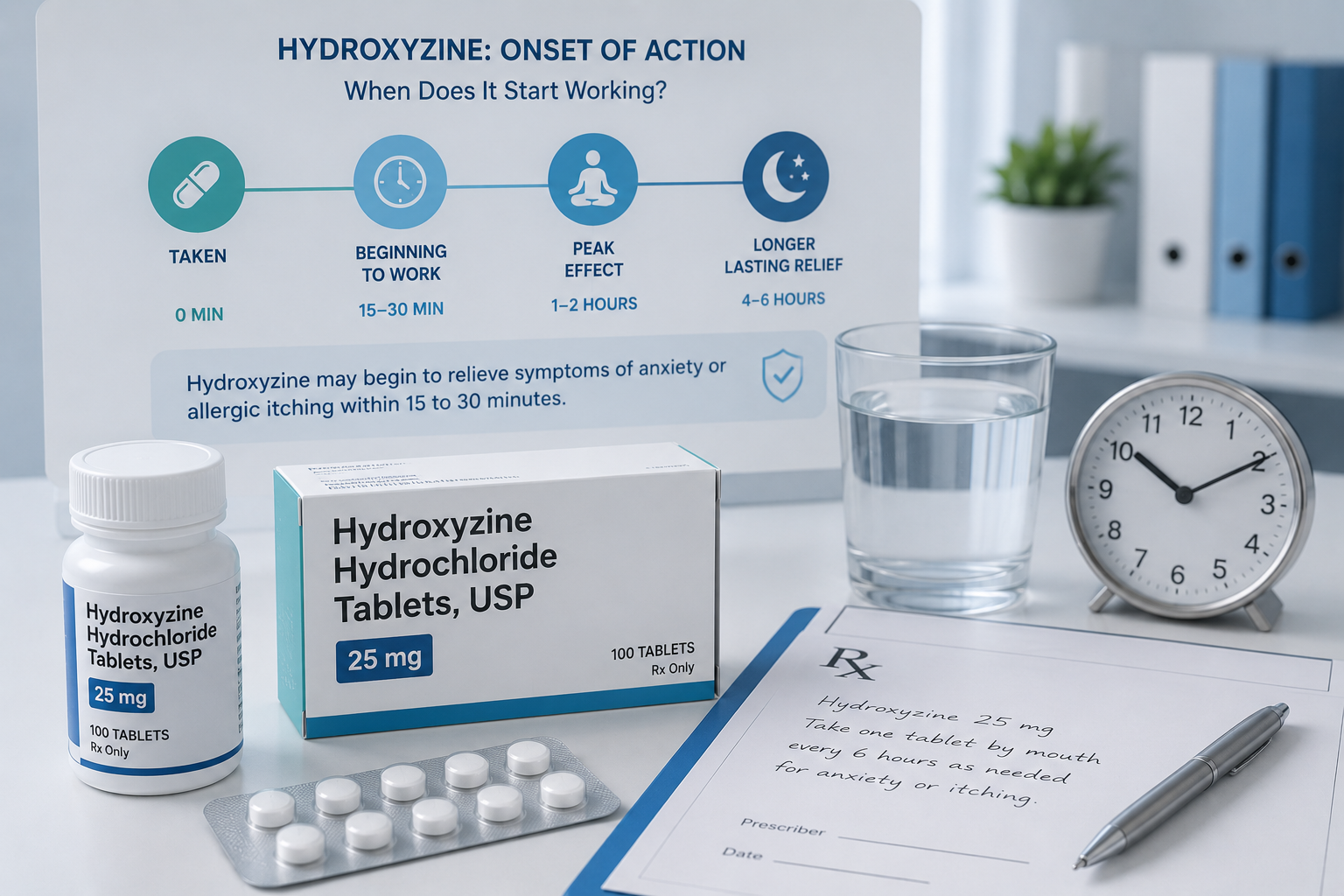
Hydroxyzine usually starts working pretty quickly — most people feel something within about 15 to 30 minutes after taking it. The fuller effect, like feeling calmer, less itchy, or more drowsy, tends to show up within 1 to 2 hours.
That said, it doesn’t feel exactly the same for everyone. Some people notice it almost right away, others take a little longer. It depends on your body, the dose, and what you’re taking it for.
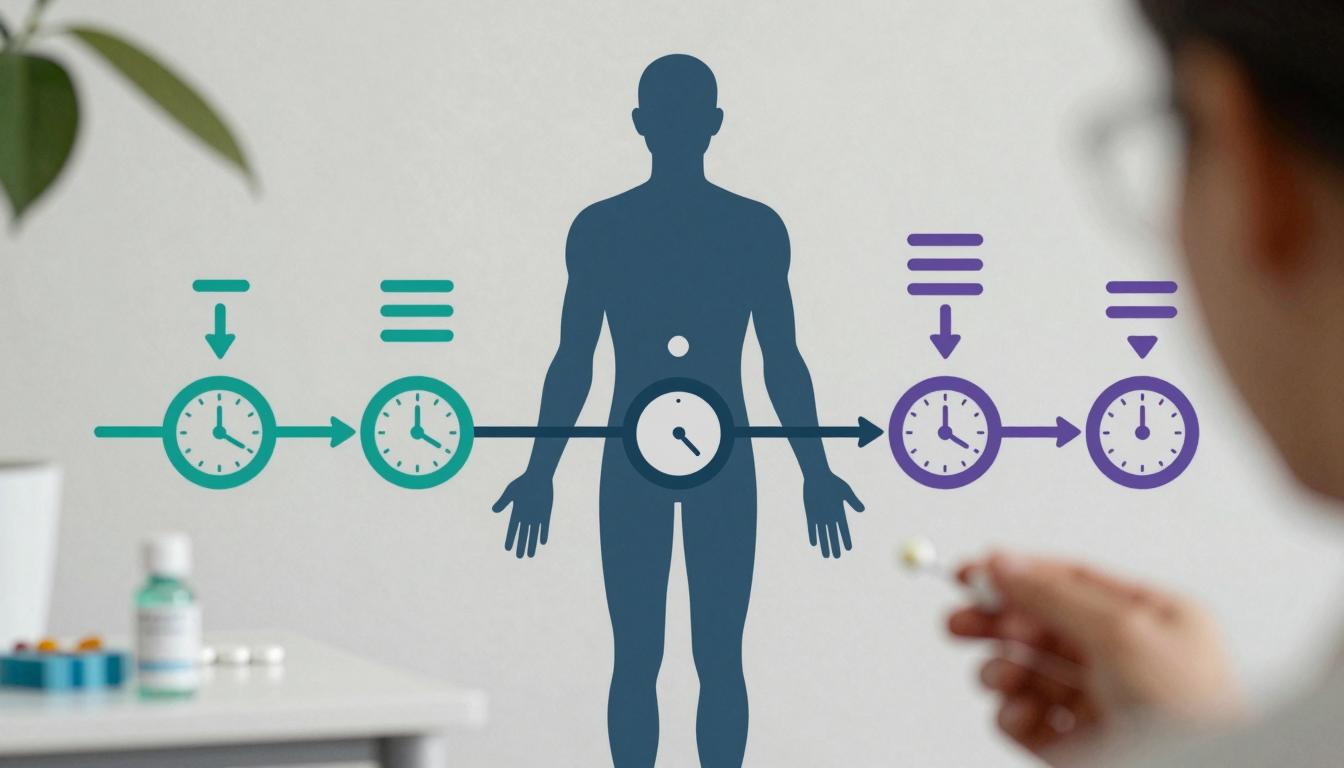
What it actually feels like when it starts working
People often expect a sudden change, but hydroxyzine doesn’t really hit like that.
It’s more gradual.
At first, you might just notice something subtle. Maybe you feel a bit more relaxed, or the itching isn’t as intense. If you’re taking it for anxiety, it’s usually more of a “things feel quieter” kind of effect rather than a strong shift.
For some people, especially at higher doses, the first noticeable thing is actually drowsiness. That can come on before anything else.
So the timeline usually looks like:
- slight effect within 15–30 minutes
- clearer effect by around 1 hour
- strongest effect around 1–2 hours
It builds rather than hits all at once.
Why it sometimes feels faster (or slower)
Not everyone reacts to hydroxyzine the same way, and that can be confusing.
A few things can change how quickly it kicks in:
- the dose — higher doses tend to be felt sooner
- your metabolism — some people process medications faster
- body weight and sensitivity
- whether you took it on an empty stomach or after food
- how sensitive you are to sedating medications
Some people feel sleepy very quickly. Others barely notice that part at all.
Both can be normal.
How long the effects usually last
Once hydroxyzine starts working, it doesn’t wear off immediately.
For most people, the main effects last around 4 to 6 hours.
But there’s a bit more to it than that.
The calming or anti-itch effect tends to stay within that range, but the drowsiness can sometimes last longer. Especially if you took it later in the day or if your body is more sensitive to it.
So you might feel:
- relief for several hours
- lingering tiredness even after the main effect fades
That’s why some people are told to take it at night, depending on why it’s prescribed.
What it helps with — and how that changes the timing
Hydroxyzine is used for a few different reasons, and the “onset” can feel slightly different depending on the situation.
For example:
- anxiety: you might feel more relaxed, less restless, less mentally tense
- allergies or itching: the itching starts to ease, redness may reduce
- sleep support: you feel drowsy or ready to sleep
For anxiety, it’s not like flipping a switch. It’s more like the intensity drops down a level.
For itching, the change is sometimes easier to notice because it’s more physical.
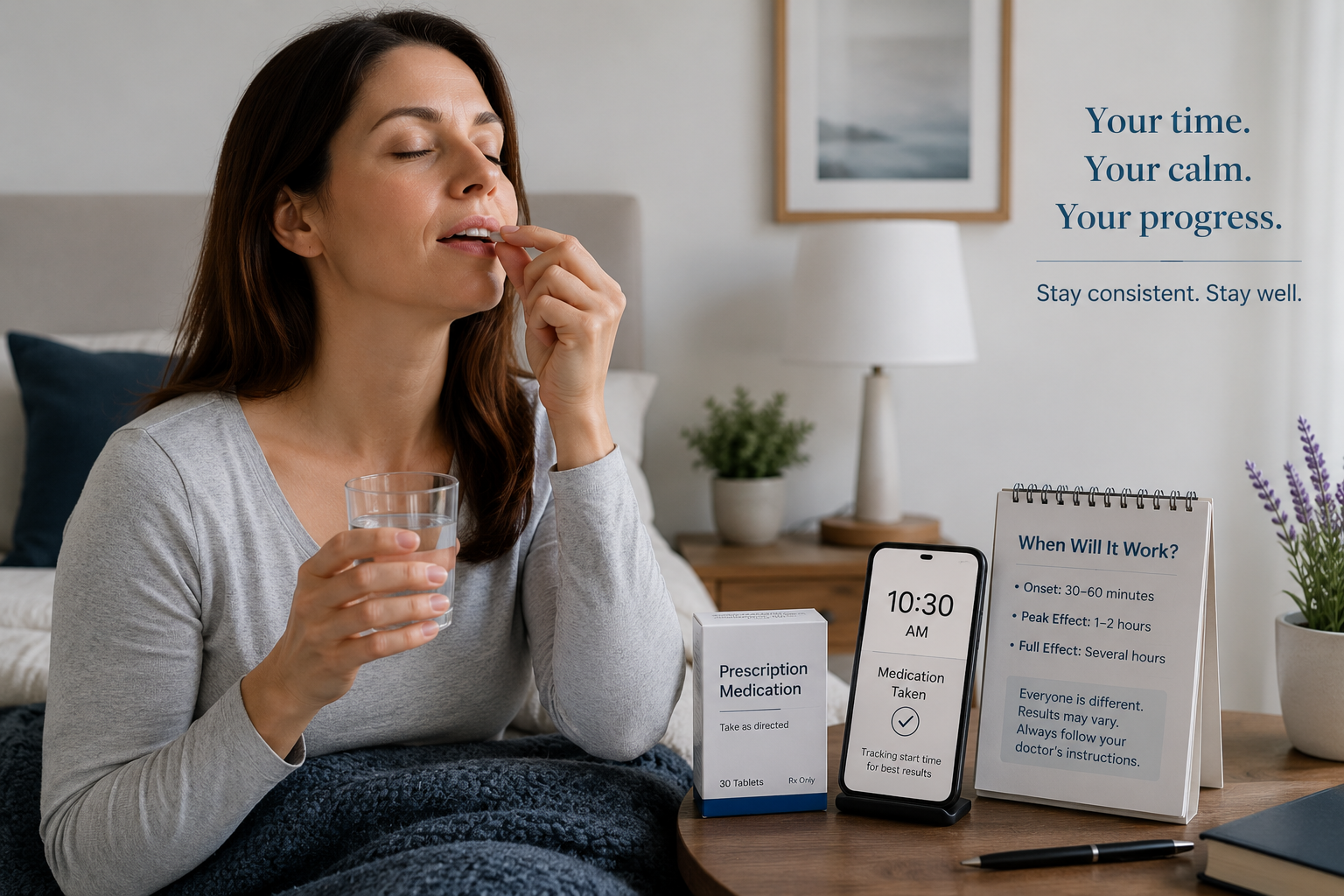
Why doctors don’t expect instant results
Even though hydroxyzine is relatively fast, it’s not instant like something you’d feel in seconds.
There’s always a bit of delay because your body has to absorb the medication and circulate it.
That’s why if you take it and don’t feel anything right away, it doesn’t mean it’s not working.
It just hasn’t fully kicked in yet.
Give it some time before deciding it didn’t help.
A few small things that actually matter
People don’t always think about this, but how you take it can affect the experience.
Some practical points:
- taking it at the same time each day (if prescribed regularly) helps keep effects consistent
- avoiding alcohol is important — it can make the drowsiness much stronger
- be careful with driving or anything that needs focus, especially the first few times you take it
- try not to double doses if you think it’s “not working yet”
It’s one of those medications where the effect is clear — but you still need to use it carefully.
When it doesn’t seem to be working
Sometimes people take hydroxyzine and feel like nothing really happened.
That can happen.
If that’s the case, a few possibilities:
- the dose might be too low
- your body just doesn’t respond strongly to it
- the condition being treated might need something different
You shouldn’t just increase the dose on your own though.
If it doesn’t seem to help after a few doses, it’s better to check in.
When to ask someone about it
It’s worth speaking to a healthcare professional if:
- you don’t feel any effect after taking it a few times
- the drowsiness is too strong or lasts too long
- symptoms aren’t improving
- you’re unsure about timing or dosing
Sometimes it’s a small adjustment. Other times, a different medication works better.
One practical thing people often overlook
Hydroxyzine can feel different depending on the day.
That part throws people off.
If you’re already tired, you might feel it more strongly. If you’re stressed or wired, it might feel milder at first.
So don’t judge it based on one dose alone.
Look at the pattern over a few uses.
A quick note if you’re unsure about timing or effects
If you’re not sure when it’s supposed to kick in, or whether what you’re feeling is normal, it helps to ask instead of guessing.
A pharmacist at Sanford Pharmacy can go over how hydroxyzine should work for your specific situation — including timing, dosing, and what to expect. You can also check sanfordpharmacy.com if you want a clearer idea of how to use it properly and safely.
Hydroxyzine usually starts working within about 30 minutes, with stronger effects showing up over the next hour or two. It’s not instant, but it’s definitely on the faster side compared to many medications. The main thing is giving it enough time — and paying attention to how your body responds over a few doses, not just one.
Categories


How Long Does It Take Praziquantel to Kill Tapeworms?
Aaliya
How Long Does Acyclovir Stay in Your System?
Jayden
How Long Can You Use Tacrolimus Ointment?
Cheyenne

How Long Does Zyrtec Stay in Your System?
Joseph Yajiv
How Long Does Zyrtec Take to Work?
Hana
.webp)
.webp)
-(2).webp)
.webp)