
Healthy Weight and Heart Health: Why They’re Always Connected
 Anastasia
|
Anastasia
|
 24 Dec 2025
Introduction
People talk about weight like it’s only about looks, or confidence, or fitting into old clothes again. But most doctors and pharmacists don’t even start there. They start with the heart.
Because healthy weight and heart health are tied together in a way that’s hard to ignore. And it’s not just about someone being “obese” or not. Even small weight changes can shift blood pressure, cholesterol numbers, blood sugar, and how hard the heart has to work just to do its job.
At Sanford Pharmacy, we see it all the time. Someone loses a few kilos and their blood pressure drops. Someone gains weight over the year and suddenly their cholesterol isn’t “fine” anymore. It feels unfair sometimes, but it’s real.

Why weight and heart health are always connected
The heart is basically a pump that’s been working since before you were born. It doesn’t get breaks. It adapts to whatever you put in front of it.
When body weight goes up, the heart has to push blood through more tissue. That means a larger network of blood vessels to supply. More blood volume. More pressure. More effort every minute, even when you’re just sitting.
So yes, extra weight doesn’t automatically mean heart disease, but it does create conditions where heart problems become more likely. And when people maintain a healthy weight for better circulation, the heart usually gets to work in a calmer, more stable environment.
What “Healthy Weight” really means
This is where things get confusing fast.
A healthy weight is not the same thing as being thin. Plenty of thin people have high cholesterol or uncontrolled blood pressure, and plenty of heavier people can still have decent heart markers. So doctors don’t really chase thinness. They chase risk reduction.
Healthy weight vs “thin” — clearing the confusion
Healthy weight is more about where fat is stored, how active a person is, and what the trend looks like over time.
BMI is one tool, but it’s not perfect. It doesn’t account for muscle, body frame, or fat distribution. That’s why doctors also look at waist circumference, because belly fat tends to be the most risky kind. It wraps around organs and affects hormones and inflammation.
If you’ve ever been told “your BMI is fine but your waist is high,” that’s the reason.
This is why maintaining healthy weight reduces heart disease risk isn’t about chasing a number on a scale. It’s more about keeping the body in a range where the heart isn’t constantly under extra strain.
How extra weight affects the heart
The heart has to pump harder to supply a larger body. That sounds simple, and it kind of is, but the effect is big.
With more weight, the heart often has to:
-
pump more blood per minute
-
work against higher resistance in blood vessels
-
keep up with higher oxygen demand
Over time, this increased workload leads to higher strain on the heart muscle. Sometimes the heart adapts by thickening or enlarging slightly. That may not cause symptoms early, but it can increase the risk of heart failure later on.
This is one of the major reasons doctors talk about obesity effects on heart and blood vessels so often.
Weight and blood pressure
Excess body fat increases blood pressure through a few different paths.
It can raise the amount of blood circulating in the body, increase resistance in the blood vessels, and affect kidney function. It also affects hormones that control how tight or relaxed arteries stay.
The tough part is that high blood pressure often feels like nothing. People don’t feel sick. They don’t feel pain. It’s just quietly damaging arteries, stressing the heart, and raising stroke risk in the background.
This is why weight management for cardiovascular health is one of the first lifestyle goals doctors mention. Even modest weight loss can lower blood pressure faster than people expect. Sometimes a few kilos makes the reading drop enough that medication doses can be adjusted later (not always, but it happens).
Weight’s role in cholesterol and plaque buildup
Extra weight often raises LDL cholesterol and triglycerides. At the same time, HDL — the “good cholesterol” — tends to drop. It’s an annoying combination.
This mix increases the chance of plaque building up in arteries. Plaque can narrow blood vessels gradually, and if it becomes unstable, it can rupture and cause a heart attack or stroke.
That’s where the phrase excess weight and cardiovascular disease risk really starts making sense. It’s not weight itself acting like poison. It’s what weight does to cholesterol, blood pressure, blood sugar, and inflammation over time.
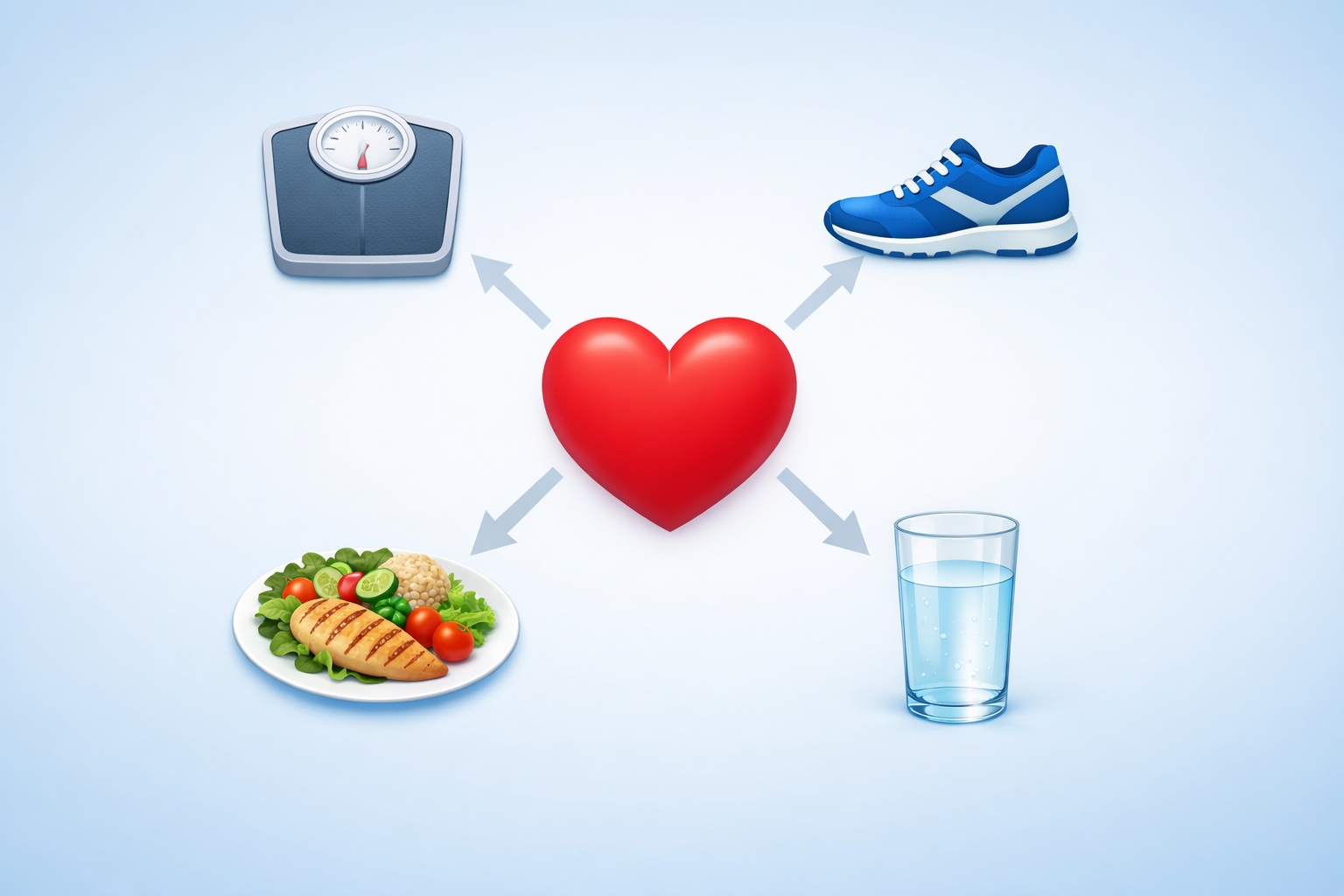
Healthy weight and blood sugar control
One of the most powerful links here is weight and insulin resistance.
As weight increases, especially around the abdomen, the body becomes less responsive to insulin. That means sugar stays higher in the blood and the pancreas has to work harder. Over time, this becomes type 2 diabetes.
Diabetes is one of the strongest risk factors for heart attack and stroke. It damages blood vessels, affects nerves, and accelerates plaque buildup.
The good news is weight loss can improve insulin sensitivity. Even a small reduction helps the body handle blood sugar better, which lowers long-term cardiovascular risk.
This is a big part of why healthy weight lowers blood pressure and cholesterol too — because everything is linked.
Inflammation: the hidden cardiovascular risk
This is the part most people don’t expect.
Fat tissue isn’t just “stored energy.” It’s active tissue. It releases chemicals that can drive chronic inflammation. Not the kind of inflammation you feel like swelling or fever, but a low-grade, constant irritation inside the body.
That inflammation makes blood vessels less flexible. It can damage the lining of arteries. And it can make plaque more unstable, which increases the risk of sudden heart events.
So when people ask why healthy weight matters for cardiovascular system, inflammation is a big part of the answer. It’s one of the invisible risks that improves when weight comes down.
How weight impacts circulation and blood clot risk
Extra weight can slow circulation, especially in the legs. Blood flow becomes less efficient, and clotting risk rises.
That’s why obesity is linked with deep vein thrombosis (DVT) and pulmonary embolism. Clots can form in the deep veins of the legs, then travel to the lungs. It’s serious, and sometimes it happens without much warning.
Obesity also increases stroke risk, partly because of blood pressure and plaque, and partly because of clotting tendency.
Keeping a healthy weight for better circulation helps reduce all of these risks.
Weight and heart rhythm problems
Excess weight increases the risk of atrial fibrillation (AFib). AFib is when the upper chambers of the heart beat irregularly, which can allow blood to pool and form clots. Those clots can travel to the brain and cause stroke.
The interesting part is that weight loss often improves AFib stability. Some people notice fewer episodes or better rhythm control after losing weight and improving fitness.
So yes, benefits of weight loss for heart health includes rhythm issues too, not just blood pressure.
Sleep, weight, and cardiovascular health
Weight gain and sleep apnea often go together. Sleep apnea causes breathing pauses during sleep, which forces the body into repeated stress responses. Blood pressure rises. Heart rate changes. The heart works harder at night instead of resting.
Treating sleep apnea can improve blood pressure and energy, which makes weight control easier. It goes in both directions.
If someone is struggling with weight and heart markers, sleep is often the missing piece nobody is checking.
Benefits of losing even a small amount of weight
A lot of people think they need dramatic weight loss to see benefits. They don’t.
A 5–10% reduction in body weight can improve:
-
blood pressure
-
cholesterol and triglycerides
-
blood sugar control
-
inflammation markers
-
stamina and energy
In some cases, people need fewer medications or lower doses. Not always, and nobody should change meds without their doctor, but it does happen.
This is one reason maintaining healthy weight reduces heart disease risk is so emphasized. It doesn’t take perfection. It takes steady, realistic progress.
How healthy weight supports long-term heart health
When weight stays in a healthier range over time, the heart has less strain to deal with.
That usually means:
-
lower risk of heart failure
-
reduced risk of coronary artery disease
-
better exercise tolerance
-
better day-to-day stamina
-
improved quality of life
And honestly, even the small things matter, like walking up stairs without feeling breathless, or being able to stay active without joint pain holding you back.
Simple and realistic weight management tips for heart care
Extreme dieting doesn’t work for most people. It makes people miserable, hungry, and burned out. The heart doesn’t need that. It needs consistency.
A few realistic approaches that support weight management for cardiovascular health:
-
Focus on balanced meals, not skipping meals
-
Add more fiber and protein so you feel full longer
-
Cut down sugary drinks first (this alone makes a difference)
-
Walk daily, even if it’s short and slow
-
Do light strength work if possible — muscle helps metabolism
-
Manage stress, because stress eating is real
-
Sleep properly, because tired bodies crave sugar
Building habits slowly is better than going aggressive for two weeks and giving up. The heart benefits more from steady change than dramatic attempts.
When to seek medical support
Sometimes weight gain isn’t only about diet.
It can be linked to thyroid problems, hormone changes, medications (like antidepressants, steroids, or insulin), or fluid retention from heart or kidney issues.
If someone has heart disease already, weight loss should be guided safely. Crash diets, unregulated supplements, and extreme fasting can stress the heart, so medical guidance matters.
A pharmacist can also help check if medications are contributing to weight changes and talk through safe options.

Frequently asked questions
Can you be overweight and still have a healthy heart?
Yes, you can. Especially if blood pressure, cholesterol, blood sugar, and fitness are good. But the risk tends to rise over time, so it’s still worth watching.
Is belly fat worse than overall weight?
In most cases, yes. Belly fat is more metabolically active and linked with inflammation and insulin resistance.
How fast should weight loss happen for heart safety?
Slow and steady is safer. About 0.5–1 kg per week is usually considered reasonable, depending on the person.
Does weight loss replace heart medications?
Not automatically. Sometimes it reduces the need later, but many people still need medication. Lifestyle and medicine often work together, not as replacements.
Conclusion
Healthy weight and heart health go hand in hand because extra weight affects nearly every major heart risk factor — blood pressure, cholesterol, blood sugar, inflammation, circulation, and even heart rhythm.
And the good part is, even small changes can create big cardiovascular benefits. You don’t need perfection. You need something you can keep doing.
If you ever feel stuck or unsure, Sanford Pharmacy pharmacists can help with realistic guidance, medication support, and practical steps that make heart care feel less overwhelming.
Categories



Can Recurrent Utis Be a Sign of Cancer
Jose

How Does Hydroxychloroquine Work?
Ali
Morning vs Night: Optimizing Blood Pressure Medication Timing
Arely
Natural Thyroid Hormone Therapy for Hypothyroidism Explained
Dulce

What Is Raloxifene Used For?
Abdullah

.webp)
.webp)
-(2).webp)
.webp)