
How Long Can You Take Prilosec?
 Mikayla
|
Mikayla
|
 11 May 2026
Safe Duration and Long-Term Use of Proton Pump Inhibitors Explained
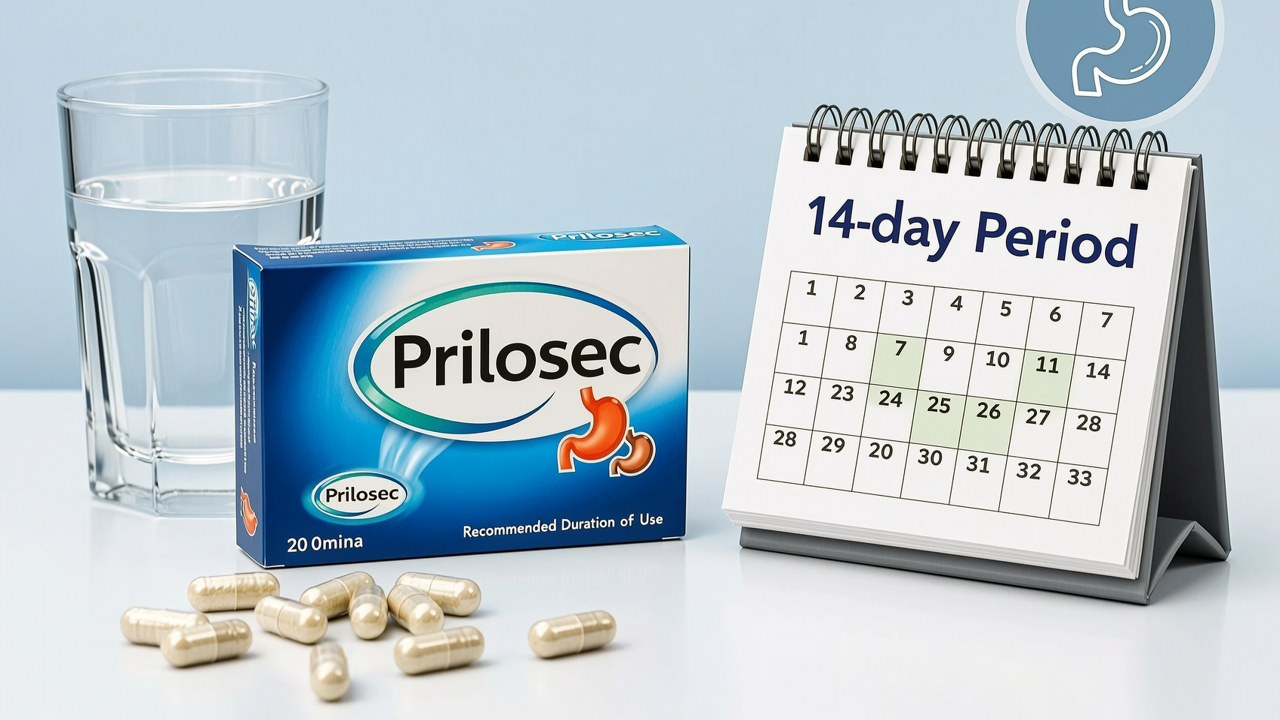
Prilosec isn’t really meant to be something you just take forever without thinking about it. For most people, it’s used for a short stretch — about 14 days if you’re taking it over the counter. If it’s prescribed, that can stretch to 4 to 8 weeks, sometimes longer depending on what’s going on.
But the key thing is — the longer you stay on it, the more it should be something you’re checking with a doctor or pharmacist about, not just continuing on your own.

What “14 days” actually means (because people misunderstand this a lot)
If you look at the box, it says 14 days. Sounds simple.
But here’s what that really means in practice:
- you take it once a day, every day for the full 14 days
- you don’t just stop when you feel better after a couple days
- and it’s not something you’re supposed to restart immediately again and again
A lot of people take it for 3–4 days, feel better, and stop. Then symptoms come back.
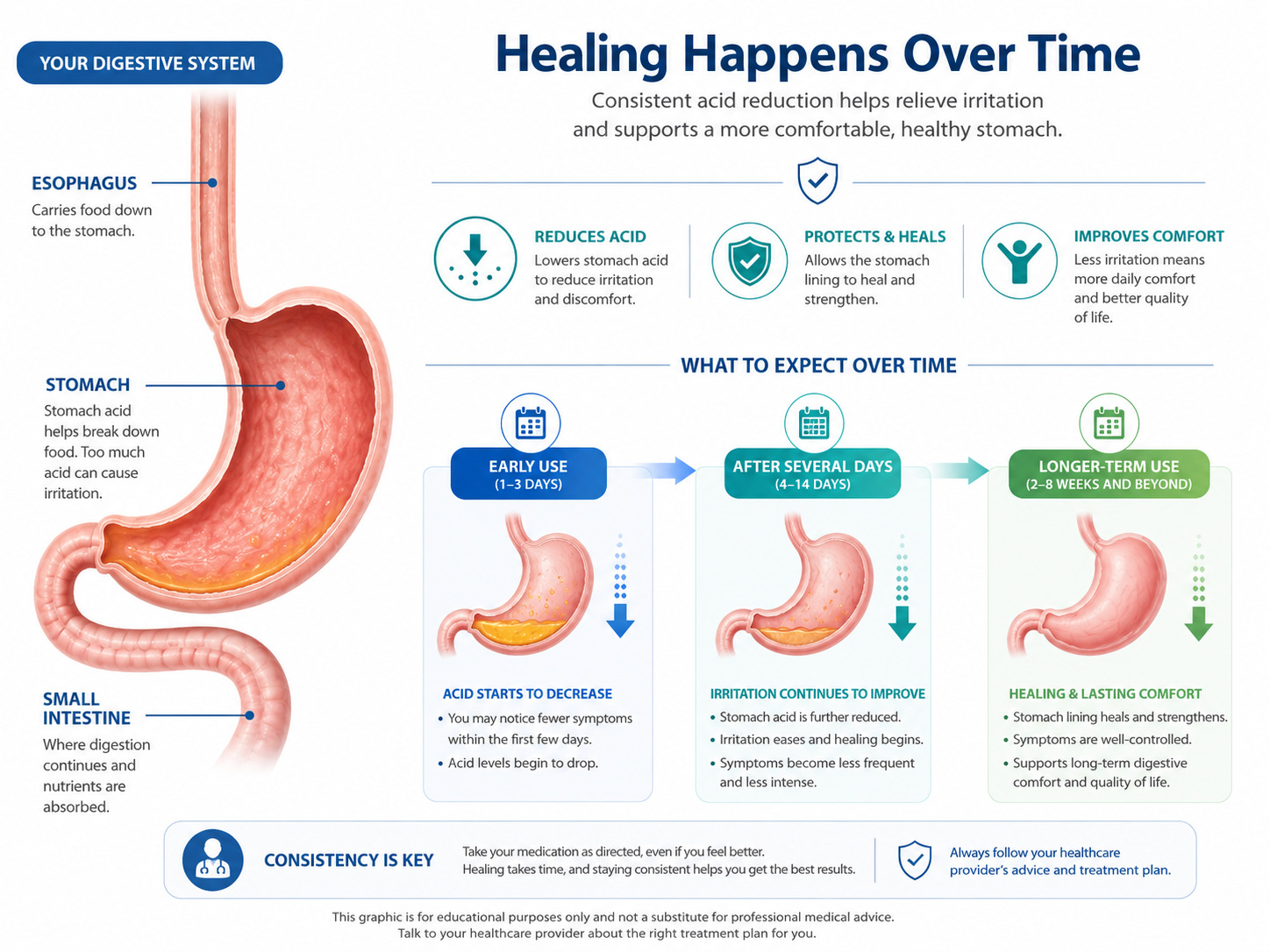
That’s because Prilosec doesn’t work like an instant antacid. It builds up its effect.
It usually takes a few days (sometimes up to 4) before you feel the full benefit.
So the 14 days is more about giving it time to properly settle things down.
What happens if symptoms come back
This is where things get tricky for a lot of people.
You finish the 14 days… and then a week later, heartburn is back.
So you take another course.
Then maybe another.
At that point, it’s less about “how long can I take it” and more about “why do I need it this often?”
If you’re repeating those 14-day cycles regularly, it’s usually a sign something needs a closer look.
When people are told to take it longer
There are definitely situations where Prilosec is used for more than just two weeks.Doctors prescribe it longer for things like:
- GERD (chronic acid reflux)
- stomach ulcers
- duodenal ulcers
- H. pylori infections (along with antibiotics)
In those cases, it’s often:
- 4 to 8 weeks
- sometimes longer if symptoms don’t fully settle
And sometimes people stay on a lower dose after that.
But again — that’s usually planned and monitored, not just continued casually.
Why people end up staying on it longer than expected
Honestly, the biggest reason is simple:
It works.
You take it, symptoms go away. You stop, they come back.
So it feels like you need it.
That doesn’t always mean long-term use is wrong. Sometimes it’s necessary.
But sometimes it means:
- the underlying issue hasn’t been addressed
- lifestyle triggers are still there
- or something else is going on
So instead of just continuing it indefinitely, it’s worth stepping back and figuring out the pattern.
About long-term use (this is where people get concerned)
Prilosec can be used long-term, but it’s not something doctors ignore.
Over time, a few things can happen:
- your body may absorb less vitamin B12
- magnesium levels can be affected
- there’s some concern about bone health with very long use
- possible links to kidney or gut-related issues
Now — this doesn’t mean it’s unsafe.
It just means that long-term use isn’t something you leave unreviewed.
Doctors usually check:
- do you still need it?
- can the dose be lowered?
- can it be used less often?
It’s about balance.
Signs you probably shouldn’t just keep taking it
There are certain patterns where it’s better not to just keep going with Prilosec on your own.
Like if:
- symptoms come back quickly every time you stop
- you keep needing repeat 14-day courses
- heartburn doesn’t improve even after a full course
- symptoms feel different or worse than before
That’s usually when it’s time to get proper advice instead of guessing.
What actually helps reduce how long you need it
This part gets overlooked a lot.
Medication helps, but it’s not the whole solution.
Things that can make a real difference:
- not eating heavy meals late at night
- avoiding trigger foods (spicy, acidic, fried)
- staying upright after eating
- weight management, if that’s a factor
- cutting back on alcohol or caffeine
Even small changes here can reduce how much you rely on medication long-term.
Realistically, how long do people take it?
If we’re being honest, there’s a wide range.
Some people:
- take it for 2 weeks and don’t need it again
Others:
- take it for a couple of months
And some:
- end up on it long-term, but under supervision
So there’s no single answer that fits everyone.
It depends on why you’re taking it in the first place.
When you really shouldn’t wait it out
There are a few symptoms where it’s better not to just keep taking Prilosec and hoping it settles.
You should get checked if you notice:
- trouble swallowing
- unexplained weight loss
- persistent chest discomfort
- symptoms getting worse instead of better
Those aren’t typical reflux patterns.
One practical thing people don’t realize
Stopping Prilosec can sometimes cause a temporary increase in acid (rebound effect).
So symptoms might feel worse for a short time after stopping.
That makes people think they still need it — even if the original issue improved.
That’s another reason it helps to have a plan rather than stopping or restarting randomly.
A quick, real-world note
A lot of people end up taking Prilosec longer than they planned, mostly because it works well.
But if you’re in that situation, it’s better to understand why you still need it instead of just continuing it indefinitely.
If you’re unsure how long you should keep taking it, or whether it’s time to reduce or stop, a pharmacist at Sanford Pharmacy can walk through your situation with you. You can also check sanfordpharmacy.com if you want a clearer idea of how to use it safely over time.
Prilosec is usually taken for about 14 days for simple heartburn, or several weeks for medical conditions. Longer use happens — but it should be intentional, not automatic.
Categories


How Long Can You Take Prilosec?
Mikayla
How Long Does It Take Praziquantel to Kill Tapeworms?
Aaliya
How Long Does Acyclovir Stay in Your System?
Jayden
How Long Can You Use Tacrolimus Ointment?
Cheyenne
How Long Does Zyrtec Stay in Your System?
Joseph Yajiv
.webp)
.webp)
-(2).webp)
.webp)