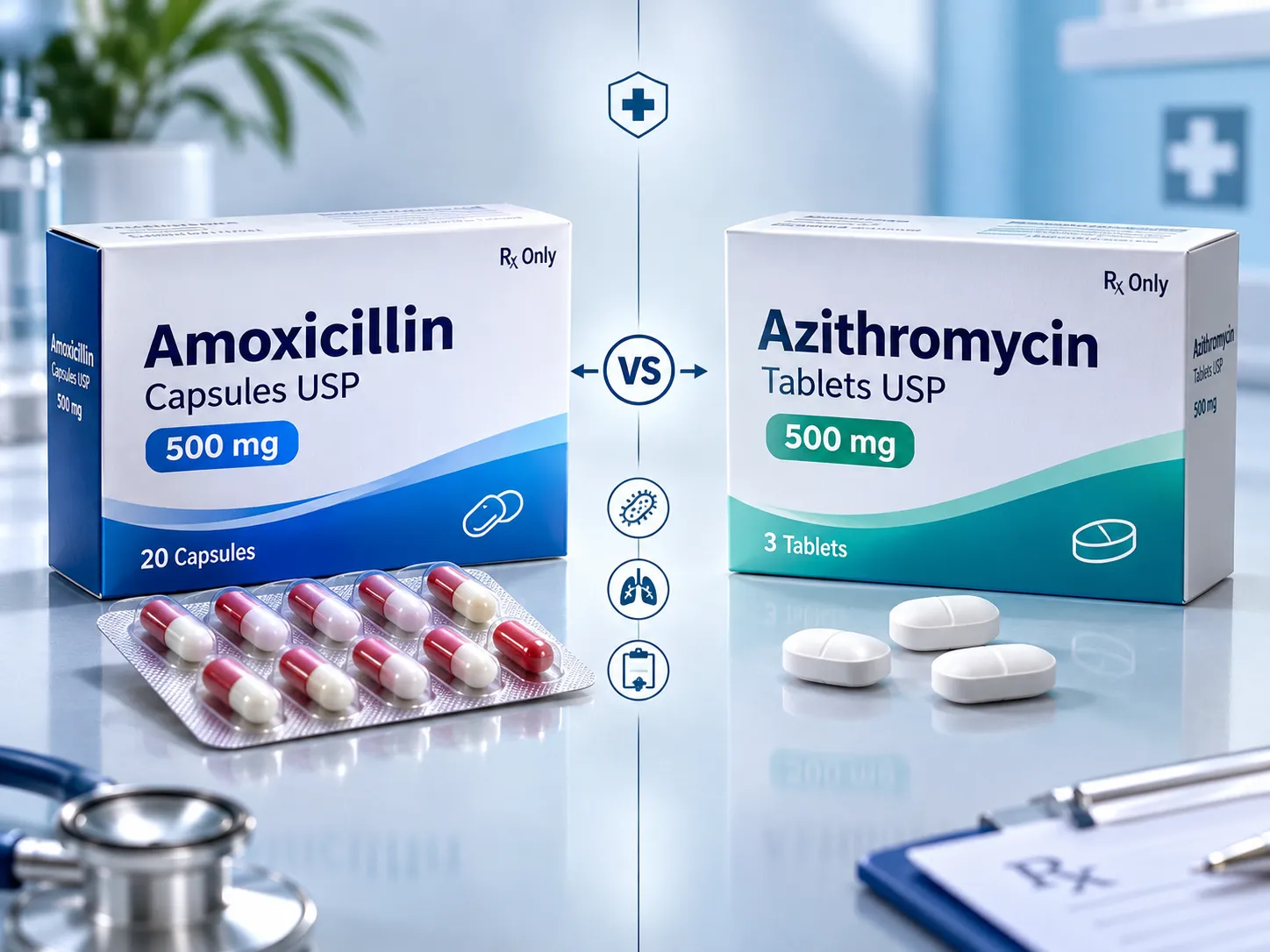
Amoxicillin vs Azithromycin: What’s the Difference?
The comparison of amoxicillin vs azithromycin focuses mostly on two different antibiotics that belong to different groups. These drugs can be helpful in the treatment of specific types of infections.
In order to choose one of these drugs as the right antibiotic, it is necessary to consider a number of issues, such as the bacteria type, infection location, allergy history, antibiotic resistance, health state, and other drugs used by the patient.
None of these two antibiotics can be considered as more powerful in all situations. In fact, any antibiotic starts working in case when the bacteria causing the infection are susceptible to the drug.
Key Characteristics of Amoxicillin and Azithromycin
Both medications are antibiotics, but the azithromycin vs amoxicillin comparison involves differences in drug class, dosing schedules, bacterial coverage, and potential adverse effects.
|
Feature |
Amoxicillin |
Azithromycin |
|
Class of drugs |
Penicillin antibiotic |
Macrolide antibiotic |
|
Common uses |
Some bacterial infections, such as ear infections, throat infections, some lung and other infections |
Selection of bacterial infections |
|
Treatment duration |
Depending on infection, treatment lasts a couple of days or longer |
Short-term therapy, in many cases |
|
Frequency of taking |
The medication is taken twice or three times a day, depending on a prescription |
The drug is usually taken once per day |
|
Common side effects |
Nausea, diarrhea, rash, stomach discomfort |
Diarrhea, nausea, abdominal pain, vomiting |
|
Allergic reactions that are possible |
True penicillin allergy, sometimes |
Allergy to a group of drugs containing macrolides |
|
Other drug-related interactions |
Many |
Drug interactions with heart medicines, prolongation of QT interval |
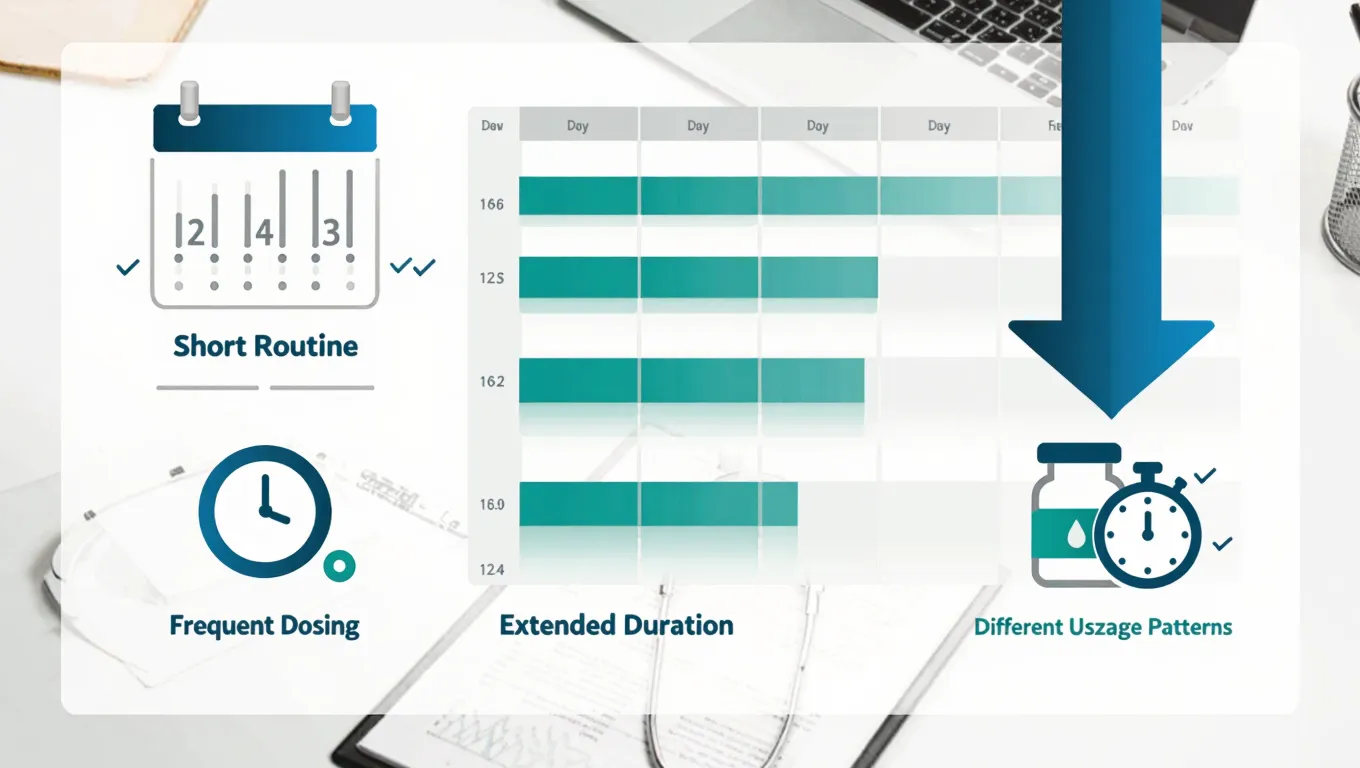
The treatment regimens greatly vary in these two types of antibiotics; therefore, they cannot be compared in terms of frequency and duration. The following examples of schedules are not the criteria for choosing the dose and duration of treatment without consultation of a doctor.
Amoxicillin vs Azithromycin: Differences in the Modes of Action
Both antibiotics stop bacterial infections progression. Nevertheless, they use different mechanisms to fight against bacteria.
The amoxicillin and azithromycin difference includes the way each medication acts on susceptible bacteria, with amoxicillin affecting bacterial cell wall formation and azithromycin affecting bacterial protein production.
In fact, this is a factor that affects the choice of one of the two drugs since some types of bacteria can be resistant to one of the drugs.
Mechanism of Action of Amoxicillin
This drug belongs to a group of penicillin antibiotics.
Amoxicillin inhibits the formation of bacterial cell walls that protect bacteria. In case of failure to form cell walls, bacteria become more susceptible to amoxicillin and cannot survive.
This antibiotic is usually prescribed to treat bacterial infections caused by bacteria that respond to penicillin antibiotics. According to the labeling, amoxicillin is a penicillin-class antibacterial drug prescribed for treating infections caused by susceptible bacteria.
The doctor decides whether to use amoxicillin or an amoxicillin-containing drug to treat various respiratory, ear, throat, dental, skin and other infections.
Mode of Action of Azithromycin
Azithromycin belongs to another group of antibiotics – macrolide drugs.
This antibiotic stops protein formation in bacteria that leads to inability of bacteria to grow and spread.
Azithromycin can be used to fight against certain respiratory infections and for other bacterial infections caused by those types of bacteria that cannot be treated by standard penicillin-resistant antibiotics.
Differences in modes of action do not mean that one drug is always better to use for infections than another. In fact, the most important issue here is susceptibility of bacteria to this or that antibiotic.
Specific Infections Treated by Amoxicillin vs Azithromycin
Comparison of amoxicillin and azithromycin is possible in terms of infections for which this drug can be used.
The amoxicillin vs azithromycin for bacterial infection comparison depends on the bacteria responsible for the illness, their antibiotic susceptibility, and the patient's medical circumstances.
Amoxicillin can be applied for treatment of certain bacterial infections such as pneumonia. In addition, it can be included into H. pylori therapy.
Usually in daily practice, amoxicillin can be prescribed for certain infections that cause infections of the ear, nasal sinuses, throat, teeth, etc.
Azithromycin can be used to treat certain respiratory and other bacterial infections that can respond to the drug or when it is not possible to use another antibiotic.
Neither of these two antibiotics treats viruses. Therefore, amoxicillin and azithromycin do not treat such infections as common cold and influenza since they are viral infections and antibiotic therapy is ineffective in such cases.
Current prescribing information states that azithromycin usage without a proven or suspected bacterial infection is ineffective and causes resistance of bacteria to this antibiotic.
Which One Is Better to Treat Sinus Infection
First, it should be understood whether any antibiotic treatment is necessary in case of sinusitis or not.
The amoxicillin vs azithromycin for sinus infection comparison is relevant only when a bacterial sinus infection has been diagnosed and antibiotic treatment is appropriate.
In fact, most of cases of rhinosinusitis (sinus infection) are not bacterial; 90% to 98% are viral, according to the CDC guideline on diagnosis and treatment of sinus infections.
When the bacterial acute rhinosinusitis is diagnosed in adults, according to the CDC guideline, one of the preferred first-line therapies is amoxicillin or amoxicillin-clavulanate in some cases.
Azithromycin is not usually recommended for the usual bacterial sinus infections because the rate of resistance to this antibiotic among streptococci is too high. The resistance level in this case is around 40%, according to the CDC guideline.
Therefore, when it comes to the comparison of amoxicillin vs azithromycin for treatment of the sinus infection, in case when the antibiotic is really required, an amoxicillin-based regimen is often used.
However, it should not be thought that every patient suffering from sinus pressure should get amoxicillin. There are several factors that need to be analyzed.
Amoxicillin vs Azithromycin for Strep Throat
In case of group A strep throat, the best antibiotic treatments are penicillin and amoxicillin.
For patients comparing amoxicillin vs azithromycin for strep throat, amoxicillin is generally preferred when the patient can safely take penicillin-class antibiotics.
According to the CDC guideline on group A strep throat diagnosis and management, penicillin and amoxicillin should be used as first-line treatments for group A streptococcal pharyngitis. There is no documentation of clinical resistance of these bacteria to penicillin and cephalosporins.
Azithromycin can serve as an alternative antibiotic in case when a patient suffers from true allergy to penicillin.
Nevertheless, resistance of bacteria can be a critical factor in case when the drug is selected. In this situation, the CDC guideline states that azithromycin is resistant to this antibiotic.
Therefore, in case of comparison of amoxicillin and azithromycin for strep throat, usually, it is better to choose amoxicillin if it is possible for the patient.
Which Antibiotic Is Better to Treat Chest/Respiratory Infections
"Chest infection" term covers many different infections including acute bronchitis, pneumonia, and other respiratory illnesses.
The amoxicillin vs azithromycin for respiratory infection comparison must account for the type of respiratory illness and whether the suspected bacteria are susceptible to the selected antibiotic.
The majority of respiratory infections are caused by viruses and cannot be treated by using either amoxicillin or azithromycin.
The selection of the antibiotic for treating suspected bacterial pneumonia or other bacterial respiratory infection depends on several factors, including:
- The likely bacteria type
- Patient's age and their health state
- The severity of the disease
- Local antibiotic resistance patterns
- History of taking antibiotics recently
- The patient's allergy history
The type of infection and its severity can determine whether it is possible to use azithromycin or not.
In some cases, a combination of two drugs can be prescribed in certain pneumonia treatment plans.
Never try to combine two left-over antibiotics for your treatment.
When Do Amoxicillin and Azithromycin Start Working
Both drugs start fighting bacteria from the first doses.
For patients asking which works faster amoxicillin or azithromycin, there is no universally faster option because the response depends on the infection and the susceptibility of the bacteria.
However, when comparing how fast works amoxicillin or azithromycin, it is not necessary to use this criterion as the main one.
Even in case when the antibiotic is chosen right, improvement of the symptoms usually requires a couple of days. Such symptoms as fever, cough, sore throat, pain in sinuses and fatigue will not go away just in a few minutes after taking antibiotics.
In case when the symptoms continue worsening or fail to improve in a period that was mentioned by your doctor in their prescription, there are several possibilities:
- The infection is viral
- The infection is resistant to the antibiotic you are taking
- The disease you have is not the disease that was supposed to be treated by you
- Complications have developed
- The treatment you are following is incorrect
Do not try to use some other antibiotic if you see no improvements in a couple of days.
How Long Do Amoxicillin and Azithromycin Need to Be Used
There is a difference in the length of treatment regimens.
Amoxicillin is taken two or three times per day and treatment duration depends on the type of infection that is being treated.
For instance, the treatment of strep throat is recommended to be done using oral amoxicillin for 10 days, according to the CDC recommendations.
On the contrary, the azithromycin regimen often includes shorter treatment course because the effect of the medication is retained in body tissues for quite a long period of time.
However, it does not mean that the short regimen is weaker or vice versa.
The amoxicillin vs azithromycin dosage comparison should consider differences in treatment frequency, duration, and the specific infection being treated.
Amoxicillin vs azithromycin dosage and treatment duration should be adjusted for each particular infection and the regimen should not be followed based on a prescription for other infection.
What Antibiotic Side Effects Are More Common
Both can cause side effects related to digestive system.
The amoxicillin vs azithromycin side effects comparison includes gastrointestinal problems with either drug, along with differences in allergic reactions and heart rhythm-related warnings.
The common side effects in case of taking antibiotics include:
- Nausea
- Diarrhea
- Discomfort in abdomen
- Vomiting
- Rash.
In the current azithromycin product labeling, it is stated that diarrhea, nausea, abdominal pain and vomiting belong to the most common side effects of this drug.
Amoxicillin can also cause stomach-related side effects, including gastrointestinal discomfort. Moreover, this drug can lead to rash.
However, it is important to speak about differences, which can be related to rare side effects that are more severe.
Severe allergic reactions can occur due to amoxicillin if the patient suffers from penicillin allergy.
QT prolongation and torsades de pointes are also possible adverse reactions to azithromycin.
These reactions are dangerous for patients who have existing heart rhythm disorders, electrolyte imbalances and other heart-related disorders.
The same situation can happen to the person if they take other medicines that can increase the QT-interval.
These two types of antibiotics can be the causes of Clostridioides difficile-related diarrhea.
Can Patients with Penicillin Allergy Take Amoxicillin?
It is obvious that people with penicillin allergy should not use amoxicillin.
However, "penicillin allergy" can mean very different things.
The history of the allergy should include such manifestations as difficulty breathing, facial or throat swelling, severe hives, anaphylaxis, severe blistering reactions.
You need to tell your physician about your allergy history in detail.
Do not try to use some left-over amoxicillin to test your allergy to this medication.
Sometimes allergy testing is able to help you to find out whether you have true penicillin allergy.
Does Azithromycin Have Any Important Drug Interactions?
Yes, azithromycin interacts with other drugs.
Moreover, the heart rhythm can become abnormal when a person takes this drug, especially when he/she suffers from any heart-related disorders.
The current product labeling states that this medicine can cause QT prolongation and serious arrhythmias in people with QT prolongation, torsades de pointes, specific heart problems, and other medicines that are prolonging QT intervals.
Some other drugs, such as warfarin, can have interaction with azithromycin.
This is why it is so important for you to let your pharmacist know about all medicines that you are taking, including prescription drugs, OTC products, and dietary supplements.
Are Amoxicillin and Azithromycin Used Together
Sometimes, these two drugs can be used together, but only if a doctor prescribed such regimen.
For patients asking can you take amoxicillin and azithromycin together, the combination may be appropriate for certain diagnosed infections, but it should never be started without a healthcare professional's prescription.
Nevertheless, in this situation, there are some specific clinical indications for such combined treatment.
This does not mean that taking these two drugs together will speed up your recovery from a common infection.
Taking additional unnecessary antibiotics can:
- cause additional side effects
- increase diarrhea or other stomach problems
- make the drug schedule more difficult
- select more bacteria that are resistant to this antibiotic
Do not use any left-over azithromycin together with an amoxicillin or vice versa.
Which One Is Stronger: Amoxicillin or Azithromycin?
Neither of these antibiotics is always more effective.
For those wondering which is stronger amoxicillin or azithromycin, neither antibiotic is universally stronger, because the appropriate choice depends on the type of bacteria and its susceptibility.
Comparing strength of these two antibiotics is like comparing keys in terms of their ability to open locks. The antibiotic must match bacteria causing infection.
Amoxicillin is very effective against bacteria that are susceptible to penicillin-type drugs.
At the same time, azithromycin can be more appropriate for certain types of bacteria or other specific circumstances.
The amoxicillin vs azithromycin effectiveness comparison should therefore focus on the diagnosed infection, bacterial susceptibility, and recommended treatment guidelines rather than assuming that one antibiotic is always more effective.
The right antibiotic will be that one that targets the likely bacteria while considering other issues, such as the history of the patient's allergy, interaction with other drugs and others.
Why It Is Necessary to Think about Antibiotic Resistance When Choosing between Them
Resistance to antibiotics is the factor that changes everything in the selection of a drug for the infection.
Bacteria can become resistant to certain types of drugs, so they cannot be stopped with the antibiotic that had been working before.
Resistance can be crucial especially for azithromycin.
In case of sinus infections, according to CDC recommendation, it is not recommended to use macrolide regularly because of pneumococcal resistance to this antibiotic.
In case of group A streptococcal pharyngitis, resistance of bacteria to azithromycin changes from area to area and depends on time, while no resistance to penicillin has been found for these bacteria.
Therefore, it is possible that your physician will not prescribe you the same antibiotic "that worked last time".
Usage of the right antibiotic can be beneficial for you personally and for the efforts to reduce antibiotic resistance.
When to Consult Your Pharmacist or Healthcare Provider
Contact your healthcare professional in case when the symptoms are becoming worse or they are not improving as you were expected.
Moreover, in case of occurrence of such symptoms as persistent vomiting, diarrhea, spreading rash, or side effects that prevent you from continuing the therapy, consult your physician.
You should contact your pharmacist or physician urgently in case when you experience:
- Difficulty breathing
- Swelling of face, lips, tongue, and throat
- Severe or blistering rash
- Fainting
- Fast or abnormal heart beat
- Persistent or severe diarrhea
- Severe weakness or dehydration.
Such heart-related side effects as palpitations, fainting, and abnormal heartbeat that appeared in case of azithromycin therapy should be consulted with a doctor quickly because of its known heart risks related to QT interval prolongation.
If your physician prescribed you azithromycin or amoxicillin, Sanford Pharmacy can help in filling this prescription and answering your questions related to it.
Choice and changing of antibiotics should be decided by the doctor treating your infection.
FAQ
Is azithromycin stronger than amoxicillin?
No antibiotic is stronger in all cases.
In fact, the better drug is the one that acts better against the bacteria causing the infection and this bacterium is susceptible to the drug.
Which antibiotic is better for the sinus infection: azithromycin or amoxicillin?
For acute bacterial sinusitis, according to the current CDC guideline, azithromycin or amoxicillin/clavulanate should be used preferentially.
On the other hand, azithromycin is not recommended in such infections because of the high rates of resistance of streptococci to this drug.
Can azithromycin be used instead of amoxicillin in case of true penicillin allergy?
Sometimes. Azithromycin is one of alternative treatment options for a number of infections in people unable to take penicillin antibiotic, including strep throat.
The right alternative depends on the infection and allergy history.
Which antibiotic works faster: azithromycin or amoxicillin?
Both antibiotics start working immediately after the first doses if the bacteria are susceptible to the drug.
Improvement of your symptoms often requires a couple of days.
Which antibiotic causes more stomach problems?
Both antibiotics can have side effects affecting your digestive system.
The azithromycin common adverse effects include diarrhea, nausea, abdominal pain, and vomiting. The amoxicillin also causes diarrhea, nausea and stomach discomfort.
Individual tolerance to these two drugs may differ.
Can I switch from amoxicillin to azithromycin because I see no improvement?
Do not change your antibiotic alone.
No improvement does not mean that it is necessary to prescribe another antibiotic but the infection needs re-evaluation.
Your healthcare professional is able to change the type of the antibiotic if it is needed.
Do I have to finish the course of treatment completely for azithromycin or amoxicillin?
Always take your medication during the whole time recommended by your healthcare professional.
Stop taking antibiotics only when it is prescribed to you, never stop the course, extend it, save tablets for another use, or repeat any antibiotic course on your own.
Different infections require different duration of treatment; therefore, it is impossible to use one duration of treatment for all cases of using amoxicillin or azithromycin.
Medical References:
MedlinePlus – Amoxicillin Drug Information
https://medlineplus.gov/druginfo/meds/a685001.html
MedlinePlus – Azithromycin Drug Information
https://medlineplus.gov/druginfo/meds/a697037.html
CDC – Outpatient Clinical Care for Adults: Antibiotic Prescribing and Use
https://www.cdc.gov/antibiotic-use/hcp/clinical-care/adult-outpatient.html
https://www.cdc.gov/group-a-strep/hcp/clinical-guidance/strep-throat.html
Categories



How Long Does Tamsulosin Take to Work?
 Emma

Amoxicillin vs Azithromycin: What’s the Difference?
Emma

How Long Does Montelukast Take to Work?
Emma

Fluoxetine Side Effects: What to Expect
Emma
When Is the Best Time to Take Hydrochlorothiazide?
Emma