Side Effects Associated with Fluoxetine
What Side Effects Would You Experience on Fluoxetine?
Fluoxetine side effects happen to many patients when they begin taking the drug. They include nausea, headache, nervousness, changes in sleep, sweating, diarrhea, fatigue, and various sexual side effects.
The vast majority of side effects subside when the person gets used to treatment. However, any severe or persistent side effects must be mentioned to a healthcare professional.
Fluoxetine, which is also known under the trade name of Prozac, is a selective serotonin reuptake inhibitor. It is used to treat depression, obsessive-compulsive disorder, panic disorder, and bulimia.
There are a lot of side effects associated with fluoxetine that are typical for the class and unique to it, and the effect the drug produces varies from one individual to another. Some people feel only moderate effects after fluoxetine, while others need a longer time to adjust to it.
The term prozac side effects refer to adverse reactions associated with fluoxetine, the active ingredient in Prozac.
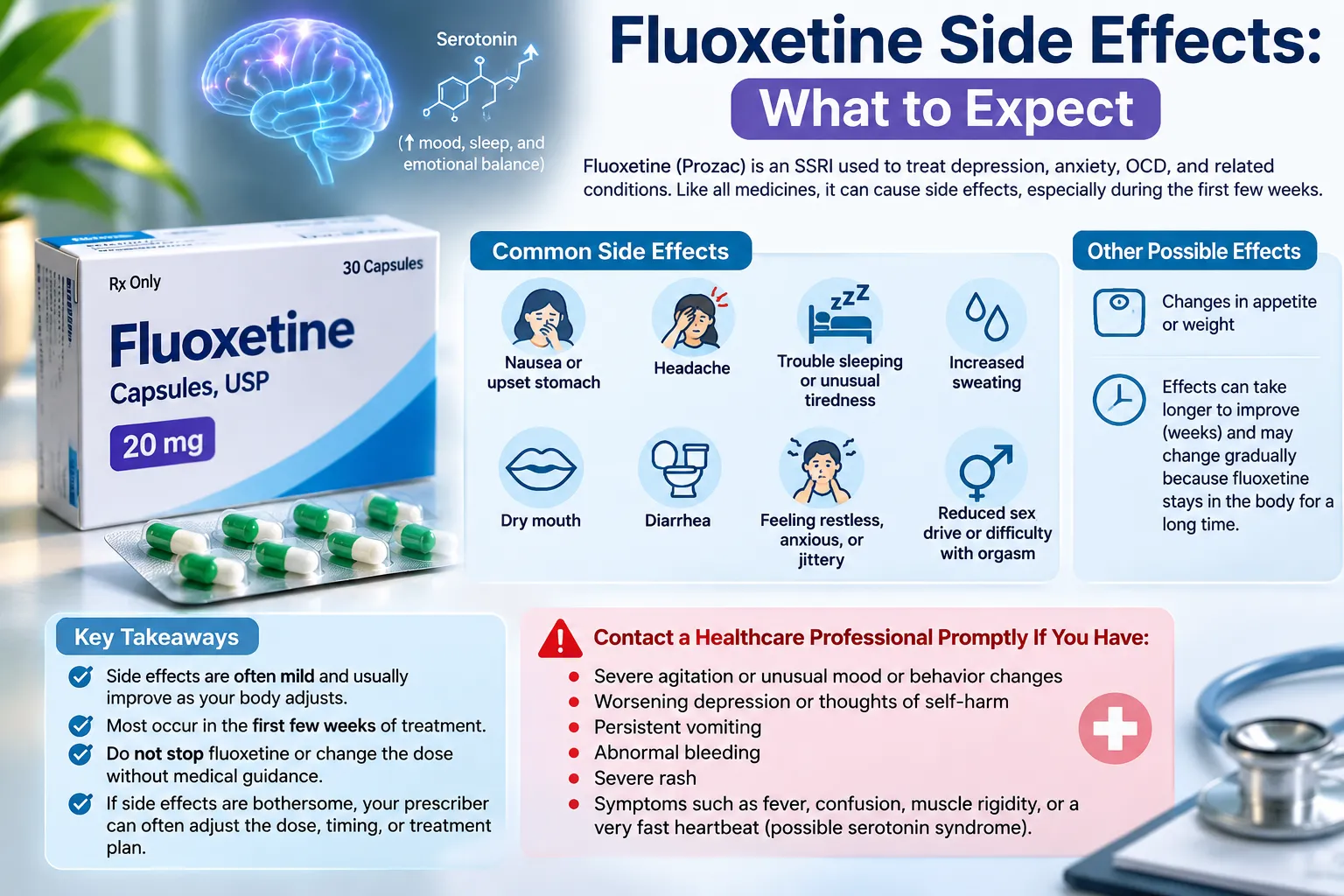
Common Side Effects of Fluoxetine
The common side effects of fluoxetine involve digestive problems, sleep issues, fatigue, and nervous system problems.
Some side effects related to fluoxetine are:
- Nausea, stomach pain
- Diarrhea, indigestion
- Headache
- Dry mouth
- Excessive sweating
- Nervousness, anxiety
- Insomnia, sleep changes
- Fatigue, weakness
- Tremors
- Loss of appetite
If the experienced symptoms are minor, they can be observed for several days. If the symptoms are disturbing and preventing you from eating, working or sleeping properly, consult your pharmacist or prescriber.
Which Fluoxetine Side Effects Would You Experience When Taking the Drug for a Week?
Some side effects of Prozac become apparent shortly after the patient starts taking the drug.
For people asking what side effects should I expect when starting fluoxetine, early reactions may include nausea, headache, sleep changes, nervousness, and appetite changes.
In the first days or weeks, the patient may notice nausea, nervousness, slight restlessness, headache, appetite changes, or insomnia. Those side effects can occur before the drug is able to treat the disease effectively.
That difference between side effects and effectiveness may be frustrating since side effects appear even before a person notices any positive impact of the medicine on his/her mental health.
The therapeutic effect of fluoxetine usually appears gradually and not instantly after just the few doses. That is why if side effects seem to be bothersome in the first days of taking Prozac, it does not have to mean that this drug will remain the same during the whole treatment.
If side effects are minor, the doctor usually suggests waiting and watching for several days, and if they are troublesome or become severe, they need to be consulted.
Will Fluoxetine Influence My Sleep?
Yes. The insomnia induced by the drug can be developed, but the effect fluoxetine exerts on sleep differs from one patient to another.
Fluoxetine insomnia may occur during treatment, particularly when patients experience increased wakefulness or restlessness.
Some people notice that they become more awake and attentive, whereas others find themselves sleepy.
Sleep Issues Related to Fluoxetine
Inability to fall asleep and stay asleep at night is among the typical side effects that are related to fluoxetine.
Some people state that they experience more energy, wakefulness or restlessness after having a dose of fluoxetine.
In that case, the doctor or pharmacist can suggest the adjustment of the time when a person takes the medication.
For the person whose fluoxetine produces more energy and wakefulness after each dose, morning administration is preferred to the evening one.
You should not change the time of taking the medicine repeatedly, but other factors like caffeine, work, stress, and other medications can also influence the quality of your sleep.
Tiredness or Drowsiness
Another reaction is also possible.
The person taking the drug may become weaker and sleepier.
Be careful with driving and other activities that require attention until you understand the effect of fluoxetine.
Any prolonged tiredness should be reported to your healthcare professional, especially if it is severe or accompanied by other symptoms.
Can Fluoxetine Cause Anxiety or Restlessness Initially?
Yes. Some people may feel nervousness, restlessness, or increased anxiety after the start of the use of fluoxetine.
For patients wondering can fluoxetine cause anxiety when you first start taking it, increased nervousness or restlessness can occur during the initial treatment period and should be monitored.
Fluoxetine labeling contains anxiety and insomnia as one of the known negative effects and potential adverse reaction of the drug.
These feelings may improve after the patient adjusts to treatment, but they may also occur after the dose change.
At the same time, there is the significant difference between the feeling of mild nervousness and the one that is characterized by severe restlessness.
Contact your healthcare provider in case you experience intense restlessness, inability to stay on the spot, rapidly growing anxiety, changes in behavior, and any worsening after starting Prozac treatment.
Emergence of new or intensified suicidal thoughts requires urgent attention, especially at the early stage of taking antidepressants or after the dosage change.
The fluoxetine labeling currently holds the boxed warning about increasing the risk of suicide in children, adolescents, and young adults taking antidepressants.
Does Fluoxetine Cause Changes in Appetite or Weight?
It is possible.
Fluoxetine may lead to appetite loss and weight loss in some cases.
Current labeling lists altered appetite and changes in the body weight as the side effects of fluoxetine.
Early nausea, which may occur in the first few days, may also decrease appetite temporarily.
The long-term weight changes are less predictable. Some patients retain their initial weight; some become thinner or lose the weight. Other patients may experience gaining weight, caused by the changes in appetite, improvements in depression or other factors.
So, does fluoxetine cause weight gain or weight loss? Both weight patterns can be noticed. None of them must be considered the inevitable side effect of the drug.
Any major or unexpected weight changes are supposed to be discussed with your healthcare provider, especially if the changes are accompanied by a lack of appetite and weakness.
Fluoxetine Sexual Side Effects
Fluoxetine sexual side effects are important since patients can feel shy about them.
SSRI drugs cause problems with sexual function in both women and men. These side effects may include the following problems:
- Reduced sexual drive
- Problems with orgasms, especially with reaching orgasms
- Delay of the orgasms and ejaculation
The current Prozac labeling mentions that sexual dysfunction can be the side effect of SSRI medications and that clinicians should ask patients about such problems directly since patients tend to keep silent about the sexual side effects.
In case you feel some changes in your sexuality, do not stop taking the drug. Discuss the problem with your prescriber.
He/she can assess your dose, the impact of other drugs, your symptoms' patterns, and decide whether another strategy can be better.
Can Fluoxetine Cause Headaches or Problems with Digestion?
It can.
Headache and digestive problems belong to common side effects that happen to people under treatment with fluoxetine.
The symptoms can include nausea, diarrhea, heartburn, dry mouth, and other digestive problems, especially at the beginning of treatment.
Fluoxetine nausea is one of the digestive side effects that may develop when treatment begins.
If your mild nausea persists, you may reduce it by eating regularly and maintaining proper hydration. You should not do any big changes in your medication plan without your pharmacist's permission.
Your headaches may also disappear spontaneously within several days as the treatment goes.
Consult your physician in case you suffer from serious problems: vomiting leads to dehydration; diarrhea becomes more frequent or worse; you have any digestive issues; the headache becomes more painful or is accompanied by confusion, weakness or other alarming symptoms.
Duration of Fluoxetine Side Effects
There is no general timeline that can be applied for everybody.
For patients asking how long do fluoxetine side effects last, many early symptoms may improve within several days or weeks, although the duration differs between individuals.
Many initial side effects become less disturbing during several days or weeks since the patient adjusts to Prozac treatment. Nausea, headache, insomnia, sleep disturbance, and nervousness can become milder in that period.
However, some of the side effects may appear during the whole time of treatment.
The possibility of fluoxetine long term side effects should be discussed with the prescriber, particularly if sexual dysfunction, sleep problems, or other persistent symptoms affect daily life.
Some patients do not feel relieved from their sexual side effects and may want to complain about them. Moreover, fluoxetine has the relatively long half-life.
It means that the drug and its active metabolites stay in the patient's body for quite a long time, and the effect on blood level may be observed not immediately after the dose change.
Serious Fluoxetine Side Effects to Monitor
Most patients tolerate the use of fluoxetine without any serious reactions, but it is essential to know the symptoms to be careful.
Immediate medical attention is required in the case of the following symptoms:
- Severe agitation, confusion, fever, tremor or muscle stiffness
- Significant or unexpected bleeding or bruising
- Allergic reactions, for instance, swelling or difficulty breathing
- Epileptic seizure
- Symptoms of very low sodium (confusion, weakness, etc.)
- Appearance of new suicidal thoughts or changes in behavior
These serious fluoxetine adverse effects require prompt assessment rather than being treated as ordinary adjustment symptoms.
The fluoxetine labeling contains the warnings about the risks of serotonin syndrome, increased bleeding tendency, seizure, hyponatremia, allergic reaction, and suicidal tendencies.
Any sudden or severe symptoms must not be viewed as usual side effect.
What Is the Serotonin Syndrome?
Serotonin syndrome is the very rare but dangerous reaction due to excessive activity of serotonin in the nervous system.
Symptoms that should alarm you and prompt urgent medical intervention include the following:
- Agitation or confusion
- Sweating
- Increased pulse rate
- Fever
- Tremor
- Changes in muscle function (stiffness, twitches)
- Diarrhea or vomiting
- Bad coordination
It becomes likely to appear when several medicines or substances that affect serotonin are taken together.
Such substances may include other antidepressants and SSRI drugs, triptans (for migraines), tramadol, lithium, buspirone, opioids, amphetamines, and St. John's wort.
Serotonin syndrome may become life-threatening, so do not ignore it.
Which Medicines Can Amplify Fluoxetine Side Effects?
It is extremely important to watch out for any fluoxetine drug interactions while you are under fluoxetine treatment.
It can interact with several medicines, OTC drugs, and dietary supplements.
In particular attention may be taken:
- The drugs of antidepressant or other serotonergic groups
- Various medicines used for treating migraines
- Tramadol and some analgesics
- Lithium
- The herbal extract St. John's wort
- Blood thinners
- Aspirin
- The NSAIDs (ibuprofen, naproxen)
The use of SSRIs (including fluoxetine) increases the risk of bleeding, and the combination of this drug with aspirin, NSAIDs, warfarin or other medicines influencing the blood clotting increases this risk.
Never forget about OTC medications and supplements. Being "natural" does not mean absence of drug interactions.
Could You Stop Fluoxetine If You Have Any Side Effects?
Do not make any changes in your dose or administration regimen without asking your prescriber first.
Since fluoxetine has long half-life, it leaves your body slower than many other SSRI antidepressants. However, it does not mean that the sudden interruption of treatment with fluoxetine is good in all the cases.
According to the current prescription instructions, any changes in the fluoxetine dose or the discontinuation of Prozac treatment are recommended to be discussed with the prescriber.
If you stop using it abruptly, depression or another disorder can recur or become worse.
If the side effects appear to be bothersome, your prescriber will decide whether the dose needs to be adjusted, changed to the other administration, treated or replaced by other medicines.

How to Deal with Minor Fluoxetine Side Effects?
Several useful tricks may help you during the first period of taking the drug.
If you feel nauseous during the treatment with fluoxetine, eating frequently and smaller portions and maintaining hydration may reduce the severity of the side effect. In case dry mouth disturbs you, you can increase the water intake or chew the sugar-free gum.
If the problem with sleep is the most annoying side effect, the review of your caffeine intake and the time when you take Prozac can help you.
Keep the fluoxetine administration time fixed rather than change it frequently.
Never reduce your dose, take smaller amounts of the drug frequently or add dietary supplements without discussing drug interactions.
If you need to buy fluoxetine with prescription online, Sanford Pharmacy can help you with it.
When to Discuss Your Side Effects with Pharmacist or Healthcare Provider?
Consult your pharmacist or prescriber whenever side effects do not disappear, worsen, disturb you in your daily routine, or make you think about stopping taking fluoxetine.
The professional consultation is especially important in the following cases:
- Severe or intensifying restlessness
- Sleep disruption
- Continued nausea or diarrhea
- Sexual side effects
- Significant appetite and weight changes
- Bleeding and bruising
- Behavioral or mood changes
Call an ambulance or go to the nearest hospital in case you have any serious symptoms, including seizures, severe allergic reaction, serotonin syndrome, confusion, the risk of committing self-harm.
FAQs
What is the common side effect of fluoxetine?
There is no one side effect of Prozac that appears to all the patients.
Commonly described side effects are nausea, insomnia, nervousness or anxiety, diarrhea, tiredness, sweating, and sex problems.
For patients asking what are the most common side effects of prozac, the commonly reported reactions include digestive discomfort, sleep disturbances, nervousness, sweating, fatigue, and sexual dysfunction.
Would fluoxetine side effects get worse before getting better?
Some of them may seem more evident initially.
The side effects like nausea, restlessness, headaches, and disturbances of sleep may become less disturbing in several days of fluoxetine administration. The side effects that are severe or are getting worse need to be reviewed.
How long does fluoxetine cause nausea?
It depends on a patient, and there is no definite timeline.
Initially, most people find their nausea subsides after several days or weeks. If it is persistent, causes frequent vomiting, dehydration, or interferes with your nutrition, consult your healthcare provider.
Can fluoxetine make me more anxious initially?
Yes. In some cases, fluoxetine leads to increased restlessness or nervousness.
The severer agitation, anxiety, behavioral changes or symptoms need to be consulted to the prescriber immediately.
Can fluoxetine increase my energy or make tired?
In different ways it is possible.
Some patients feel tired or weak, others have insomnia, nervousness, or increased alertness as a result of fluoxetine action. Your response may influence the time when your prescriber recommends taking it.
Does fluoxetine lead to weight gain?
The drug affects weight, but weight gain is not the guaranteed effect.
Some patients feel their appetite loss or weight loss initially; in the long-run, the weight changes differ from one to another.
Are the sex side effects of fluoxetine permanent?
Sex side effects are possible in some patients throughout their Prozac treatment period. The current labeling considers low libido, inability to reach orgasm, erectile problems, and delayed/absent ejaculation to be possible fluoxetine side effects.
Do not stop fluoxetine on your own in case your side effects bother you; instead, consult your prescriber about them.
When should I worry about my fluoxetine side effects?
There is nothing terrible about mild symptoms like nausea, headache, sleep problems, nervousness.
For patients asking when should you worry about fluoxetine side effects, severe agitation, seizures, unusual bleeding, suicidal thoughts, or symptoms suggesting serotonin syndrome require urgent medical assessment.
Consult a healthcare professional about serious symptoms including seizures, severe allergic reaction, bleeding, confusion, symptoms of serotonin syndrome, new/sudden suicidal thoughts or attempts.
Managing Fluoxetine Side Effects Safely
Usually, the side effects of fluoxetine appear right after the patient begins taking it, but many of them are mild. In several days or weeks of treatment, they may become less troubling.
If you have persistent insomnia, restlessness, sexual dysfunction, or some other symptoms, discuss them with your prescriber.
Medical References:
MedlinePlus – Fluoxetine Drug Information
Fluoxetine: MedlinePlus Drug Information
https://www.accessdata.fda.gov/drugsatfda_docs/label/2023/018936%20s112lbl.pdf
Categories



How Long Does Tamsulosin Take to Work?
 Emma

Amoxicillin vs Azithromycin: What’s the Difference?
Emma

How Long Does Montelukast Take to Work?
Emma

Fluoxetine Side Effects: What to Expect
Emma

When Is the Best Time to Take Hydrochlorothiazide?
Emma