How lomustine works in treating cancers lies in its ability to damage the DNA structures in cancerous tissues. The medicine prevents replication and multiplication of cancer cells. The oral chemotherapy belongs to the class of agents called nitrosoureas. These are alkylating agents, which is why lomustine is described as a lomustine alkylating agent.
Because lomustine penetrates into the brain tissue, oncologists may recommend using this cancer drug as an effective lomustine brain tumor treatment.
Effects of Lomustine Intake
Capsules are the form in which lomustine is available. After being absorbed, it is released into the bloodstream to penetrate the tissues of the body. The agent is lipophilic, so it passes biological membranes easily.
One significant property of lomustine is its ability to cross the blood-brain barrier. This physiological barrier limits penetration of some substances into brain. Lomustine can cross it more effectively than other agents used in chemotherapy, which makes possible the role of the lomustine brain tumor treatment.
The substance is metabolized by the organism, and its breakdown products demonstrate anti-cancer effect. Besides cancerous cells, the medicine may damage the healthy ones like cells of the bone marrow.
That is why the monitoring lasts several weeks after the dose administration. These processes help explain what happens after taking lomustine chemotherapy.
Mechanism of Action of Lomustine
How lomustine works on cancer cells implies more mechanisms of the impact. However, its main effect consists in damage to the material responsible for their development and division. This is the basis of the lomustine mechanism of action.
Interference with the Normal Structure of DNA
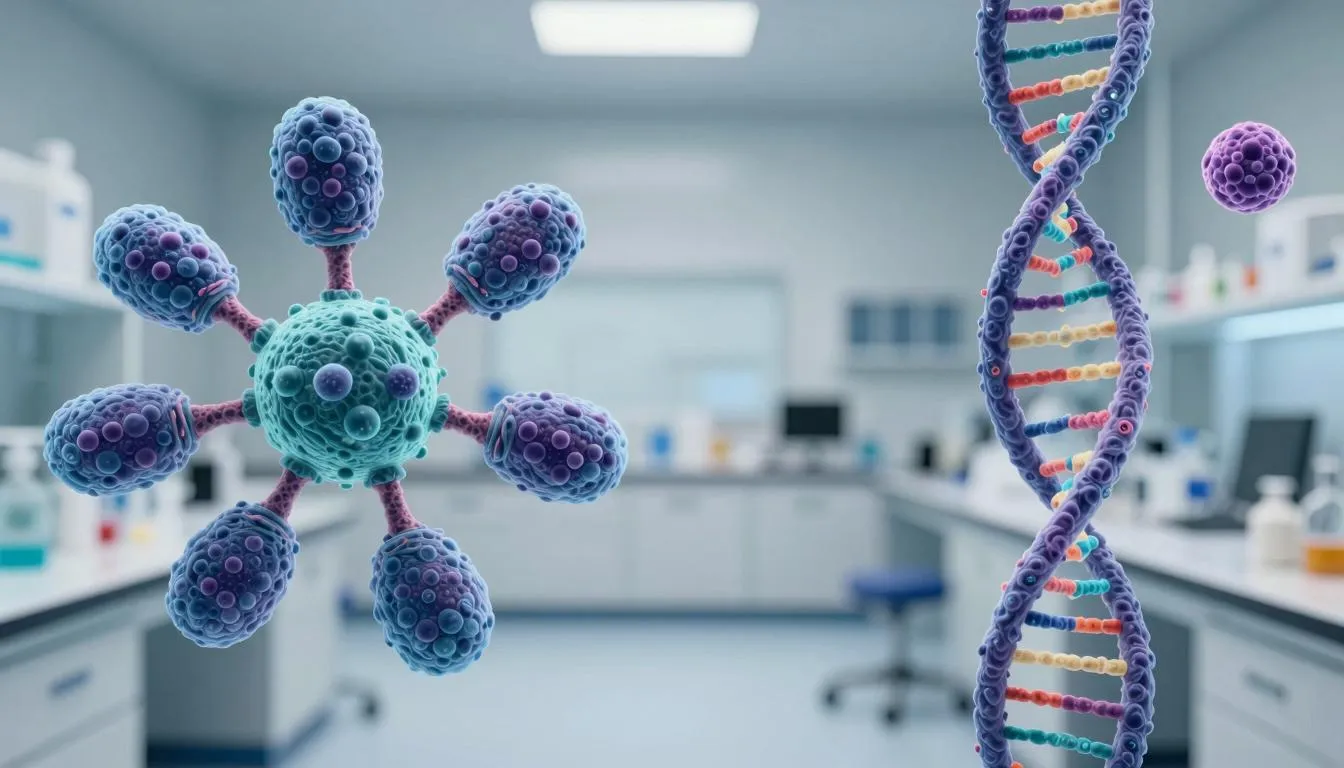
Being one of the lomustine alkylating agent analogs, the medicine alkylates parts of DNA structure. Besides this, lomustine creates cross-links in the DNA molecule.
Normally, it splits for duplication. Cross-linking interferes with this process significantly. Once the DNA cannot be repaired, the cell is unable to proceed to another stage of the cycle, and finally dies. This explains how lomustine kills cancer cells and how does lomustine work against cancer.
How lomustine works on cancer includes interference with DNA repairing enzymes, RNA synthesis, and RNA processing. In this way, the medicine interrupts many of instructions that cells follow.
Effect of Lomustine on the Division of Cells
Cancer cells usually divide more rapidly than normal cells, which increases the probability of their response to chemotherapy.
The effect of the lomustine on cancer cells, or lomustine effects on cancer cells, can prevent further division of cancerous cells, delay the growth of the tumor, or reduce its volume. However, chemotherapy cannot discriminate precisely between cancer cells and normal cells.
Healthy cells, that multiply quickly, can be damaged, as well. Bone marrow cells play a vital role in it because they produce white blood cells, red blood cells, and platelets.
This explains why lomustine chemotherapy causes infection risk, anemia, bruising, and bleeding.
The digestive tract tissues and hair follicles can be also damaged, which is responsible for such symptoms as nausea, mouth ulcers, loss of appetite, or alopecia.
Which Cancers May Be Treated with Lomustine?
The main lomustine uses include cancers like brain tumors and Hodgkin lymphoma in some circumstances. It is used both alone and with other anticancer treatments.
In case of brain cancer, lomustine is recommended after surgery and/or radiotherapy, or sometimes in combination with it. Lomustine chemotherapy is applicable for gliomas and other brain tumors, in case of some recurring forms of these diseases.
Its property of crossing the blood-brain barrier plays a decisive role in its use as a brain tumor treatment.
It also works similarly in other forms of cancer.
Sometimes there is a question how does lomustine work for brain tumors.The answer is that this is the same DNA-damaging action as in case of other cancers, though the agent can reach the brain cancer tissue due to the property of the blood-brain barrier to be crossed.
Lomustine may be used with other drugs in Hodgkin lymphoma when the former treatment does not give positive results.
In which circumstances will lomustine cancer treatment or lomustine chemotherapy be used? It depends on:
- cancer type and molecular structure
- the site of localization and spread of the disease
- former treatment procedures
- number of blood cells and functioning of organs
- overall condition of a person
- the advantages of therapy against risks
Lomustine Chemotherapy and Its Place in Therapy Plan
Receiving lomustine does not mean that each patient has the same disease. It must be used as a part of a comprehensive treatment program.
Why Lomustine Is Given in Widely Spaced Cycles
Different from daily chemotherapy drugs, lomustine is administrated once per a while of at least six weeks. Usually, it requires several capsules of different colors to constitute one prescription dose.
Wide spacing is needed due to the fact that the substance affects the number of blood cells several weeks after taking. In this case, a patient may still feel fine, but the number of blood cells may be already lowered.
Taking the next dose too soon can lead to severe or even lethal bone-marrow suppression. Patients should never try to take the medicine again because they think that the first dose was useless.
It is vital to check the prescription and to be sure that all the data about the capsule strength and total prescribed dose are correct before taking it.
When Does Lomustine Work?
There is no reliable data regarding lomustine work duration. Chemical reaction starts after absorption, conversion to active forms, and further actions, though a patient will not notice them immediately.
For those asking how long does lomustine take to work, symptoms usually begin to change very slowly, remain the same, or sometimes become worse for various other reasons. Side effects may be present not only if a medicine works but if it does not work.
How Do Doctors Know If Lomustine Works?
It is quite difficult to give the simple answer to how do doctors know if lomustine is working. There are several ways of estimation depending on the disease and cancer location.
For instance, in case of some cancers, oncologists evaluate:
- MRI, CT scan, and other imaging studies
- Changes in the cancer size or appearance
- Cancer symptoms
- Clinical examination
- Steroids use in case of brain tumors
- Laboratory tests and general state of a person
- The stability of the disease
How do doctors know if lomustine works in some cases when the disease stays steady? Stable disease sometimes can be considered an appropriate response, especially in those cases when it is enough to control the disease, rather than to get rid of it.
The interval between scans is different for various cancers.
Importance of the Proper Testing during Treatment
Delayed Suppression of Blood Cells Count
As mentioned above, lomustine can induce the bone-marrow suppression.
Decrease in the number of white blood cells and platelets occurs with the delay usually visible four to six weeks after the administration. The degree of bone-marrow suppression grows with repeated lomustine intakes.
White blood cells are involved in the fight against infections. Platelets contribute to normal blood clotting.
Red blood cells carry oxygen through the body. Deficiency of these substances can cause fever, increased risk of infections, unusual bleeding, bruising, feeling exhausted, weakness, or breathing problems.
The monitoring of blood-cell count is conducted before the treatment, as well as for several weeks after the administration of each dose.
If blood cells recover inadequately, the next dose can be postponed.
Other Tests Conducted during the Therapy Period
The oncology team may conduct liver and kidneys tests. These organs participate in processing of drugs and their breakdown products.
Lomustine can be also the reason of lung toxicity. It can develop several months or even years after treatment and be serious. Lung problems may be associated with lomustine cumulative dose, but it can appear also in people receiving relatively low doses.
Nausea, and vomiting are frequent symptoms appearing usually on the first day after treatment.
To relieve these symptoms, patients are recommended to use antiemetic drugs.
If there are appetite problems, mouth ulcers, fatigue, and weakness, it is necessary to inform the oncologist.
How to Use Lomustine Safely
The information about the mode of action of lomustine is important, but it is crucial to follow the prescriptions strictly.
To use the medicine safely, it is required to:
- check the date and total number of capsules
- take all prescribed capsules for one dose simultaneously
- take the medicine without breaking, opening, or chewing
- follow the recommendations of the oncology team regarding food intake
- wear gloves when touching capsules and avoid any skin contact
- never try to receive next dose sooner than prescribed
- report about missing doses
- do not try to take one dose again in case of vomiting
Every medication, vitamin, non-prescription drug, and herbal remedy taken by patients should be informed to the oncology team.
Also, any vaccination should be informed before its reception because chemotherapy weakens the immune system.
If lomustine is prescribed, Sanford Pharmacy is able to clarify how the dose consists of different capsule strengths.
Any changes in the amount of the drug or schedule should be done according to the advice of the oncology team.
Urgent Communication with Your Oncology Team
Contact the oncology team as soon as possible in case of:
- fever, chills, sore throat, or any signs of infection
- any signs of bruising, bleeding, or pinpoint red spots
- bloody or black stools
- vomiting blood or black matter (coffee-grounds like substance)
- severe or continuous vomiting
- coughing, wheezing, or any respiratory problems
- chest pain
- decrease in the quantity of urine or any edema
- yellow skin color or eyes
- sudden mental changes, blurred vision, uncoordinated movements
These conditions require immediate assistance of the oncologist.
FAQ Regarding Lomustine Action
Is there a possibility to cure cancer with lomustine?
Lomustine may have the effect of reducing tumor size or controlling the development of cancer, but the word cure cannot be used in connection with this chemotherapy agent.
How long lomustine stays in body?
The medicine is broken down rather quickly, but its active metabolism products have more long effects.
Why should patients undergo blood tests several weeks after lomustine intake?
The suppression of blood-cell production is delayed. Regular check helps to reveal changes in the number of white blood cells, platelets, and red blood cells before taking next dose.
Can lomustine be used along with other methods of cancer therapy?
Yes, this drug can be taken with other chemotherapy drugs or with surgery or radiation therapy plans. Their combination increases risk of side effects, which should be carefully controlled by the oncologists.
Medical References
DailyMed – Gleostine (Lomustine) Prescribing Information
https://dailymed.nlm.nih.gov/dailymed/search.cfm?query=lomustine
MedlinePlus – Lomustine Drug Information
https://medlineplus.gov/druginfo/meds/a682207.html
National Cancer Institute – Lomustine Drug Dictionary
https://www.cancer.gov/publications/dictionaries/cancer-drug/def/lomustine
National Cancer Institute – Lomustine Definition
https://www.cancer.gov/publications/dictionaries/cancer-terms/def/lomustine
This information is educational and does not replace advice from an oncologist or cancer care team.
Categories



How Long Does Tamsulosin Take to Work?
 Emma

Amoxicillin vs Azithromycin: What’s the Difference?
Emma

How Long Does Montelukast Take to Work?
Emma

Fluoxetine Side Effects: What to Expect
Emma
When Is the Best Time to Take Hydrochlorothiazide?
Emma