How long you can stay on capecitabine depends on the type of cancer that is treated, purpose of therapy, efficacy of treatment and tolerability of side effects. In some patients the treatment course lasts for a fixed period of months while in other who suffer from advanced cancer capecitabine may be taken indefinitely until the tumor grows again or capecitabine treatment becomes unsafe. There is no universal longest treatment course for all capecitabine users.
Why Capecitabine Treatment Duration Varies
Capecitabine is a chemotherapy tablet which is used to treat different types of cancer including certain breast, colorectal, rectal, stomach, esophageal and pancreatic cancers. The capecitabine tablets are transformed into fluorouracil, also known as 5-FU, in the body and inhibit production of components required for growing and division of cancerous cells.
There are multiple factors which play a critical role in the determination of the capecitabine treatment duration. The therapy may serve as a tool in the treatment of:
- Surgery • Radiation therapy performed on cancer
- Chemotherapy or another treatment used alone or together
- Reducing risk of cancer recurrence
- Controlling cancer that has advanced or metastasized
- Mitigating cancer symptoms
Duration of treatment is fixed for some cancer patients but unlimited for others. This explains the discrepancy in capecitabine treatment plans between people with the same treatment scheme. This also explains what determines the length of capecitabine treatment.
Common Capecitabine Treatment Schedules
Treatment Cycles
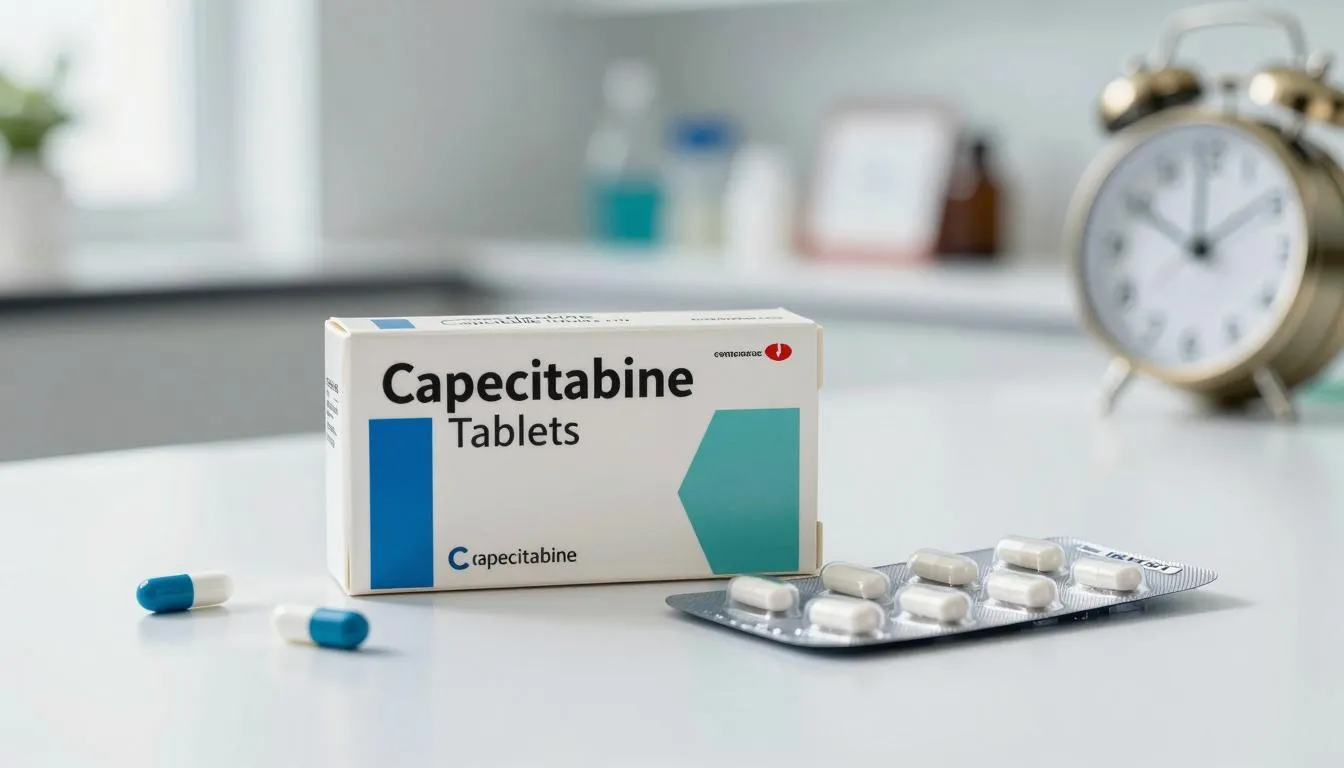
Capecitabine is typically used in capecitabine treatment cycles which consist of treatment days and rest periods which are necessary to allow recovery of healthy tissues.
One of the common capecitabine treatment schedule includes taking pills twice per day on 14 consecutive days followed by seven-day treatment-free interval. This therapy plan is usually called capecitabine 14 days on 7 days off.
This schedule is not the only option. Capecitabine may be taken on different days if it is administered concurrently with radiation or chemotherapy. Dose is determined according to the body surface area and may be adjusted according to kidney function, side effects, age, overall health status and other factors.
Each capecitabine patient should strictly follow the dosing schedule that has been individually designed by oncologists. Schedule retrieved from Internet may be unsuitable in the view of your oncologists.
Planned Courses After Surgery
Capecitabine therapy prescribed after the surgery usually has fixed number of cycles required for cancer prevention. Some colon cancer adjuvant therapy schemes involve as much as 8, 21-day cycles, i.e. six months of the capecitabine chemotherapy duration. There are several factors that are taken into account by doctors when the number of treatment cycles for particular cancer is chosen. If the laboratory results change abnormally or if the side effects are difficult to handle, oncologists modify the treatment scheme.
Taking prescribed amount of cycles of capecitabine is important. However, it is not always possible to take it without modifications. Medically supervised changes in the dose or treatment schedule are not indicative of the therapy failure.
Treatment for Advanced or Metastatic Cancer
The length of capecitabine chemotherapy for advanced cancer is unlimited. If the tumor stops growing and no side effects occur during capecitabine administration, it is possible to keep on taking it until new symptoms or scan results appear.
The concrete number of capecitabine cycles that one could undergo is difficult to estimate and depends on various factors. For patients wondering how many cycles of capecitabine can you have, some patients stop taking capecitabine after just a few courses since their tumors grow or the therapy becomes toxic while others receive it for considerably longer time.
Periodic assessment helps oncologists to decide whether the therapy is still safe. Unlimited use without periodic assessment would be unwise.
How Doctors Decide Whether to Continue Capecitabine
Some information which influences what determines capecitabine treatment duration is listed below. Decision to administer it is never made upon the sole basis of one result of lab testing or single symptom of the patient.
Doctors typically take into account the following factors:
- Size and dynamics of the tumor
- Changes in the intensity of cancer-related symptoms
- Blood cell counts
- Dynamics of kidney and liver functions
- Weight, hydration state, diet, overall health
- Side effect intensity and frequency
- Comorbid conditions and other medications
- Problems that patients want to solve by treatment
Scanning is performed periodically but not after every capecitabine cycle. Even the stable tumor can be viewed as a useful outcome in advanced cancer treatment since it shows that the therapy inhibits tumor progression.
How Long Do You Take Capecitabine for Breast Cancer?
How long do you take capecitabine for breast cancer depends on the situation in which it is administered. For instance, when it is prescribed after the earlier performed therapy, the oncologist prescribes a fixed number of cycles. The exact number varies according to characteristics of a certain cancer and its treatment scheme.
When it comes to advanced or metastatic breast cancer, capecitabine is typically prescribed until the disease grows or side effects become excessive. Xeloda treatment duration is similar since Xeloda is one of capecitabine trade names.
Each breast cancer patient should not try to establish whether the treatment course is normal comparing it with another patient's plan. Cancer subtype, previous treatments, organ function, treatment response and medications can influence treatment schedule.
Side Effects Which May Require Treatment Pause
Hand-Foot Syndrome
The hand-foot syndrome is one of the best-known capecitabine side effects. Initial symptoms may involve tingling, numbness, redness, tightness, irritation in the palms and soles. Severe hand-foot syndrome may be accompanied by pain, swelling, blisters and peeling.
Reporting such changes in time matters a lot since delays in capecitabine pause may result in longer treatment break. Oncologists would recommend pausing the therapy, decreasing the dose and skin-care techniques according to the severity of symptoms reported by the patient.
Diarrhea, Nausea, Mouth Sores
Diarrhea may be serious during capecitabine therapy especially if it results in dehydration or affects kidneys. Severe vomiting and painful mouth sores may be responsible for preventing the intake of food and water.
The patient should notify cancer care team regarding unexpected intensity of mentioned symptoms. They would usually offer supportive therapy, perform necessary blood tests and make capecitabine administration to stop. Do not take additional capecitabine doses without oncologist's permission after vomiting.
Blood Counts Changes and Other Concerns
Capecitabine may impair functioning of white blood cells, red blood cells and platelets resulting in infection risk increase, feeling weak, shortness of breath, bruises and bleeding.
Oncologists monitor kidney and liver functions of patients because their impairment may lead to adverse consequences of capecitabine use. Severe or unexpected toxicity may be related to the decreased activity of the enzyme called dihydropyrimidine dehydrogenase or DPD. Genetic testing may be offered before the therapy start according to your situation and medical practice.
Can Capecitabine Be Used for a Long Time?
Yes, capecitabine long-term use may be performed if it controls advanced cancer and it is tolerable. For people asking can capecitabine be taken long term, long term treatment does not imply that side effects should not be taken seriously. On the contrary, the capecitabine dose and schedule may change according to the changes in patient's tolerance to this medication.
Dose reduction may also be performed to achieve adequate therapeutic results. Lower dose is still able to mitigate cancer to some extent. Dose modification is a usual safety measure performed in the context of oncology treatment but not the sign of capecitabine ineffectiveness.
Can You Take a Break from Capecitabine Therapy?
Some breaks may be required by a patient due to appearance of side effects, infections, dehydration, surgery or laboratory results. Such breaks in capecitabine treatment may be stopped when the problem that caused it gets better.
Do not ever stop or restart this therapy independently. Even if there are no more complaints during a treatment break, it is up to the medical professional to determine if the patient may resume the capecitabine intake. Missed and doubled capecitabine doses may be dangerous.
Capecitabine is to be swallowed whole with water 30 minutes after meals following the prescribed schedule. Sanford Pharmacy may assist the capecitabine user with information regarding capecitabine prescription refills. However, treatment break, dose reduction or its length should be discussed with the oncologists.

When Does Capecitabine Treatment Need to Be Stopped?
For patients asking when should capecitabine treatment be stopped, the timing of the capecitabine therapy stopping depends on individual factors but may include cancer progression, excessive or repeated side effects, significant organ function changes, completion of fixed course and switching to other therapy.
Stopping capecitabine early does not mean in all the cases that patient got nothing useful from the treatment. Oncologist may decide to switch to another medicine, chemotherapy regimen, radiotherapy, surgery, supportive care or observation period.
When to Contact Your Cancer Care Team for Immediate Assistance
Seek immediate consultation in case of the following symptoms:
- Serious diarrhea
- Frequent vomiting
- Fever, chills
- Heart pains, breathing difficulties, fainting, irregular heartbeat
- Severe weakness, confusion, lack of coordination
- Peeling, painful and swollen hands and feet
- Mouth sores that prevent swallowing of food and water
- Uneven or bloody stool
Do not postpone consultation until the next visit if there are any concerning symptoms.
FAQs About Staying on Capecitabine
Is capecitabine taken long term?
It may be. For advanced cancer, the therapy is often continued as long as it mitigates the disease and there are no side effects. Capecitabine is less likely to be prescribed in a fixed number of treatment cycles.
What happens if I need to stop capecitabine treatment early?
Your oncologist would perform examination to find out the reasons for early termination of the treatment. Then he may propose to reduce the dose, change the scheme or switch to another medication.
Can low capecitabine dose be efficient?
Yes, dose reductions are common way of making treatment safer and more tolerable. Appropriate dose should be determined by the medical specialists.
How to determine whether capecitabine still helps?
Medics assess scan results, symptoms of cancer, physical examination and blood tests. The fact of good feeling is a good sign but it can not indicate the therapy success.
Should I take capecitabine exactly as prescribed by my doctors despite good feeling?
The question how long to take capecitabine should be determined by the prescribed treatment plan and oncology team rather than by improvement in how the patient feels.
Medical References
DailyMed – Capecitabine Tablets, Prescribing Information
https://dailymed.nlm.nih.gov/dailymed/drugInfo.cfm?setid=56441153-a1e5-4fdc-96d6-f21baa6b5fbe
DailyMed – Xeloda (Capecitabine), Prescribing Information
https://dailymed.nlm.nih.gov/dailymed/drugInfo.cfm?setid=e702d84d-7162-4751-bf37-d724cc7e45a5
MedlinePlus – Capecitabine Drug Information
https://medlineplus.gov/druginfo/meds/a699003.html
This information is educational and does not replace advice from your oncologist or cancer care team.
Categories



How Long Does Tamsulosin Take to Work?
 Emma

Amoxicillin vs Azithromycin: What’s the Difference?
Emma

How Long Does Montelukast Take to Work?
Emma

Fluoxetine Side Effects: What to Expect
Emma
When Is the Best Time to Take Hydrochlorothiazide?
Emma