
How Long to Take Minocycline for Acne?
 Destin
|
Destin
|
 02 Feb 2026
What Minocycline Is and Why It’s Used for Acne
How long to take minocycline for acne usually has a planned answer from the start. For most people, minocycline is taken for about 6 to 12 weeks. Some may stop closer to 6 weeks. Others may need the full 12 weeks. It is not meant to be taken long-term or without a clear plan.
Minocycline is an oral tetracycline antibiotic. Minocycline is prescribed for moderate to severe inflammatory acne. This type of acne is usually red, swollen, painful, or deep under the skin. It is not used for blackheads alone or very mild acne.
Doctors use minocycline to lower acne bacteria and calm inflammation, while other acne treatments are given time to work.
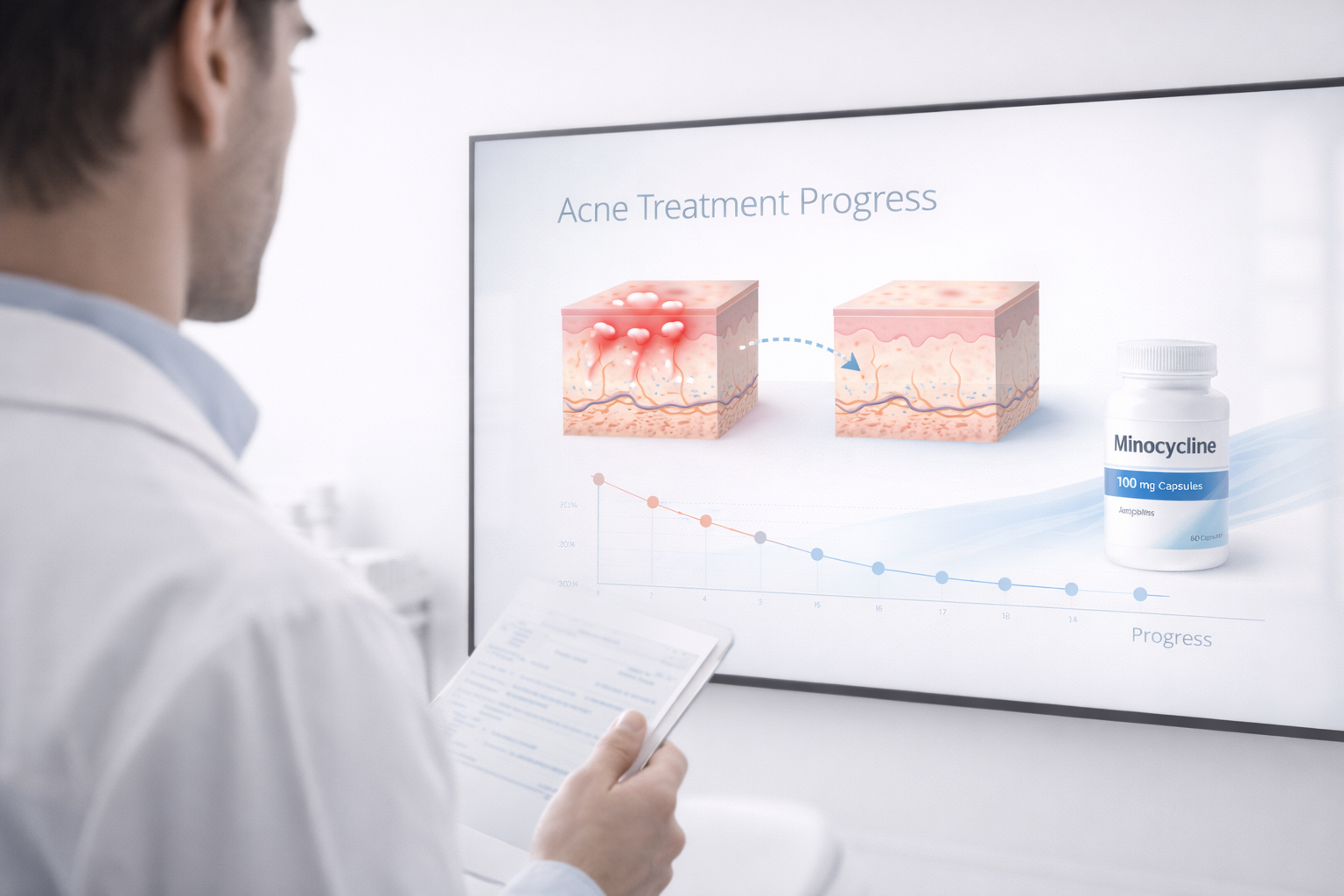
How Minocycline Works for Acne
Minocycline works by interfering with how bacteria function. Acne bacteria need to produce proteins to grow and survive. Minocycline blocks that process.
As bacteria activity drops:
-
inflammation starts to calm
-
redness becomes less noticeable
-
swollen pimples reduce in size
-
new inflamed breakouts slow down
Minocycline also has mild anti-inflammatory effects. This helps explain why painful acne often feels better before acne fully clears.
Because this process takes time, how long does minocycline take to work for acne is usually measured in weeks, not days.
Typical Length of Minocycline Treatment for Acne
Most prescriptions fall into a clear range. minocycline acne treatment duration is commonly 6 to 12 weeks.
General patterns include:
-
less severe inflammatory acne: around 6–8 weeks
-
more persistent acne: closer to 10–12 weeks
Doctors avoid extending treatment longer than necessary. how many months can you take minocycline for acne is usually answered as “a short course only.” Long-term antibiotic use is avoided when possible.
Minocycline is meant to help control acne, not permanently replace other treatments.
When Improvement Is Usually Seen
Minocycline does not work quickly. This is one of the most important things to understand.
Typical improvement timing:
-
first 2 weeks: little visible change
-
weeks 3–4: redness begins to reduce
-
weeks 6–8: fewer inflamed breakouts
-
weeks 9–12: more stable skin
This is the usual minocycline acne before and after timeline. Some people improve sooner. Others take longer. Both are normal.
Early improvement does not mean treatment is finished. Stopping early often causes acne to return.
Why Minocycline Is Not Used Long Term
Minocycline is not intended for long-term use. There are clear reasons for this.
Long-term use increases:
-
antibiotic resistance
-
risk of side effects
-
chance of skin or tooth discoloration
Because of this, when to stop minocycline for acne is usually decided before treatment even begins. The antibiotic is used as a temporary measure while topical treatments become effective.
Long-term acne control relies on non-antibiotic treatments.
Role of Topical Acne Treatments During Therapy
Minocycline is rarely prescribed alone. Topical treatments play a major role.
Common topical treatments include:
-
retinoids
-
benzoyl peroxide
-
medicated cleansers
Topicals work on clogged pores and skin turnover. These effects take longer to see. Minocycline helps control inflammation during that period.
Using topicals correctly reduces the need for extended antibiotic use and helps maintain results after stopping minocycline.
Factors That Affect How Long Treatment Lasts
Not everyone needs the same treatment length. minocycline course length for acne depends on several factors.
These include:
-
severity of acne
-
location of acne
-
how quickly inflammation responds
-
consistency with dosing
-
skincare routine
Missing doses can delay improvement and extend treatment. Taking the medication exactly as prescribed supports a shorter and safer course.
Minocycline How Long to See Results
People often ask minocycline how long to see results because acne improvement feels slow.
What many people experience:
-
early weeks feel unchanged
-
redness slowly reduces
-
breakouts become less frequent
-
skin feels calmer before it looks clearer
This delay is expected. Acne treatment works gradually.
What Happens After Stopping Minocycline
After minocycline is stopped, outcomes vary.
For many patients:
-
acne remains controlled with topical therapy
-
inflammation does not return
Some patients may see acne slowly return. This does not automatically mean restarting antibiotics. Often, topical treatments need adjustment instead.
Reassessment comes before restarting oral antibiotics.
Possible Side Effects During Treatment
Minocycline is generally tolerated, but side effects can occur.
Possible side effects include:
-
dizziness
-
nausea
-
stomach discomfort
-
sensitivity to light
With longer use, rare effects include:
-
skin discoloration
-
tooth discoloration
Any unusual symptoms should be reported promptly. This is another reason minocycline acne dosage duration is kept limited.
Why Consistency Matters
Minocycline works only when taken consistently.
Skipping doses:
-
reduces effectiveness
-
slows improvement
-
increases resistance risk
Taking more than prescribed does not improve results. Following the schedule exactly is important.
When to Follow Up or Seek Advice
Follow-up is important when using oral acne antibiotics.
Medical or pharmacy advice should be sought if:
-
no improvement after 8–12 weeks
-
acne worsens
-
significant side effects appear
Questions about minocycline for acne how long, stopping timelines, or transitioning to maintenance care can be discussed with Sanford Pharmacy.
Sanford Pharmacy can help with duration guidance, side effect management, and support for moving from antibiotics to long-term acne care.
Key Points to Remember
-
how long to take minocycline for acne is usually 6–12 weeks
-
early improvement may start around week 3 or 4
-
full benefit may take up to 12 weeks
-
not meant for long-term use
-
topical treatments are essential
Minocycline is a short-term tool. When used for the right length of time and paired with proper skincare, it helps calm inflammatory acne and supports long-term control without prolonged antibiotic exposure.
Categories


Can Recurrent Utis Be a Sign of Cancer
Jose

How Does Hydroxychloroquine Work?
Ali
Morning vs Night: Optimizing Blood Pressure Medication Timing
Arely
Natural Thyroid Hormone Therapy for Hypothyroidism Explained
Dulce

What Is Raloxifene Used For?
Abdullah
.webp)
.webp)
-(2).webp)
.webp)