
Signs of Developmental Delays in Infants!
 Justice
|
Justice
|
 18 Feb 2026
Understanding Developmental Milestones in Infants
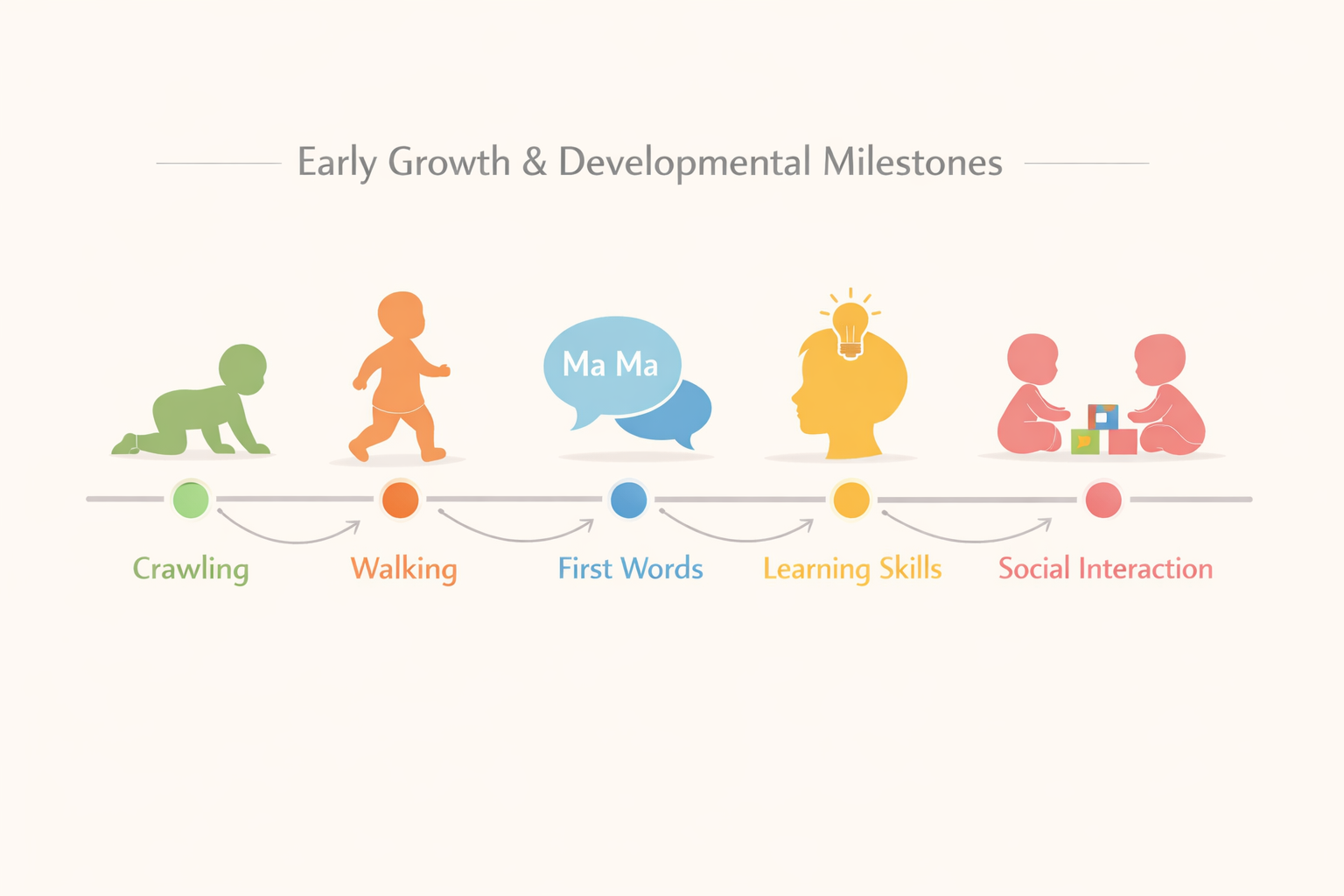
Developmental milestones are skills that most babies learn within a general age range. These include physical movements, sounds, social responses, and early problem-solving behaviors. Milestones are used as guides. They are not strict deadlines.
Babies reach milestones at different rates. One baby may roll early but speak later. Another may babble early but take longer to crawl. Small differences are common. This is normal variation.
A delay is different. An infant developmental milestones delay means a baby is not reaching expected skills within the typical age range, or progress seems to stop. When patterns continue over time, they may reflect developmental delay symptoms in babies rather than simple variation.
Parents often ask when to worry about baby development. The answer usually depends on patterns, not one single missed milestone.

Types of Developmental Areas to Monitor
Development is divided into several areas. Watching each area helps identify concerns early.
Gross motor skills involve large body movements:
- rolling
- sitting
- crawling
- standing
Fine motor skills involve hand coordination:
- grasping toys
- reaching
- transferring objects between hands
Language and communication include:
- cooing
- babbling
- responding to voices
- early gestures
Social and emotional development includes:
- smiling
- eye contact
- bonding
- responding to caregivers
Cognitive skills include:
- curiosity
- tracking objects
- exploring toys
Monitoring these areas helps identify early signs of developmental delay.
Early Signs of Gross Motor Delays
Motor skill delay in infants may appear in the first months.
Possible concerns include:
- poor head control by 3 to 4 months
- not rolling over by around 6 months
- very stiff or very floppy muscle tone
- consistently favoring one side of the body
Muscle tone that feels unusually tight or very loose can signal motor skill delay in infants. Consistent one-sided movement early in life may also require evaluation.
These may be considered red flags for developmental delay in infants when they persist.
Signs of Fine Motor Delays
Fine motor skills should gradually improve over the first year.
Possible signs include:
- not bringing hands to mouth by 3 to 4 months
- difficulty grasping objects by 5 to 6 months
- limited hand-to-hand transfer by 7 to 8 months
Babies normally show growing interest in holding and exploring objects. Lack of progress may suggest developmental delay symptoms in babies affecting motor coordination.
Signs of Language and Communication Delays
Communication begins early. Sounds and responses develop before real words.
Possible speech delay signs in babies include:
- no cooing or babbling by 4 to 6 months
- limited response to sounds
- not turning toward familiar voices
- no gestures such as pointing or waving by 9 to 12 months
Hearing issues can sometimes affect speech development. If a baby does not respond to sound or voice consistently, this should be evaluated.
These patterns may indicate early signs of developmental delay in communication.
Signs of Social and Emotional Delays
Social development is an important part of infant growth.
Possible social developmental delay in infants signs include:
- limited eye contact
- rarely smiling by 3 months
- little interest in caregivers
- lack of response to name by 9 months
Babies usually seek interaction. A baby who avoids eye contact or does not engage socially over time may need further assessment.
Parents often notice subtle changes first. Trusting instinct is important when thinking about when to worry about baby development.
Cognitive Development Concerns
Cognitive development relates to thinking and learning.
Possible cognitive developmental delay signs include:
- limited curiosity about surroundings
- difficulty tracking moving objects
- not exploring toys in age-appropriate ways
Babies naturally reach for objects and explore with their hands and mouth. A lack of interest in exploring may suggest delay.
Red Flags That Require Prompt Evaluation
Some signs require immediate medical evaluation.
These include:
- loss of previously acquired skills
- persistent feeding difficulties
- seizure activity or unusual movements
- significant muscle stiffness or weakness
Loss of skills is especially serious. If a baby stops doing something they previously could do, it should be checked without delay.
These are clear red flags for developmental delay in infants.
When to Talk to a Pediatrician
Parents should speak to a pediatrician if:
- milestones are repeatedly missed
- development appears slower than expected
- instincts suggest something is not right
Early screening helps identify signs of developmental delays in infants before problems become more serious.
Pediatric visits include developmental screening for this reason.
How Early Intervention Helps
If a delay is identified, early intervention programs are available.
Support may include:
- physical therapy for motor delays
- speech therapy for communication concerns
- occupational therapy for fine motor issues
- developmental therapy for cognitive concerns
Early support often leads to better long-term outcomes. Progress is tracked over time to monitor improvement.

Role of Ongoing Support and Resources
Regular well-baby visits are important. Development is reviewed at each visit.
Parents can:
- use milestone checklists
- note new skills
- discuss concerns early
If questions arise about infant developmental milestones delay, guidance should be sought.
Sanford Pharmacy can provide guidance on supportive care products and help connect families with appropriate healthcare resources when concerns about development arise.
Watching development over time, rather than focusing on a single milestone, helps parents understand normal variation and recognize possible developmental delay symptoms in babies early.
Categories



Can Recurrent Utis Be a Sign of Cancer
Jose

How Does Hydroxychloroquine Work?
Ali
Morning vs Night: Optimizing Blood Pressure Medication Timing
Arely

Natural Thyroid Hormone Therapy for Hypothyroidism Explained
Dulce

What Is Raloxifene Used For?
Abdullah

.webp)
.webp)
-(2).webp)

.webp)