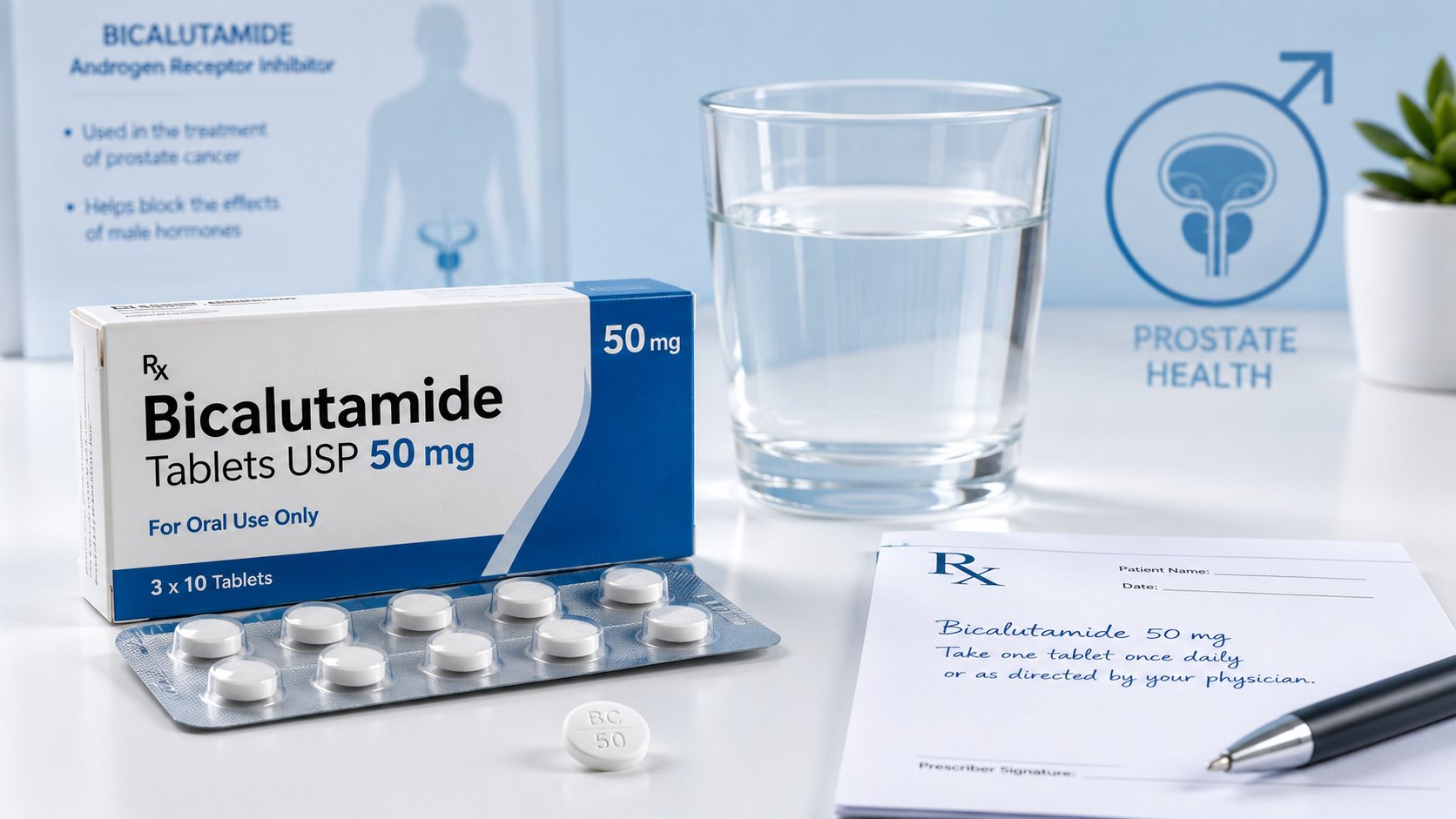
Bicalutamide is a medication used in the treatment of prostate cancer. It’s part of what’s known as hormone therapy, and its main role is to block the effect of male hormones—especially testosterone—that can encourage cancer cells to grow.
It doesn’t remove testosterone from the body. Instead, it changes how the body responds to it. That difference is important, because it explains why the medication behaves the way it does and why it’s often used alongside other treatments.

Where Bicalutamide Fits in Treatment
Prostate cancer is one of the cancers that depends heavily on hormones. In many patients, especially those with more advanced disease, controlling hormone activity becomes a key part of treatment.
Bicalutamide is usually introduced when there’s a need to reduce how strongly testosterone is affecting cancer cells. It is commonly used in:
- advanced prostate cancer
- cases where the cancer has spread beyond the prostate
- long-term treatment plans aimed at slowing progression
Most of the time, it isn’t used alone. It’s combined with medications that lower testosterone production. That combination tends to give a more consistent effect than either approach on its own.
How Bicalutamide Works in the Body
The mechanism is fairly straightforward once you look at what’s happening at the cellular level.
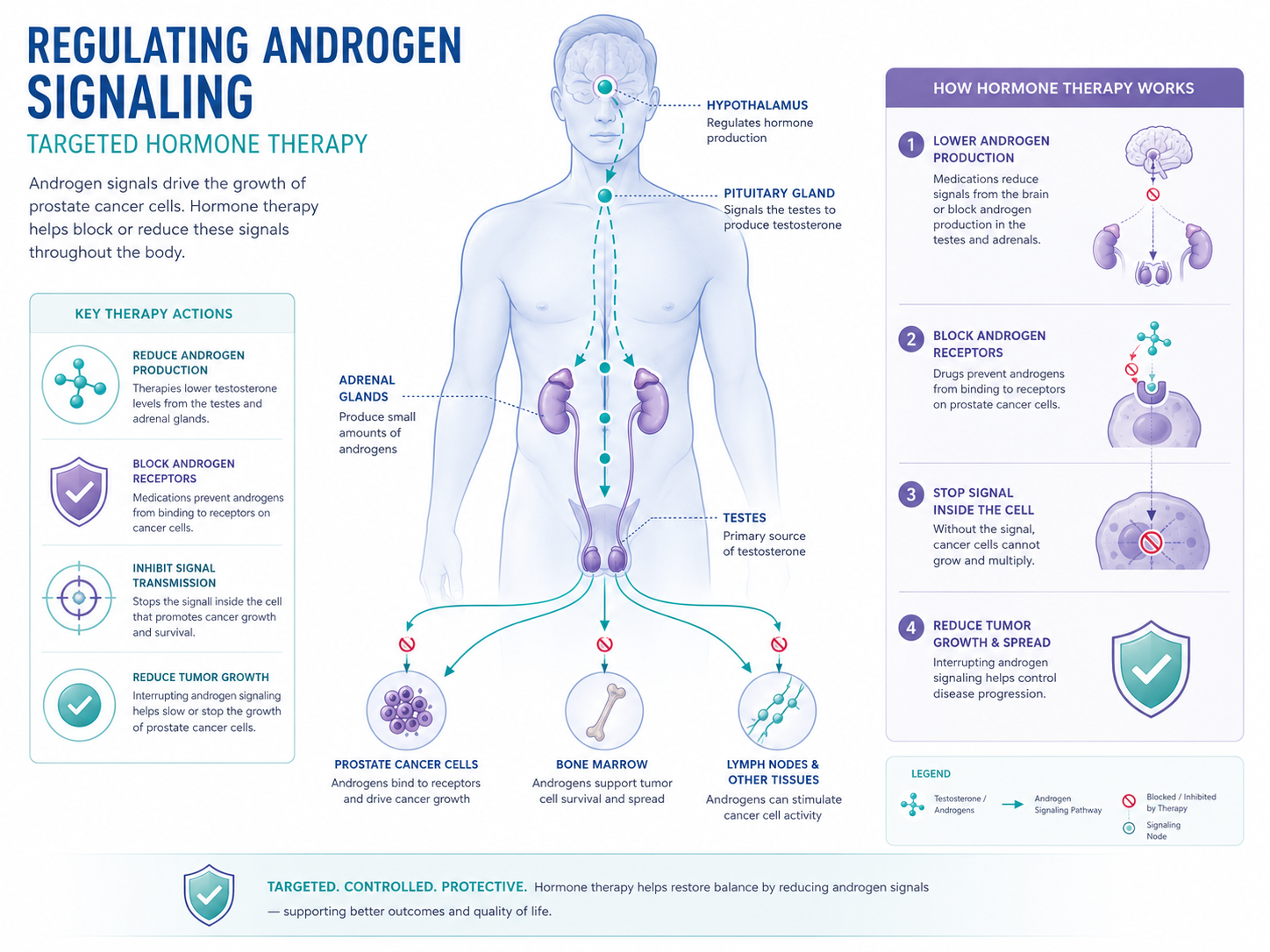
Prostate cancer cells have what are called androgen receptors. These receptors respond to testosterone. When testosterone binds to them, it sends a signal that supports cell growth.
Bicalutamide attaches to those same receptors, but it doesn’t activate them. It essentially blocks them.
So even though testosterone is still circulating in the body, it can’t deliver its usual signal to the cancer cells. Over time, that reduces the stimulus for growth.
It’s a quiet process. There’s no immediate sensation or noticeable shift. But biologically, the signal that drives the cancer is being interrupted.
Why It’s Often Used With Other Hormone Therapies
In clinical practice, bicalutamide is frequently paired with treatments that reduce testosterone levels, such as LHRH therapies.
This combination works in two ways at the same time:
- testosterone production is reduced
- any remaining hormone is blocked at the receptor level
That approach tends to be more effective, particularly in patients with more advanced disease.
Using bicalutamide alone is possible, but it’s less common. Most treatment plans aim for a more complete suppression of hormone activity.
What to Expect After Starting Treatment
One of the first things patients notice is that nothing feels different right away.
That’s expected.
This medication doesn’t produce immediate symptom relief. It’s not like taking something for pain or infection where changes are obvious within hours or days.
Instead, the effect builds gradually. Progress is usually tracked through:
- PSA (prostate-specific antigen) levels
- routine follow-up appointments
- imaging when needed
So even though there may not be a noticeable change in how you feel, the treatment is still active.
How Long It Takes to See an Effect
The timeline varies, but the response is usually measured over weeks to months rather than days.
What tends to happen is:
- hormone signaling is reduced early
- measurable changes (like PSA levels) follow over time
- clinical stability or improvement develops gradually
This slower pace can feel uncertain for some patients, but it reflects how the medication is designed to work.
Side Effects That May Occur
Because bicalutamide interferes with hormone activity, some of the effects are related to that shift.
Common ones include:
- breast tenderness or slight enlargement
- hot flashes
- fatigue
- mild digestive discomfort
These are not unusual and don’t necessarily mean the medication needs to be stopped. But if they become more noticeable or bothersome, they should be discussed rather than ignored.
Monitoring and Safety
This is not a medication that’s taken without follow-up.
Liver function is something that needs to be checked periodically. Blood tests are used to make sure the medication is being tolerated properly.
Patients are generally advised to:
- take it consistently as prescribed
- avoid skipping doses regularly
- report any unusual symptoms
Long-term treatments always require some level of monitoring, and this is no exception.
Who Should Not Use It
Bicalutamide is intended for use in men with prostate cancer.
It is not used in:
- women
- children
- individuals with a known allergy to the medication
In patients with existing liver conditions, it may still be used, but only with careful assessment and ongoing monitoring.
When to Seek Medical Advice
There are certain situations where it’s important to check in rather than wait.
That includes:
- side effects that don’t settle or become more noticeable
- symptoms that feel unusual or unexpected
- concerns about whether the medication is working
- questions about interactions with other medications
It’s always better to review these early rather than try to manage them without guidance.
A Practical Way to Understand It
It helps to think of bicalutamide as a medication that changes the environment the cancer depends on, rather than directly attacking the cancer itself.
By blocking hormone signals, it slows things down. That’s its role.
It doesn’t produce rapid changes, and it doesn’t eliminate the disease on its own. But it plays an important part in keeping the condition controlled over time.
A Clinical Note
Bicalutamide is usually part of a longer-term treatment plan rather than a short course. Its benefit comes from consistent use and proper monitoring.
If you’re unsure how it fits into your treatment, or what changes to expect over time, a pharmacist at Sanford Pharmacy can go through those details with you. More information is available at sanfordpharmacy.com.
Bicalutamide is an anti-androgen medication used in prostate cancer management. By blocking the effect of testosterone at the receptor level, it helps slow cancer growth and supports ongoing control of the disease over time.
Note: The information provided on this blog concerning medicines and diseases is only intended for education purposes. It is neither meant to be used as medical advice, diagnosis, nor treatment. You should always discuss your medicine usage plan with a doctor or pharmacist. Sanford Pharmacy assumes no liability for any result obtained through using this information.
Categories



How Long Does Tamsulosin Take to Work?
 Emma

Amoxicillin vs Azithromycin: What’s the Difference?
Emma

How Long Does Montelukast Take to Work?
Emma

Fluoxetine Side Effects: What to Expect
Emma
When Is the Best Time to Take Hydrochlorothiazide?
Emma