Famotidine vs Omeprazole: What’s the Difference?
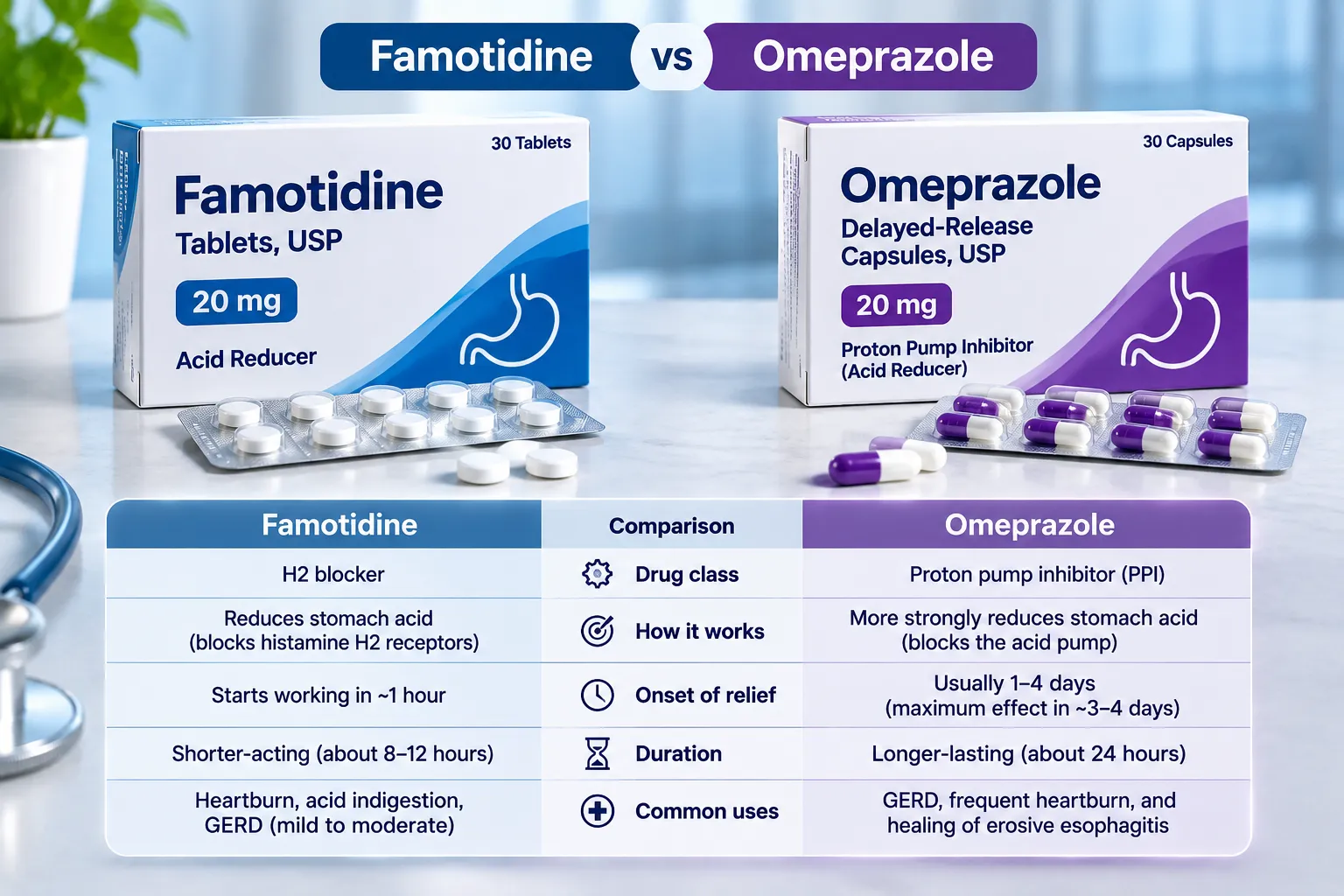
Mainly, famotidine vs omeprazole differences lie in the rapidity of action and degree of acid suppression. The first drug belongs to H2 blockers that work rather quickly, and it is good for sporadic symptoms of heartburn while omeprazole represents proton pump inhibitors (PPIs) that ensure the stronger and more powerful acid inhibition.
Patients researching famotidine vs omeprazole or omeprazole vs famotidine should understand that these medicines reduce stomach acid through different mechanisms and may be suitable for different treatment needs.
In case of chronic GERD and frequent heartburn or acid esophagitis, it is better to consider omeprazole treatment. And vice versa – famotidine will suit more moderate forms of diseases.
Famotidine vs Omeprazole: Main Differences
|
Comparison |
Famotidine |
Omeprazole |
|
Class of drug |
H2 blocker |
Proton pump inhibitor |
|
Rapid onset of action |
Generally faster |
Slower |
|
Maximum effectiveness |
Relatively fast |
1-4 days in the case of OTC use |
|
Common applications |
Heartburn, GERD, peptic ulcers |
Frequent heartburn, GERD, esophageal esophagitis, ulcers |
|
General application |
for occasional symptoms and infrequent episodes |
occasionally |
|
Application frequency |
once or twice per day (depending on particular form) |
The precise regimen depends on the product and condition.
Patients researching famotidine and omeprazole difference or asking what is the difference between famotidine and omeprazole should compare their drug classes, onset of action, degree of acid suppression, and recommended uses.
How Famotidine and Omeprazole Work?
Both drugs reduce the concentration of gastric acid but influence on different parts of its formation.
How Famotidine Works?
Famotidine is one of representatives of the group of H2 blockers.
It works due to blocking of H2 receptors in the stomach that participate in the stimulation of acid formation. Consequently, their inhibition results in reduction of acid production by the organ.
Famotidine is applied for the treatment of GERD, peptic ulcer and excessive formation of the stomach acid.
How Omeprazole Works?
The drug is one of PPIs.
Omeprazole blocks proton pumps – these proteins participate in the final stage of formation of stomach acid. It gives the drug more powerful and durable acid suppression effect in contrast to H2-blockers.
It should be noted that over-the-counter form of Omeprazole provides the full effect only after 1-4 days of administration.
Which One Works Faster for Heartburn?
In terms of comparison famotidine vs omeprazole in order to find out which one acts faster for heartburn relief, it is omeprazole.
Patients researching famotidine vs omeprazole which works faster should know that famotidine generally begins relieving acid-related symptoms sooner, whereas omeprazole takes longer to achieve its full acid-suppressing effect.
Its rapid action makes this remedy good for occasional episodes.
Omeprazole shows slower activity and gradual effect. Some patients feel better after 1-4 days but in general, this is the period required for the full action.
That is why, the drug cannot be considered as medicine for instant heartburn relief since it should be started beforehand.
Which one lasts longer: famotidine or omeprazole?
In general, omeprazole shows more powerful acid suppression effect.
Though, famotidine reduces the stomach acid for several hours and can be used once or twice a day (the regimen depends on particular condition).
Famotidine acts quickly while omeprazole is administered once daily. That means, the latter drug is more suitable for continuous acid suppression.
Which Is Better for GERD and Acid Reflux?
Famotidine vs omeprazole for GERD treatment: it depends on severity and frequency of symptoms.
Patients comparing famotidine vs omeprazole for GERD should consider that PPIs are generally preferred for persistent GERD symptoms and healing erosive esophagitis.
Both drugs can be used for treating GERD. But FDA approved famotidine only for treatment of symptomatic nonerosive GERD and erosive esophagitis while omeprazole can be used for both GERD (with healing of erosive esophagitis).
According to the recommendations for GERD treatment, the usage of PPIs is preferable for persistent GERD or erosive esophagitis since they have more powerful acid suppressive effect in contrast to H2-blockers.
Patients researching famotidine vs omeprazole for acid reflux or asking which is better famotidine or omeprazole for acid reflux should understand that the appropriate choice depends on symptom frequency, severity, and whether esophageal inflammation is present.
Thus, those who suffer from occasional and mild acid reflex can take famotidine while frequent symptoms with the erosion of esophagus should use PPIs like omeprazole.
Which Is Better for Occasional Heartburn?
In case of occasional heartburn, famotidine seems to be more proper.
Patients researching famotidine vs omeprazole heartburn or asking should I take famotidine or omeprazole for heartburn should distinguish occasional symptoms needing relatively quick relief from frequent heartburn requiring a longer-term acid-suppression strategy.
Omeprazole works much better with frequent heartburn symptoms. According to the instructions on the over-the-counter package, it can be used for treatment of frequent heartburn that happens 2 or more times a week.
So, should I choose famotidine or omeprazole for heartburn? The frequency of symptoms is decisive for that.
In case of repeated return of symptoms or their regular occurrence it would be better to discuss this problem with a pharmacist or physician and not to treat oneself continuously.
How Should Famotidine and Omeprazole Be Used?
Depending on the condition famotidine can be prescribed once a day at night or more frequently.
Famotidine is used precisely according to the physician's recommendations.
Omeprazole is taken before food. Over-the-counter omeprazole (20 mg) should be applied once a day before meals for 14 days in case of frequent heartburn.
You should follow the recommendations for your product since the regimen of prescription products and their treatment may vary. Don't take additional doses of the drug because of delay in symptoms relief.
Side Effects of Famotidine and Omeprazole
Both remedies are well tolerated.Patients comparing famotidine vs omeprazole side effects should consider both common digestive symptoms and the different safety concerns associated with prolonged treatment.
Possible adverse effects include:
- headache
- nausea
- diarrhea
- constipation
- abdominal pain
- dizziness
They can be mild. But severe or persistent side effects should be informed to healthcare provider.
The side effects of particular importance appear when treatment is long-lasting or when the patient suffers from kidney problems and takes numerous medications.
Which Drug Has More Long-Term Effects?
The treatment with PPIs involves more safety issues than that with H2 blockers.
Long-term use of omeprazole and other proton pump inhibitors has been linked with such health problems like decreased concentration of magnesium, B12 deficiency, increased risk of bone fractures in certain patients, kidney problems, some kinds of intestinal infection and formation of stomach polyps.
It doesn't mean that PPI treatment is dangerous. On the contrary, the treatment with this group of medications can be appropriate and necessary for some serious health condition.
Famotidine has its own safety profile and it depends on renal functioning, in case of reduced renal function, it requires smaller dose.
It is necessary to take the appropriate dose of the drug to decrease stomach acid not to take it for a long time without regular evaluation of necessity.
Do Famotidine and Omeprazole Have Different Drug Interactions?
It is yes. While famotidine has fewer drug-drug interactions.
Omeprazole changes stomach pH and some enzyme systems in the liver that leads to changes in metabolism of certain medications. Thus, they can influence the absorption and metabolism of numerous pharmaceutical agents.
Famotidine does not also affect absorption and metabolism of some substances in a minor extent and can raise levels of some drugs because of kidney disease.
In case of taking several prescription medications you can discuss with pharmacist the list of your medication.
Can You Use Both Drugs Simultaneously?
Sometimes, you can use them at the same time but not in most cases.
Patients asking can you take famotidine and omeprazole together should understand that healthcare professionals may occasionally recommend both medicines for selected patients, but combining them without medical guidance is not advisable.
The physician can prescribe you PPI during the day and H2 blocker at another time to relieve your condition.
But simultaneous use of famotidine and omeprazole without medical consultation can be unnecessary.
You can find the way to solve the problem related to insufficient relief by dose or treatment adjustment not by adding one more acid suppressant.
Can You Change Famotidine for Omeprazole and Vice Versa?
The transition is possible. In case of infrequent symptoms of GERD, you may need a weaker acid suppression and move to famotidine from omeprazole and vice versa in case of more frequent symptoms and erosive disease.
The sudden stoppage of PPIs after their prolonged usage can be followed by transient rebound acid formation.
However, it does not mean that PPI should not be applied all the time.
If you take omeprazole for a long time, you can consult your healthcare professional about decreasing of dose or replacement of the treatment.
Which One Is Suitable for Long-Term Application?
There is no the universal recommendation.
Patients researching famotidine vs omeprazole for long term use should discuss the need for ongoing acid suppression, treatment effectiveness, kidney function, possible adverse effects, and medication interactions with their healthcare provider.
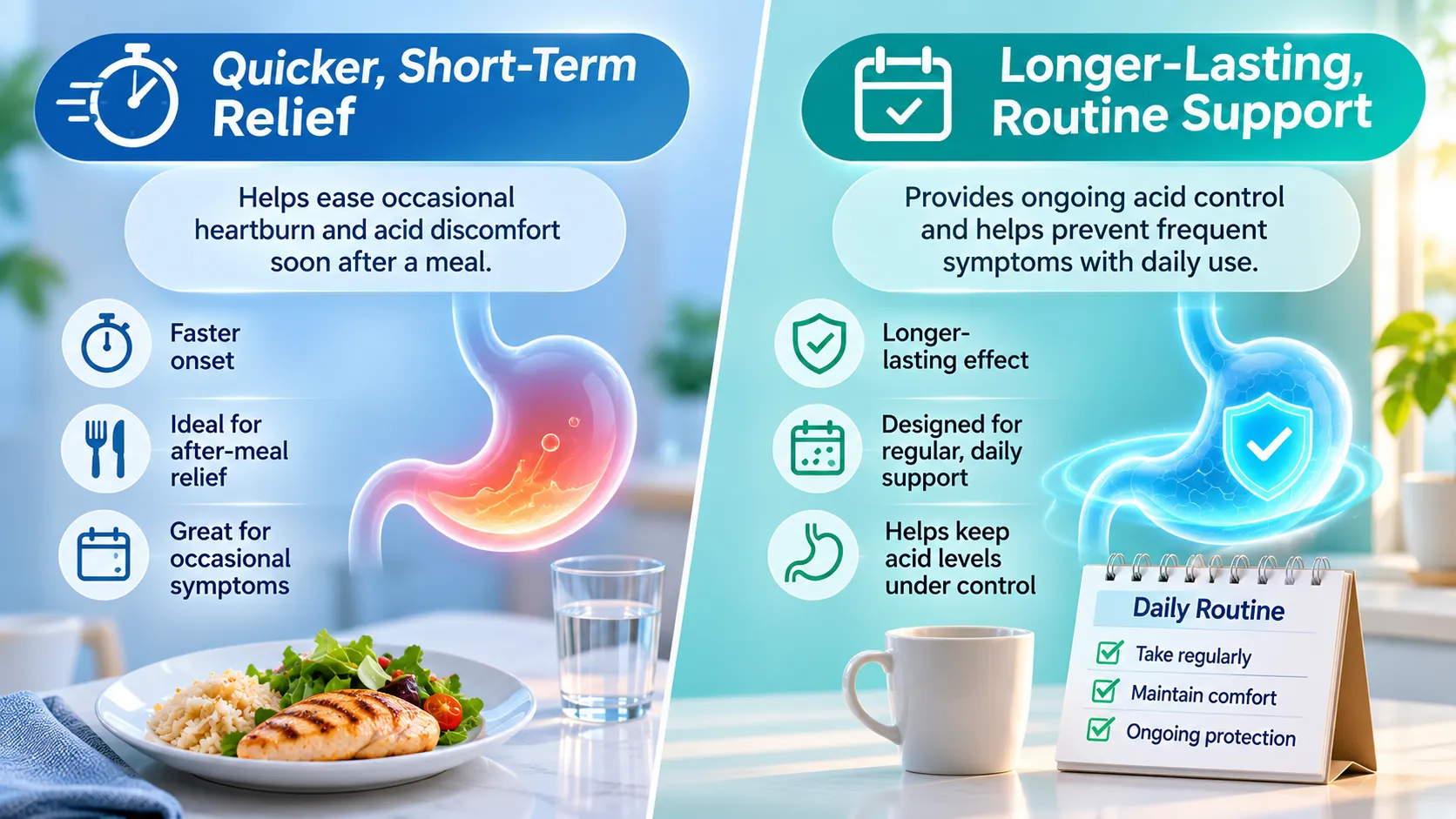
In case of mild or sporadic symptoms, you can take famotidine and in case of more severe form of GERD – omeprazole. PPIs are recommended for the healing of erosive esophagitis according to GERD guidelines.
Thus, the optimal prolonged therapy is minimal therapeutic dose necessary for relieving of a particular health condition.
When Should You Contact Pharmacist or Physician?
Contact a healthcare professional if you have often or persistent heartburn that is not controlled or need to be controlled during the prolonged period.
Get the examination of your body in case you have such symptoms as:
- difficult or painful swallowing
- vomiting of blood
- bloody or black stools
- unexplained weight loss
- frequent vomiting
- abdominal pain
- anemia symptoms
- new or severe chest pain
The OTC instructions for omeprazole contain the following advice to have medical evaluation in case of difficulty swallowing, vomiting blood, black or bloody stools, unexplained weight loss and suspicious chest pain.
In case when you were prescribed these drugs, Sanford Pharmacy can help you with prescriptions' filling and answering usual medication questions.
FAQs for Famotidine vs Omeprazole
Which is stronger, famotidine or omeprazole?
Omeprazole is usually stronger.
Which is faster: famotidine or omeprazole?
In general, famotidine works faster.
Omeprazole may have delayed effect – up to 1-4 days.
Which is better for GERD?
In case of healing of erosive esophagitis and persistent GERD, it is better to apply omeprazole.
Can I take famotidine in the evening and omeprazole in the morning?
Sometimes, this combination is used but not frequently.
Ask your prescriber or pharmacist about that.
Is famotidine safer than omeprazole for prolonged treatment?
No.
Can I switch from omeprazole to famotidine?
It is possible but the rebound symptoms are possible after stopping of omeprazole.
In what case, famotidine works better?
In case of sporadic and mild heartburn.
Choose Between Famotidine and Omeprazole
The main point of the comparison of famotidine vs omeprazole is the rapid action or strong effect.
Patients comparing famotidine vs omeprazole effectiveness should recognize that famotidine may offer quicker relief for occasional symptoms, while omeprazole generally provides stronger sustained acid suppression for conditions requiring it.
The first drug acts quickly but PPI has powerful and lasting effect that suits chronic conditions like GERD and its healing.
Medical References
MedlinePlus – Famotidine Drug Information
MedlinePlus – Famotidine
MedlinePlus – Omeprazole Drug Information
MedlinePlus – Omeprazole
DailyMed – Famotidine Tablets Prescribing Information
DailyMed – Famotidine Tablets
DailyMed – Omeprazole Delayed-Release OTC Drug Information
DailyMed – Omeprazole OTC
PubMed – ACG Clinical Guideline for GERD
Categories


Potassium Chloride Side Effects
 Emma

How Long Does It Take for Venlafaxine to Become Effective?
Emma

Famotidine vs Omeprazole: What’s the Difference?
Emma

How Long Does Tamsulosin Take to Work?
Emma

Amoxicillin vs Azithromycin: What’s the Difference?
Emma