Potassium Chloride Side Effects - What Are the Risks?
The main potassium chloride adverse effects are nausea, vomiting, stomach upset, gas, diarrhea, and abdominal pain. If you have kidney issues or take other drugs that raise potassium levels, more severe consequences may develop because of high potassium levels. They include fainting, palpitations, or significant gastrointestinal problems.
Patients researching potassium chloride side effects or potassium chloride adverse effects should understand the difference between common digestive discomfort and potentially serious complications involving elevated blood potassium levels.
Usage of Potassium Chloride: What Are the Benefits?
Potassium chloride is used to treat and prevent hypokalemia or deficiency of potassium. It can be prescribed in different forms – tablets, capsules, solutions, powders, and even intravenously in some cases. The most frequent side effects of the drug are associated either with irritation of the digestive system or with the development of high potassium levels.
Common Potassium Chloride Side Effects
The side effects of potassium chloride are mostly related to gastrointestinal symptoms.
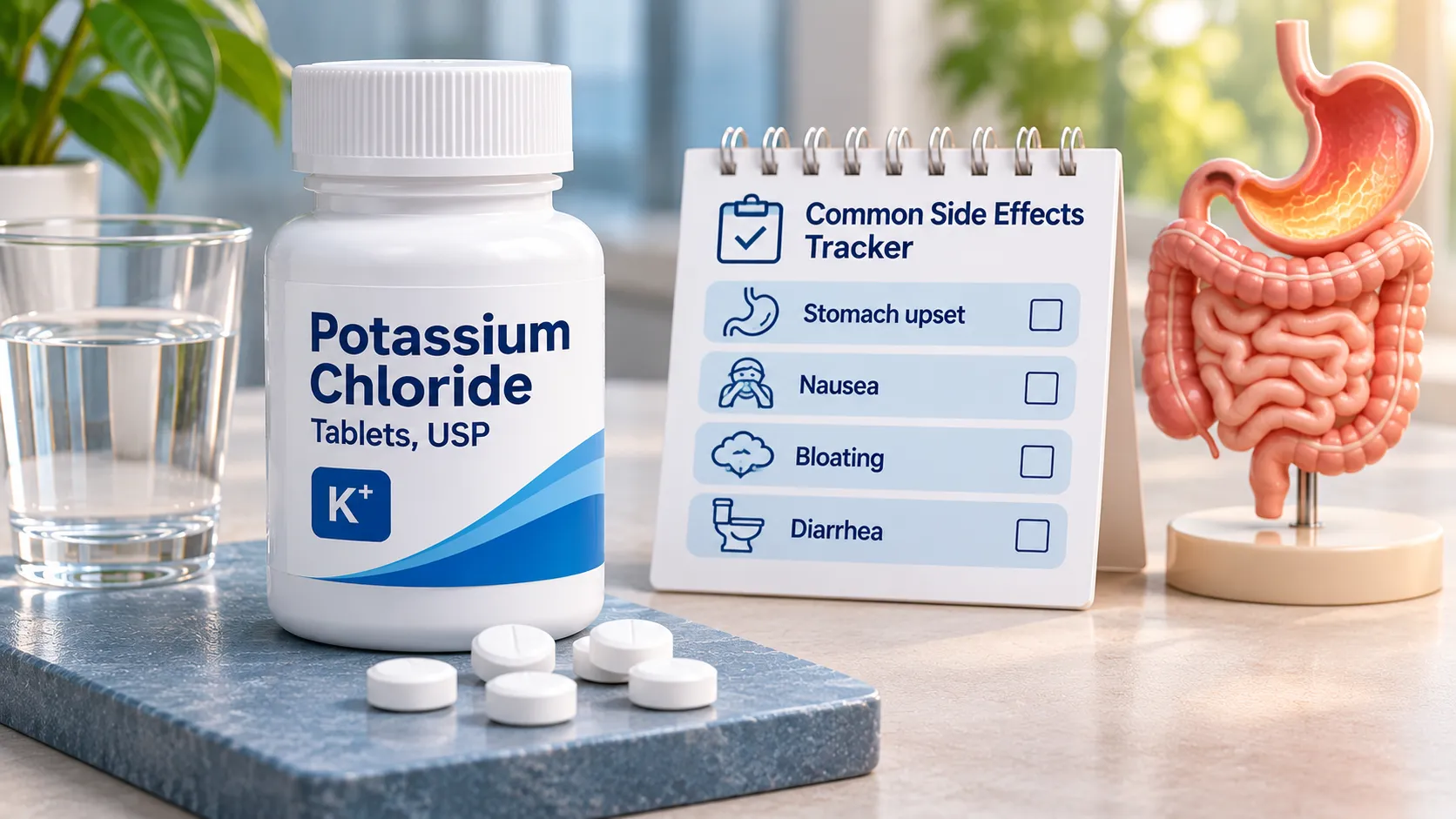
Patients researching common side effects of potassium chloride or asking what are the most common side effects of potassium chloride should pay particular attention to nausea, vomiting, abdominal discomfort, bloating, and diarrhea.
They include:
- Nausea
- Vomiting
- Gas and/or bloating
- Abdominal discomfort
- Stomach upset
According to current potassium chloride prescribing information, the most frequent adverse reactions are nausea, vomiting, flatulence, abdominal pain or discomfort, and diarrhea.
Usually, these symptoms are insignificant especially in the beginning of the treatment period. However, gastrointestinal symptoms shouldn't be ignored since potassium may cause serious irritation of the stomach.
Why Does Potassium Chloride Cause Gastrointestinal Irritation?
Potassium chloride itself can cause irritation of the stomach or intestine lining.
Patients researching potassium chloride stomach side effects should understand that some oral formulations can irritate the digestive tract, particularly when they are not taken according to product instructions.
This aspect is especially true for highly concentrated potassium chloride solution or some solid forms. Potassium that gets into direct contact with the stomach or the intestinal tract causes such symptoms as burning sensation, nausea, stomach pain, cramps, or irritation.
According to current prescribing information of oral potassium chloride solution, this medicine requires dilution and should be taken with food in order to minimize gastrointestinal irritation.
If your medication is in the form of tablets or capsules, you should follow the particular instructions that come with it. It's also possible to increase the amount of water intake during treatment.
Don't make any modifications with your dose of the modified-release tablets and capsules without your physician's recommendation.
Can Potassium Chloride Lead to Nausea, Vomiting, or Diarrhea?
Yes.
Nausea and diarrhea can occur with potassium chloride.
Patients researching potassium chloride nausea or potassium chloride diarrhea should recognize that both symptoms can occur during treatment and may require medical advice if they persist or become severe.
Mild nausea or diarrhea may occur at the beginning or after increasing the dose. They may disappear later in case of adaptation; however, they should be under the supervision of your doctor.
Patients asking can potassium chloride cause stomach pain or nausea should know that irritation of the digestive tract is a recognized cause of these symptoms during oral potassium chloride treatment.
Prolonged vomiting or diarrhea is a symptom requiring special attention since it can cause such complications as:
- Problems with taking your required dose
- Dehydration
- Potassium deficiency or imbalance of other electrolytes
- Decreasing of effectiveness of the treatment
In case of abdominal pain, recurrent vomiting, vomiting blood, and black stools, you should go to your doctor.

Can Potassium Chloride Be a Cause of High Potassium Level?
Yes.
One of the most dangerous side effects of potassium chloride is hyperkalemia, which means too high levels of potassium in blood.
Patients asking can potassium chloride cause high potassium levels should understand that excessive potassium accumulation is possible, particularly in people with impaired kidney function or those taking other potassium-raising medicines.
Potassium is responsible for proper functioning of the muscles, nerves, and the heart. Excess of the mineral may influence adversely the activity of the electrical impulses of the heart and even cause dangerous consequences.
Higher risk of developing this condition exists in case of:
- Low efficiency of the kidneys
- Severe dehydration
- Mechanisms of potassium accumulation
- Concurrent ingestion of large amounts of potassium
- Taking medicines increasing the levels of potassium in the blood
It's written in the current prescribing information of potassium chloride that patients should be closely observed if it's used with drugs which increase the potassium retention.
The functionality of the kidneys is especially important since they remove excess of potassium.
What Are Symptoms of High Potassium?
It may be hard to find out hyperkalemia because mild or moderate cases aren't accompanied by the appearance of the particular symptoms.
That's why blood tests are more useful in the detection of hyperkalemia than symptoms.
If you have symptoms, they may be such:
- Muscle weakness
- Tiredness
- Numbness or tingling
- Palpitations
- Low or abnormal heartbeat
- Severe dizziness
- Fainting
The FDA labels of IV form of potassium mention that mild and moderate cases of hyperkalemia may be asymptomatic and detected only with the help of laboratory test or ECG changes. In severe cases, hyperkalemia may lead to cardiac arrhythmias.
If you have regular potassium treatments, your physician may test the level of potassium and kidney function.
Can Potassium Chloride Influence on the Heart Function?
Yes.
Potassium controls the activity of electrical signals that manage the activity of heartbeats.
Both too low and too high levels of potassium can cause arrhythmias.
Severe cases of hyperkalemia can lead to such conditions as:
- Irregular heartbeat
- Very slow heart beat
- Palpitations
- Fainting
- Causing cardiac arrest in the extreme case
This is one of the main reasons of IV potassium administration and restriction on the increase of oral dose.
New onset of palpitations, significant dizziness, or fainting at potassium chloride consumption should be checked.
Can Potassium Chloride Cause Problems with Stomach or Esophagus?
Some forms of potassium cause serious gastrointestinal irritation if they weren't used properly.
Patients researching potassium chloride tablet side effects should be aware that certain solid oral formulations may cause significant gastrointestinal irritation or injury, making correct administration important.
There were reports about the irritating and ulcerative effect of the solid formulations of potassium chloride because of the prolonged action of the pill on the tissue.
For the avoidance of these consequences:
- Take the pill in accordance with the recommendations
- Use appropriate amount of water for consumption
- Take potassium chloride with food if it's required according to instructions
- Don't crush or chew extended-release preparations if it's not mentioned on the label of the drug
In case if swallowing of the tablet gives you difficulties, don't crush it immediately – better visit the pharmacist and choose another preparation form.
Gastric pain, vomiting of the blood, or black stools are signs of the gastric bleeding.
What Are the Serious Potassium Chloride Side Effects?
Serious reactions are rare, but should be known by the patients.
Patients researching potassium chloride serious side effects or asking what are the serious side effects of potassium chloride should recognize that abnormal heart rhythms, severe hyperkalemia, and gastrointestinal bleeding may require urgent medical attention.
You should visit your doctor in case of:
- Sudden and serious weakness
- Cardiac arrhythmias or palpitations
- Fainting
- Severe dizziness
- Abdominal pain
- Recurrent vomiting
- Hematemesis
- Blood-streaked feces
Such symptoms may indicate serious hyperkalemia, problems with the stomach or intestine or other diseases and shouldn't be neglected or avoided by reducing the medication dose.
Which Medications Can Increase Potassium Chloride Side Effects?
Some medicines may cause increase of potassium level or decrease in its removing.
Such medicines are:
- ACE inhibitors
- Angiotensin receptor blockers (ARBs)
- Kidney medicines
- Salt substitutes containing potassium
- Potassium chloride
- Other potassium-sparing diuretics
- Potassium chloride itself
According to the current potassium chloride labels, taking the medication along with diuretics that are potassium-sparing require monitoring for hyperkalemia. The same applies to combination with ACE inhibitors and ARBs.
Potassium-sparing medications, ACE and ARBs should be monitored in case of their combination with NSAIDs.
It doesn't mean that such combinations are impossible. On the contrary, some combinations of the drugs may be beneficial in some cases, but potassium and kidney function tests should be done more often.
Remember also that you should inform your pharmacist about taking salt substitutes since they may contain significant amounts of potassium.
Side Effects Caused By IV Administration of Potassium Chloride
IV form of potassium is usually injected in healthcare setting.
This medication requires dilution and gradual infusion.
It causes the following side effects:
- Injection-site pain or burning
- Infiltration of the vein
- Phlebitis
- Tissue injury in case of extravascular administration
- Dangerous cardiac arrhythmia if the solution was injected quickly
According to the current potassium chloride prescribing information, direct injection of the highly-concentrated undiluted potassium may cause fatal cardiac arrhythmia or cardiac arrest.
This is one more reason to pay careful attention to IV potassium administration, which is why it's always performed in healthcare settings with monitoring.
How to Decrease the Side Effects of Potassium Chloride?
The best method to prevent side effects of potassium chloride is to use it properly as prescribed.
In case of potassium tablets and capsules:
- Take it with food if it's required
- Use appropriate amount of water
- Dilute the liquid preparation
- Use divided doses if it's needed in your case
- Avoid taking additional potassium
Also try to keep up with the blood tests if they were prescribed by your doctor.
Never reduce your dose of the drug due to gastrointestinal symptoms, since potassium is prescribed for you because you have potassium deficiency.
If taking of the particular form is difficult, visit your pharmacist and ask him for advice.
When to Discuss Potassium Chloride Side Effects with the Pharmacists/Healthcare Providers?
You should contact your pharmacists and physician in case if you have continuous stomach upset or if it's becoming worse.
Patients asking how long do potassium chloride side effects last should understand that mild digestive symptoms may improve with time, but persistent or worsening symptoms need evaluation rather than an assumption that they will resolve on their own.
Also, you should visit your doctor if:
- You've developed serious muscle weakness
- Palpitations occur repeatedly
- You have persistent nausea and diarrhea
- The situation with your kidneys became worse
- You've started new medication which increases the levels of potassium
- You want to use potassium-containing salt substitute
Patients asking when should you worry about potassium chloride side effects should seek proper medical evaluation for severe weakness, palpitations, fainting, severe abdominal pain, or signs of gastrointestinal bleeding.
You should seek immediate assistance if you feel fainting, severe weakness, cardiac arrhythmia, severe abdominal pain, vomiting of the blood, or blood-streaked feces.
If you've got a prescription for potassium chloride, Sanford Pharmacy may assist in the fulfilment of your prescription.
Questions concerning your blood tests or the change of the dose should be asked to your physician.
FAQs About Potassium Chloride Side Effects
Does potassium chloride cause stomach pain?
Yes, Potassium chloride has a number of possible side effects related to the stomach such as abdominal pain, stomach irritation, nausea.
Use of the drug with food or dilution of the solution may reduce irritation of the gastrointestinal tract.
Can potassium chloride cause diarrhea?
Yes, Diarrhea is quite common side effect of the potassium chloride.
It requires special attention since it can cause dehydration and other electrolytes problems.
Can potassium chloride cause constipation?
Constipation is rarer symptom than nausea or diarrhea.
If you have some problems with bowels, inform your physician.
Can potassium chloride cause dizziness?
Dizziness may appear for a variety of reasons, and not always it occurs due to the intake of the potassium.
However, in case of severe dizziness accompanying muscle weakness, palpitations or fainting, it may be the symptom of potassium deficiency or other problems with health.
Can potassium chloride cause muscle weakness?
Yes, in case if the potassium chloride causes hyperkalemia or too high levels of potassium.
Because muscle weakness may be the sign of potassium deficiency, this symptom should be informed to your physician.
Is too much potassium chloride dangerous?
Yes, Too much potassium may cause dangerous hyperkalemia which may cause interference with heart rhythm and functioning of the muscles.
Too much of potassium may be dangerous especially if your kidneys are dysfunctional.
Never take additional potassium because of missing a dose or because you think that your potassium level is too low.
Should I stop taking potassium chloride in case of side effects?
It isn't necessary to stop this medicine without instruction of your physician.
Mild side effects may be easily corrected if you make some modifications in the regimen of using the medicine.
However, you should visit your doctor if you have severe side effects and determine the cause.
Medical References
DailyMed – Potassium Chloride Oral Solution Prescribing Information
https://www.dailymed.nlm.nih.gov/dailymed/fda/fdaDrugXsl.cfm?setid=1ea4345e-f8bb-4d41-9003-c87b21169d7c&type=display
U.S. Food and Drug Administration (FDA) – Potassium Chloride Oral Solution Prescribing Information
https://www.accessdata.fda.gov/drugsatfda_docs/label/2026/206814Orig1s013lbl.pdf
DailyMed – Potassium Chloride Injection Prescribing Information
https://dailymed.nlm.nih.gov/dailymed/drugInfo.cfm?setid=bf8e8ac7-e6a8-4571-a0ea-7bcab89290f6
U.S. Food and Drug Administration (FDA) – Potassium Chloride Injection Prescribing Information
https://www.accessdata.fda.gov/drugsatfda_docs/label/2022/019904s021lbl.pdf
Categories



Potassium Chloride Side Effects
 Emma

How Long Does It Take for Venlafaxine to Become Effective?
Emma

Famotidine vs Omeprazole: What’s the Difference?
Emma

How Long Does Tamsulosin Take to Work?
Emma

Amoxicillin vs Azithromycin: What’s the Difference?
Emma