
Foods to Avoid When Taking Sulfamethoxazole / Trimethoprim
 Ibrahim
|
Ibrahim
|
 08 Dec 2025
A lot of people hear the name sulfamethoxazole/trimethoprim — or SMX/TMP, or just Bactrim — and instantly think “strong antibiotic.” It’s one of the most commonly prescribed meds for UTIs, skin infections, sinus infections, and a few other things. What most people don’t hear about, though, is how food plays a role while you’re taking it. And not because food ruins the antibiotic or anything dramatic, but simply because certain foods can make the side effects worse, or make you feel more uncomfortable than you need to be.
Doctors often forget to explain this part. Pharmacists see it more — people come back asking why their stomach feels off, or why they felt shaky after coffee. This guide basically breaks things down in a way that’s easy to follow, without going too technical.

A Quick Look at the Medication
Sulfamethoxazole-trimethoprim is a combination antibiotic that works by blocking two different steps bacteria use to grow. That’s why it’s so effective for urinary infections and some skin issues — the bacteria basically have a harder time surviving.
But because it’s processed through the kidneys and can irritate the stomach in some people, food and hydration make a difference in how smoothly the medication goes.
Why Certain Foods Can Be a Problem
It’s not that foods destroy the antibiotic. The issue is more about how you feel while taking it and how your body handles it.
Some foods:
-
slow down absorption
-
worsen nausea
-
increase sunlight sensitivity
-
change potassium levels, which SMX/TMP already affects
Nothing here is meant to scare — it’s more about avoiding discomfort or unnecessary risks.
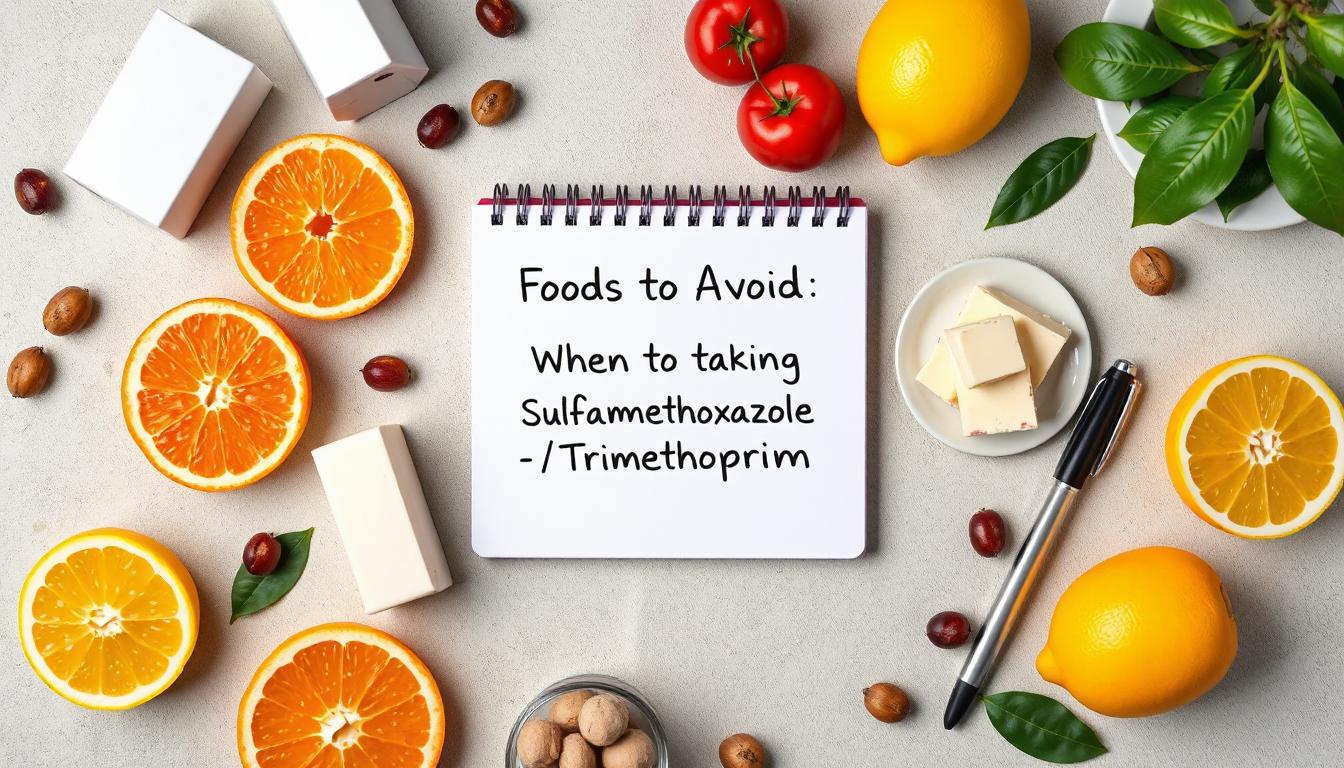
Foods to Avoid or Limit While Taking Sulfamethoxazole / Trimethoprim
1. Alcohol — probably the biggest thing to avoid
People don’t always realize this, but alcohol and SMX/TMP don’t mix well. It won’t cause the severe reaction associated with metronidazole, but still:
-
nausea gets worse
-
dehydration gets worse
-
liver stress goes up
-
side effects feel stronger
It’s honestly just better to skip drinks until the treatment is done. Even one or two can make the next dose feel rougher.
2. Excessive Caffeine (coffee, strong tea, energy drinks)
Most people don’t need to quit caffeine completely. But SMX/TMP slows down how your body clears caffeine, so suddenly your usual cup can feel like two or three.
Possible effects:
-
jittery feeling
-
faster heartbeat
-
trouble sleeping
-
mild anxiety
A cup or two is usually fine. Just don’t chase it with energy drinks or a giant iced coffee.
3. High-Sugar Foods — especially during a UTI
Sugar doesn’t cancel out the antibiotic, but it does irritate the bladder and may help bacteria hold on longer. When treating a UTI, loading up on sweets isn’t the best idea.
Examples:
-
soda
-
pastries
-
candy
-
sugary juices
Water, bro — water is your best friend during a UTI.
4. Foods High in Potassium
This one surprises almost everyone. SMX/TMP can raise potassium levels, especially in people with kidney issues or those taking certain other meds.
Foods high in potassium aren’t banned — you just don’t want to eat huge amounts daily.
High-potassium foods include:
-
bananas
-
avocados
-
coconut water
-
potatoes
-
tomatoes and tomato soup
-
spinach
If you're eating these in normal amounts, it's fine. Just avoid overdoing it.
5. Very Acidic Foods (if your stomach feels sensitive)
Certain foods don’t interfere with the antibiotic itself, but they do interfere with your comfort level. If the medicine is already causing nausea, acidic foods can make that worse.
Things like:
-
oranges
-
lemon juice
-
pineapple
-
vinegar-heavy dressings
This depends on the person. Some barely notice anything; others feel it right away.
6. Foods That Are Tough on the Stomach
SMX/TMP occasionally irritates the stomach lining. Eating heavy or greasy meals at the same time doesn’t help. You might not vomit or anything, but you may feel off.
Foods that often cause issues:
-
fried takeout
-
spicy curries
-
really heavy pasta dishes
-
giant meals when you’re already queasy
Light, simple meals work better while you're on the antibiotic.
Hydration Is Actually More Important Than Any Specific Food
A lot of people don’t realize that sulfamethoxazole/trimethoprim needs good hydration to move safely through the kidneys.
Proper hydration:
-
protects the kidneys
-
lowers the risk of crystals forming in urine
-
makes nausea less intense
-
helps with UTI recovery
Not complicated — just drink more water than usual for the time you’re taking it.
Foods That Are Actually Helpful
While avoiding certain foods helps, a few choices can actually make the course easier:
-
yogurt or probiotics (take them at a different time from the medication)
-
rice, toast, mild cereals
-
baked chicken or other lean proteins
-
berries or apples
-
broth-based soups
-
lots of fluids
These tend to sit gently on the stomach and support gut balance.
What If Someone Eats These “Avoid” Foods by Accident?
Nothing dramatic usually happens. Most of these aren’t dangerous interactions — they just affect comfort or potassium levels. The biggest real concern is:
-
high-potassium foods plus kidney issues
-
dehydration plus SMX/TMP
If you suddenly feel strange — irregular heartbeat, muscle weakness, or severe fatigue — that’s worth checking out.
Who Needs to Be Extra Careful With Food Interactions?
Some groups have a higher chance of side effects:
-
people with chronic kidney problems
-
older adults
-
anyone taking ACE inhibitors or ARBs (blood pressure meds that also raise potassium)
-
those prone to dehydration
These patients should follow food guidelines more closely.
Common Questions People Ask
Can I drink coffee?
Yes, just don’t overload on it.
Is one beer okay?
Better to avoid alcohol completely until the antibiotic is done.
Do bananas really matter?
Only if you eat several a day or have kidney issues.
What should I eat if I feel nauseous?
Try lighter foods — toast, rice, bananas (just not too many), broth.
Can I take probiotics at the same time?
Yes, but take them a few hours away from the antibiotic.
Practical Tips From a Pharmacy Perspective
Pharmacists see the same patterns again and again, so the advice is simple:
-
small meals instead of big ones
-
steady water throughout the day
-
avoid huge potassium-loaded smoothies
-
be cautious with caffeine
-
mention all medications you’re taking
-
finish the full sulfamethoxazole-trimethoprim 800-160 mg tablet course
Even little adjustments can make the experience much smoother.
Wrapping It Up
Sulfamethoxazole/trimethoprim is a strong and dependable antibiotic, but side effects hit harder when diet choices don’t match what your body needs during treatment. You don’t need a strict food ban list — just basic awareness so the medication can do its job without making you feel worse.
When in doubt, a pharmacist can usually explain whether a food reaction, a new symptom, or a weird feeling is part of the antibiotic or something unrelated. Simple guidance goes a long way with this medication.
Categories


Can Recurrent Utis Be a Sign of Cancer
Jose
How Does Hydroxychloroquine Work?
Ali
Morning vs Night: Optimizing Blood Pressure Medication Timing
Arely
Natural Thyroid Hormone Therapy for Hypothyroidism Explained
Dulce

What Is Raloxifene Used For?
Abdullah
.webp)
.webp)
-(2).webp)
.webp)