
How Long Does It Take for Claritin to Work?
 Ashlee
|
Ashlee
|
 06 Mar 2026
Claritin (Loratadine) Onset Time, Duration, and Allergy Relief Guide
Claritin usually starts working within about 1 to 3 hours after you take it. Most people begin noticing their allergy symptoms easing the same day, and one dose typically keeps working for about 24 hours. Some people feel relief a little sooner, others a little later. That’s normal.
If you’ve ever taken Claritin during allergy season, you probably know the feeling. Relief doesn’t usually hit all at once. It tends to come on gradually. The sneezing slows down. Your eyes itch less. Things just start calming down.
Let’s talk through what’s actually happening after you take it.
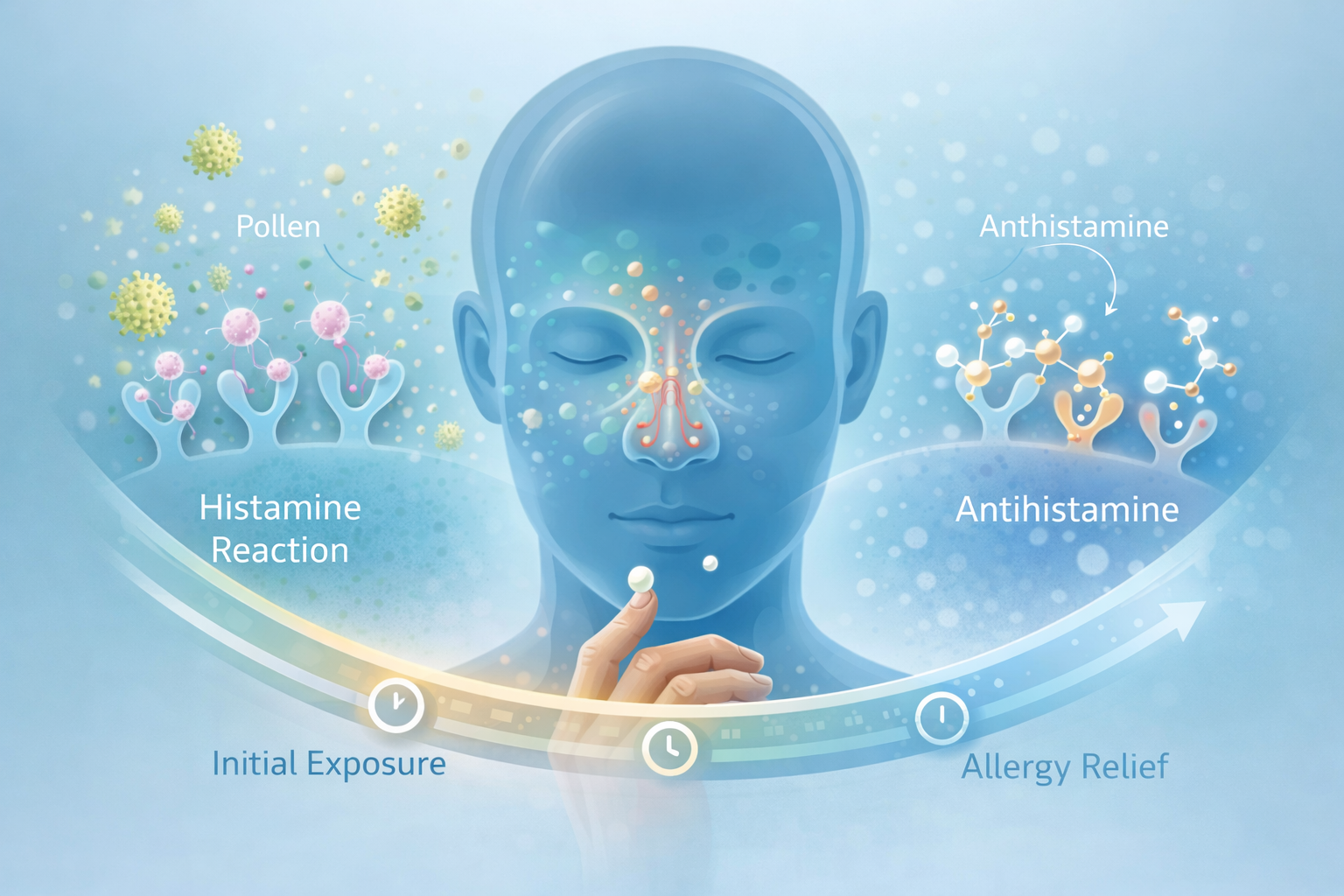
When Most People Start Feeling Allergy Relief
If you're asking how long does Claritin take to work, the typical timing is fairly predictable.
Most people start feeling something within 1 to 3 hours after taking a tablet. Not dramatic relief right away. More like small changes at first.
Maybe you're sneezing less often.
Maybe your nose isn’t running constantly anymore.
The medication keeps building in your system through the day. Because of that, the strongest effect often shows up several hours later, usually somewhere around 8 to 12 hours after the dose.
A simple way to think about it:
- First relief: about 1–3 hours
- Strongest effect: later in the day
- Total relief window: around 24 hours
That’s why Claritin is usually taken once per day.
Some people feel improvement a bit faster. Others need a few hours. Both are completely normal.
The Allergy Symptoms Claritin Helps With
Claritin is designed to calm down symptoms caused by histamine.
Histamine is the chemical your body releases when it thinks something like pollen or pet dander is a threat. Once that chemical starts circulating, the classic allergy symptoms appear.
Things like:
- Sneezing
- Runny nose
- Itchy nose
- Watery or itchy eyes
- Scratchy throat
- General seasonal allergy irritation
If you deal with hay fever during spring or fall, this is exactly the kind of medication doctors often recommend.
One thing to know though.
Claritin can sometimes be less helpful for severe nasal congestion. That heavy “blocked sinus” feeling often comes from inflammation deeper in the nasal passages. Antihistamines don’t always fix that part completely.
For congestion, some people end up needing an additional treatment.
What’s Actually Happening Inside Your Body
The active ingredient in Claritin is loratadine.
It belongs to a group called second-generation antihistamines. These are newer allergy medications designed to reduce symptoms without making most people sleepy.
Here’s the simple version of what happens after you take it.
The tablet dissolves.
Your body absorbs the medication through the digestive system.
It enters the bloodstream.
Once it’s circulating, loratadine starts blocking histamine receptors.
Histamine is basically the signal that triggers allergy symptoms. Sneezing, itching, watery eyes — those are all responses to that signal.
When Claritin blocks it, your body stops reacting as strongly.
Your liver also converts loratadine into another compound called desloratadine, which continues helping block histamine for many hours.
That’s part of why the medication lasts all day.
Why Claritin Sometimes Works Faster for Some People
Even though the usual Claritin onset time is about 1–3 hours, there are a few things that can make it feel faster or slower.
Everyone’s body is a little different.
A few factors that matter:

How strong your allergies are
Mild symptoms tend to calm down faster. If pollen levels are extremely high, relief may take longer.
When you take the medication
Taking Claritin before symptoms become intense often works better than waiting until allergies are already severe.
Many people take it first thing in the morning during allergy season.
Your metabolism
Some people process medications faster than others. That can slightly affect how quickly Claritin works.
Your allergen exposure
If you're around pollen, dust, or pets constantly, symptoms can keep being triggered throughout the day.
Reducing exposure often helps the medication work better.
Does Claritin Work Better If You Take It Every Day?
For occasional allergies, Claritin usually works the same day you take it.
But during active allergy season, daily use can make symptom control much easier.
Taking it consistently keeps histamine activity lower in your body.
That means symptoms don’t have as much chance to build up.
People often take Claritin daily when:
- pollen counts are high
- they spend time outside regularly
- seasonal allergies are active in their region
Starting the medication before heavy allergen exposure can sometimes prevent symptoms from getting worse.
What If Claritin Doesn't Seem to Be Working?
This happens sometimes.
Someone takes the medication and expects instant relief. Then after an hour they feel the same and assume it failed.
Usually it just needs more time.
If you're wondering how long before Claritin relieves allergy symptoms, it's important to wait a few hours before judging the result.
If symptoms still aren’t improving, a few simple things can help.
First, make sure you're taking the medication correctly.
- Claritin is usually taken once daily
- Taking extra doses won't make it work faster
Second, try reducing allergen exposure.
Things that help more than people expect:
- closing windows during high pollen days
- showering after spending time outdoors
- washing bedding regularly
- using air purifiers
If symptoms are still stubborn after several days, it may be worth speaking with a pharmacist.
If your doctor has recommended loratadine, it can be ordered through Sanford Pharmacy online, which allows you to receive your medication without waiting in pharmacy lines.
Does Food Change How Quickly Claritin Works?
This question comes up a lot.
The short answer is no.
Claritin can be taken with food or without food, and meals usually don’t change the Claritin allergy relief time very much.
What matters more is taking it consistently.
Many people take their dose in the morning, mainly so protection lasts throughout the day when pollen exposure is highest.
Drug Presence vs Drug Effect
Another small detail that confuses people.
Even though Claritin may remain in your body longer than 24 hours, its symptom relief effect is designed to last about one day.
That’s why doctors recommend one dose every 24 hours.
Taking more won't necessarily improve symptoms faster.
Consistency tends to work better.
When It's Time to Ask a Pharmacist or Doctor
Most allergy symptoms are manageable with medications like Claritin.
But sometimes symptoms stick around longer than expected.
You should talk with a healthcare professional if:
- allergy symptoms remain uncontrolled after several days
- severe sinus pressure develops
- fever appears along with allergy symptoms
- symptoms interfere with sleep or daily life
- you're taking other medications that could interact
A pharmacist can often help figure out what’s going on.
If you need help choosing an allergy treatment, a pharmacist at Sanford Pharmacy can review your symptoms and suggest appropriate options.
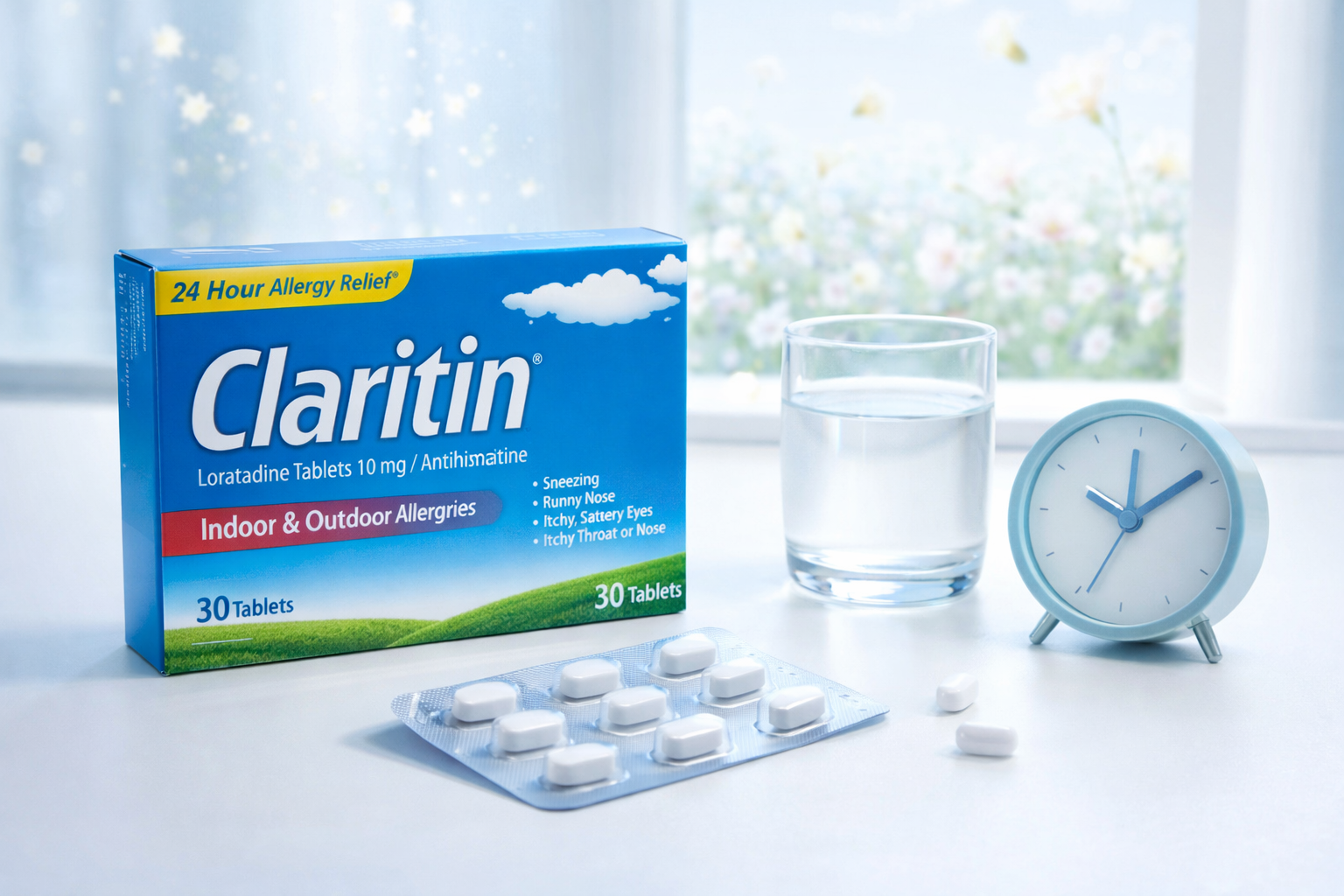
Common Questions About Claritin
Does Claritin work immediately?
No. Most people begin noticing relief within 1 to 3 hours.
How fast does Claritin work for seasonal allergies?
Relief usually begins within a few hours, though the strongest effect may appear later in the day.
Should Claritin be taken in the morning or at night?
Many people take it in the morning so the medication works during the day when allergen exposure is higher.
Does Claritin work immediately for allergies?
No. Like most antihistamines, it needs time to circulate in the bloodstream.
How long after taking Claritin do symptoms improve?
Most people start noticing improvement within 1–3 hours, though full relief may take longer.
When to Seek Medical Advice
Most seasonal allergies respond well to antihistamines. Still, ongoing symptoms shouldn’t be ignored.
You should seek medical advice if:
- allergy symptoms continue despite treatment
- breathing becomes difficult
- severe sinus pain develops
- symptoms resemble an infection instead of allergies
If you've been prescribed loratadine and want a convenient way to receive your medication, Sanford Pharmacy offers online ordering so prescriptions can be delivered directly to your door.
For many people, once the right allergy treatment is in place, relief usually isn’t far behind.
Categories


Can Recurrent Utis Be a Sign of Cancer
Jose

How Does Hydroxychloroquine Work?
Ali
Morning vs Night: Optimizing Blood Pressure Medication Timing
Arely
Natural Thyroid Hormone Therapy for Hypothyroidism Explained
Dulce

What Is Raloxifene Used For?
Abdullah
.webp)
.webp)
-(2).webp)
.webp)