
Morning vs Night: Optimizing Blood Pressure Medication Timing
 Arely
|
Arely
|
 01 Apr 2026
When Is the Best Time to Take Your Blood Pressure Medicine—Day or Night?
The best time to take blood pressure medication isn’t exactly the same for everyone, but in many cases, taking it at night can help improve blood pressure control during sleep and in the early morning hours. Medications need to be taken in the morning according to the doctor's or pharmacist's instructions because this approach will achieve better results.
It’s one of those things that seems simple at first — just take your pill once a day. But the timing can actually make a noticeable difference.

Why timing matters more than most people think
Blood pressure doesn’t stay the same all day.
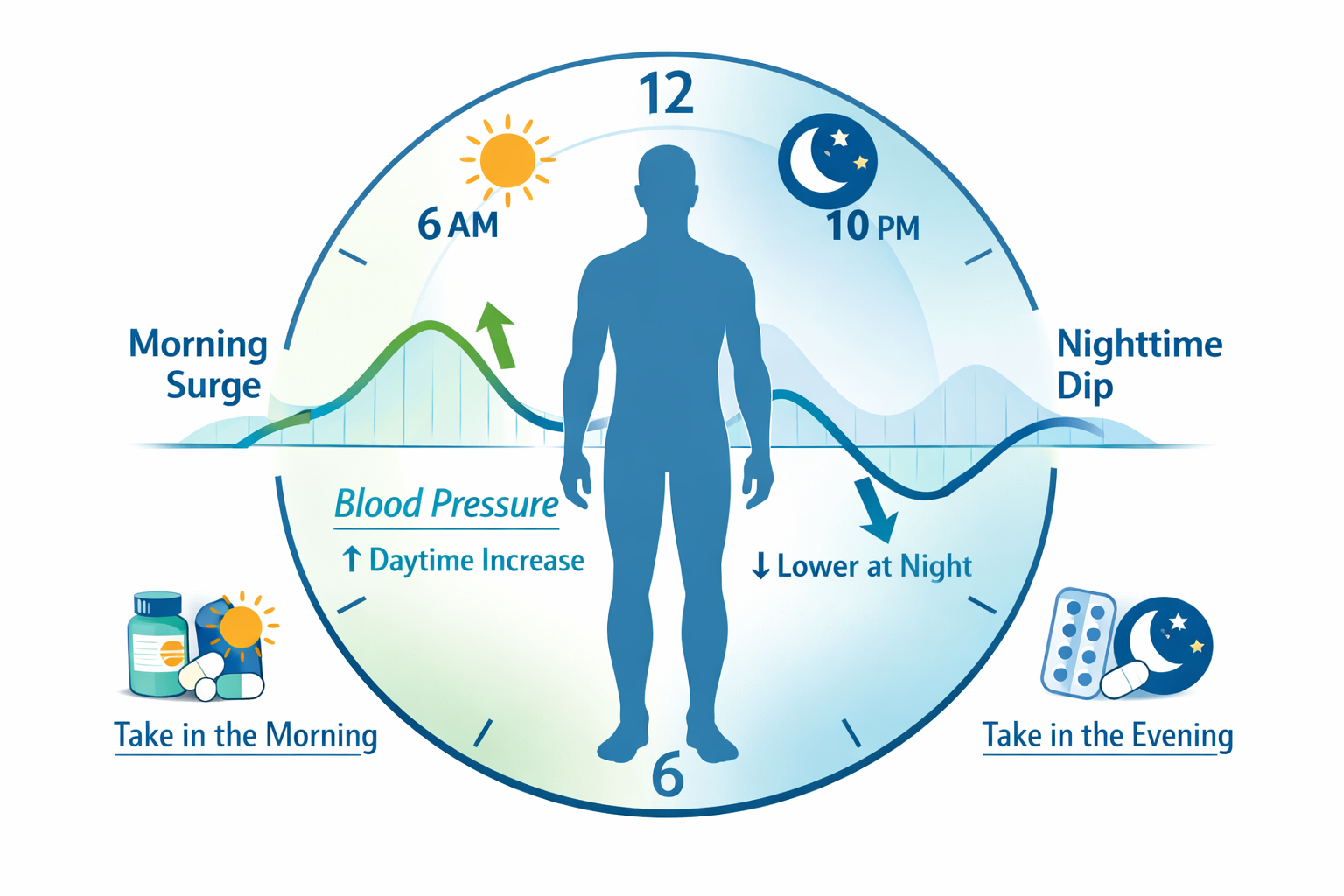
It follows a natural pattern. For most people, it starts to rise in the early morning, stays higher during the day, and then drops at night while sleeping. That drop is sometimes called the “dipping” pattern.
Medication timing can influence how well that pattern is controlled.
When the timing is right, it helps:
- keep blood pressure more stable throughout the day
- reduce those early morning spikes
- improve how well the medication works overall
Those early morning spikes are important. That’s when the risk of heart attacks and strokes tends to be higher.
So timing isn’t just about convenience. It’s about coverage.
Why are some people advised to take it at night
For certain patients, taking blood pressure medication at night can offer better protection.
It helps control blood pressure during sleep — which is actually when the body is supposed to be resting and recovering.
Nighttime dosing may:
- improve overnight blood pressure control
- reduce the risk of early morning cardiovascular events
- support a more natural drop in blood pressure during sleep
Some studies have suggested that bedtime dosing may lead to better outcomes in specific groups of patients.
But that doesn’t mean it’s automatically better for everyone.

When morning dosing makes more sense
There are definitely situations where taking medication in the morning is the better option.
Some blood pressure medications can affect how your body behaves during the day.
For example, diuretics — often called water pills — increase urination. Taking those at night would likely interrupt sleep.
Morning dosing may be preferred when:
- the medication causes frequent urination
- there’s a risk of dizziness at night
- the medication is meant to work during active daytime hours
In some cases, taking a medication at night might actually be inconvenient or even unsafe, especially if it increases the risk of falls.
How the type of medication affects timing
Not all blood pressure medications behave the same way, so timing often depends on the specific type.
Here’s how it usually breaks down:
- Diuretics (water pills): usually taken in the morning to avoid nighttime bathroom trips
- ACE inhibitors / ARBs: may be taken in the morning or at night, depending on how your body responds
- Calcium channel blockers: can often be taken at either time
- Beta-blockers: timing varies based on the formulation and individual needs
There isn’t a single rule that applies to every medication.
That’s why doctors tailor timing based on both the medication and the patient.
What makes the “best time” different for each person
Personal factors determine the ideal time for activities even when general guidelines exist.
Your body mechanisms together with your daily schedule and sleep patterns establish your medication reaction.
Some of the factors that matter include:
- your sleep schedule
- whether you experience side effects like dizziness
- other medications you take
- whether your blood pressure tends to be higher in the morning or evening
The person who experiences morning blood pressure spikes will receive better results from taking their medication at night.
Another person might experience nighttime light-headedness which would improve with morning medication. The solution does not exist as a universal answer.
The most important factor is maintaining regularity. The practice of taking your medication at identical times every day establishes stable blood pressure regulation throughout the day.
Before changing your medication timing
This is important.
The study results indicate that nighttime medication administration produces better outcomes than daytime treatment. Patients who need to change their medication schedule should wait until they receive professional guidance. The different medications need their own timing schedule which requires professional assistance for schedule adjustments. The following steps should be followed before making any changes:
- consultation with your doctor or pharmacist
- continuously check your blood pressure
- observe all side effects you experience
The current timing works best in some situations while other situations require only minor adjustments. A brief discussion enables you to avoid unnecessary complications which would otherwise arise.
When it’s time to check in with a healthcare professional
If something doesn’t feel right with your current routine, it’s worth bringing it up.
You should speak with a healthcare provider if:
- your blood pressure remains uncontrolled
- you experience dizziness or fainting
- you notice symptoms at night or early morning
- you’re unsure about when to take your medication
- you’re taking multiple blood pressure medications and timing feels confusing
These situations are more common than people think.
Medication timing can usually be adjusted, but it should be done carefully.
A practical note about getting the timing right
Blood pressure treatment isn’t just about taking the medication — it’s about taking it in a way that works best for your body.
Small details matter. Timing, consistency, and how your body responds all play a role. If you’re ever unsure, it helps to ask.
A pharmacist at Sanford Pharmacy can review your medication schedule and help you figure out the best timing based on your prescription and daily routine. You can also find guidance and support through sanfordpharmacy.com, which makes it easier to stay on track with your treatment and get answers when you need them.
For many people, the best time to take blood pressure medication comes down to what provides the most stable control with the fewest side effects. Whether that ends up being morning or night, consistency and proper guidance make the biggest difference.
Categories



How to Take Clomid to Get Pregnant
Krista

How Does Acyclovir Cream Work?
Grayson

What Is Triclabendazole?
Deonte

How Long Does Oseltamivir Take to Work?
Nia

How Long Can You Take Prilosec?
Mikayla

.webp)
.webp)
-(2).webp)

.webp)