
How Would I Know If I Had Cervical Cancer?
 Signs of Cervical Cancer to Watch For | Sanford Pharmacy
|
Signs of Cervical Cancer to Watch For | Sanford Pharmacy
|
 08 May 2026
Recognizing Early Symptoms and Risk Factors of Cervical Cancer
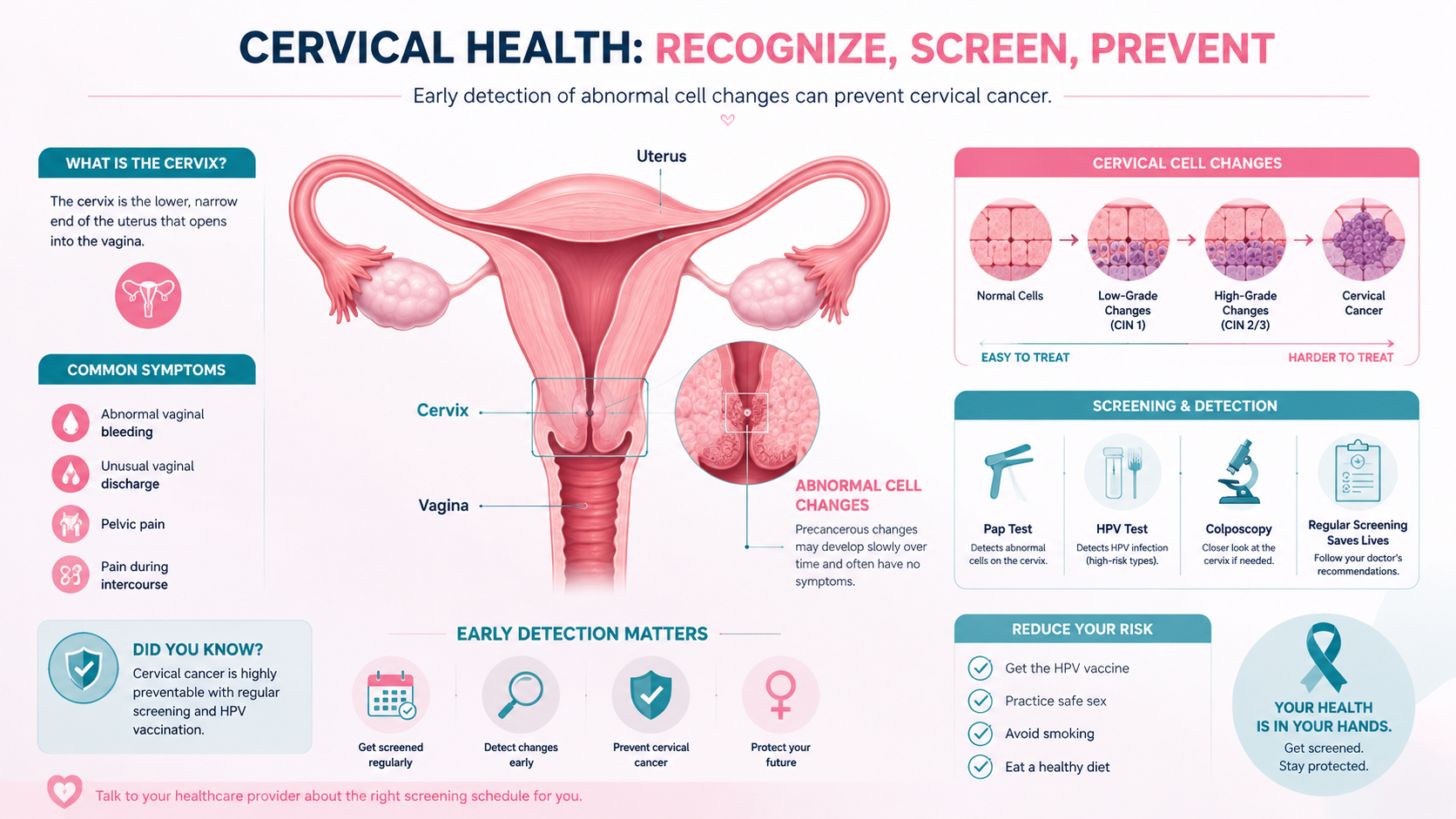
Cervical cancer usually develops without showing any signs until advanced stages which makes it difficult for people to recognize their health problems. The initial signs of the condition appear through three different symptoms which include abnormal vaginal bleeding and unusual discharge and pelvic pain. The only way to know for sure, though, is through medical tests like a Pap smear or HPV test.
That’s the tricky part. Early on, there’s often nothing obvious to point to.

Early cervical cancer can be silent
In the beginning, cervical cancer tends to develop quietly.
There’s no clear pain. No obvious warning sign in most cases.
What’s happening is at the cellular level — changes in the cervix that you can’t see or feel.
That’s why:
- early stages usually don’t cause symptoms
- people often feel completely normal
- screening becomes really important
Pap tests and HPV screening are designed to catch those changes before they turn into cancer or while they’re still very early.
So in many cases, it’s not symptoms that lead to diagnosis — it’s routine screening.
Symptoms that people start to notice
As the condition progresses, symptoms can begin to show up.
They’re not always severe at first. Sometimes they’re subtle, which makes them easy to overlook.
Unusual vaginal bleeding
This is one of the more common signs.
It might show up as:
- bleeding between periods
- bleeding after sex
- bleeding after menopause
- periods that are heavier or last longer than usual
Even a small change in bleeding patterns that doesn’t feel typical is worth paying attention to.
Changes in vaginal discharge
Discharge can change for many reasons, but certain patterns stand out.
Things like:
- watery or pinkish discharge
- a stronger or unusual odor
- discharge that doesn’t go away
If it’s persistent and doesn’t match your normal pattern, it’s something to get checked.
Pelvic discomfort or pain
This doesn’t always feel sharp or intense.
Sometimes it’s more like:
- a dull ache in the lower abdomen
- discomfort during intercourse
- pain that doesn’t seem tied to your cycle
Because it’s not always severe, it can be easy to ignore at first.

Symptoms in more advanced stages
If cervical cancer progresses further, symptoms tend to become more noticeable.
At that point, it’s not just local changes.
You might see things like:
- lower back pain that doesn’t go away
- pain in the legs
- swelling in the legs
- changes in urination or bowel habits
- ongoing fatigue
- unexplained weight loss
These symptoms usually mean something more serious is going on and need medical attention sooner rather than later.
Why symptoms alone aren’t enough
One important thing to understand — symptoms don’t confirm cervical cancer.
Many of the signs mentioned can also be caused by other conditions, like infections or hormonal changes.
That’s why doctors don’t rely on symptoms alone.
To actually diagnose cervical cancer, they use tests such as:
- a Pap smear, which checks for abnormal cervical cells
- an HPV test, which looks for high-risk virus strains
- a colposcopy, where the cervix is examined more closely
- a biopsy, if something abnormal is found
These tests give a clear answer.
Who is at higher risk
Not everyone has the same level of risk.Some factors increase the chances of developing cervical cancer over time.
These include:
- persistent infection with high-risk HPV
- smoking
- a weakened immune system
- not having regular cervical screenings
- early sexual activity or multiple partners
Having one or more of these doesn’t mean someone will develop cancer. It just means screening becomes even more important.
When it’s time to see a doctor
If something feels off, it’s better to get it checked rather than wait.
You should seek medical advice if you notice:
- unusual vaginal bleeding
- discharge that’s different or persistent
- ongoing pelvic pain
- any symptom that doesn’t feel like your normal pattern
Even mild symptoms matter if they don’t go away.
A lot of people hesitate because the symptoms don’t feel “serious enough.” But it’s the persistence that matters.
Why screening matters so much
Cervical cancer is one of the few cancers where early detection really changes everything.
With regular screening:
- precancerous changes can be found early
- treatment can start before cancer develops
- outcomes are significantly better
That’s why Pap smears and HPV testing are so important.
They catch things long before symptoms would.
A practical note
The symptoms you read about create understandable fears which people experience.
The majority of symptoms which people observe actually stem from medical conditions other than cancer according to common understanding. The best approach requires complete certainty about the situation.
A pharmacist at Sanford Pharmacy will assist you in understanding your next steps after you present your symptoms and screening needs along with your health monitoring requirements.
You can also find general health support through sanfordpharmacy.com, especially if you’re trying to understand screening and prevention.
Cervical cancer often doesn’t announce itself early. That’s why awareness and regular screening matter more than trying to spot symptoms alone.
Categories



How to Take Clomid to Get Pregnant
Krista

How Does Acyclovir Cream Work?
Grayson

What Is Triclabendazole?
Deonte
How Long Does Oseltamivir Take to Work?
Nia
How Long Can You Take Prilosec?
Mikayla

.webp)
.webp)
-(2).webp)
.webp)